

Title insurance in British Columbia is a one-time, closing-date policy that protects the owner and often the lender against financial loss from pre-existing title defects, fraud, boundary issues and other hidden problems. It's generally optional for buyers, although many mortgage lenders still require lender coverage.
A first-time buyer in Maple Ridge might hear about it for the first time while reviewing closing documents with a notary. The question is natural: is this another form of property insurance, a legal requirement, or just an added fee? The answer depends on whose interest the policy protects, what risks the wording includes, and what the property's history looks like.
For buyers comparing a Silver Valley townhome, an older West Maple Ridge house, or a Pitt Meadows property with a larger lot, those details matter. Title insurance sits alongside the land-title search, inspection, strata-document review and mortgage process. It doesn't replace those steps.
Table of Contents
- What Title Insurance in BC Real Estate Actually Means
- How Title Insurance Works From Closing Day Forward
- Owner Policies vs Lender Policies
- Common Title Risks for Maple Ridge and Pitt Meadows Properties
- What Title Insurance Costs in BC
- When You Need Title Insurance and How to Buy It
- Title Insurance Questions Buyers Ask Most
- Working With Royal LePage Brookside Realty on Your Purchase
What Title Insurance in BC Real Estate Actually Means
A buyer sitting with a notary a week before closing on a Silver Valley townhome may be surprised when title insurance appears in the paperwork. The practical definition is straightforward: it's a one-time policy arranged at closing that protects the owner and often the lender against losses caused by hidden, pre-existing title problems that ordinary due diligence might not uncover.
BC's land-title system provides an important official record of ownership and registered interests. A title search can identify many matters that affect a property, but some risks may exist outside what a standard search, inspection or available survey reveals. Title insurance can address specified risks involving fraud, forgery, undisclosed liens, boundary or encroachment problems, and certain registration or legal issues. Coverage always depends on the policy wording.

Why it became common in BC
Title insurance became a practical part of British Columbia real estate transactions by the late 1990s and early 2000s. The provincial industry traces one major milestone to the First Canadian refinance mortgage program introduced in 1996, and another to the availability of TitlePLUS in British Columbia in November 2003. The Law Society of British Columbia report on title insurance describes that development in the context of local conveyancing practice.
The product grew alongside BC's land-title system because it offered a faster substitute for some traditional closing searches and survey-related steps, while adding protection for certain risks those steps might miss. That's why title insurance is now commonly embedded in purchases and refinances in Maple Ridge, Pitt Meadows and the Fraser Valley rather than treated as a niche add-on.
A buyer doesn't need to memorise every policy clause. By closing day, the useful questions are clear: does the policy protect the buyer, the lender, or both; what does it exclude; and does the property's age, design or renovation history make the added protection worthwhile? Buyers considering a strata purchase can also review how ownership differs from a detached home in this explanation of strata properties.
How Title Insurance Works From Closing Day Forward
A useful analogy is a shield attached to the transaction at closing. It doesn't promise that the home will never have a problem. Instead, it can transfer certain financial risks connected to the property's title from the buyer or lender to an insurer, provided the event falls within the policy.
The policy's starting point
The insurer is generally insuring the state of title as of the closing date. That means the relevant question is often whether a covered defect or interest already existed when the policy began, even if nobody knew about it at the time.
Examples include an undisclosed lien, a forged document affecting ownership, or an encroachment that wasn't identified during the transaction. A covered claim may involve investigation, legal defence or financial compensation, depending on the policy and the loss.
The BC Real Estate Association's explanation of title insurance describes it as a closing-date policy that can protect owners and lenders from specified losses involving title defects, fraud, survey or boundary matters, zoning and setback non-compliance, and other issues that existed before purchase.
How it differs from property insurance
Home insurance usually concerns the physical property and future events, such as damage to the building or belongings. Title insurance concerns the legal ownership record and certain hidden conditions tied to the title. It's not a substitute for home insurance, a home inspection or legal review.
An owner's policy generally stays in force as long as the insured owner retains an interest in the land, subject to the policy terms. There isn't a regular annual renewal in the usual residential arrangement. That makes title insurance a transactional risk-transfer product, not ongoing coverage for the home's physical condition.
Practical distinction: A home policy may respond to a future fire. Title insurance may respond to a covered title problem that was already present when ownership changed.
The policy also doesn't eliminate the lawyer or notary's work. The legal professional still reviews the transaction, conducts the appropriate title work and registers the transfer. Readers who want a broader document-handling perspective can consult this resource about real estate closing documents, while Brookside's overview of the real estate closing process places title-related decisions within the wider completion timeline.
Owner Policies vs Lender Policies
The most important distinction is who receives protection. A lender policy protects the mortgage lender's financial interest. An owner policy protects the purchaser's ownership interest and equity. They can often be arranged together, but one doesn't automatically provide the other's protection.
Owner Policy vs Lender Policy at a Glance
| Feature | Owner Policy | Lender Policy |
|---|---|---|
| Who is protected | The registered owner, subject to the policy terms | The mortgage lender |
| What can trigger a claim | A covered title defect, fraud, forgery, lien, survey issue or other listed risk that causes an insured loss | A covered title problem that threatens the lender's security or mortgage interest |
| When coverage typically ends | Generally when the insured owner no longer retains an interest in the land, subject to the policy | According to the lender policy terms, commonly in relation to the lender's interest in the mortgage |
A lender may require its own policy before advancing mortgage funds. That requirement protects the lender's security, not necessarily the buyer's entire investment. If the buyer pays for lender coverage alone, the buyer shouldn't assume the buyer's equity receives identical protection.
Exclusions deserve careful attention
Title insurance isn't a blanket promise to fix every property problem. Common exclusions noted by BCREA include defects known to the owner but not disclosed to the insurer before closing, expropriation and environmental issues. The policy may also contain conditions, limits and exceptions that affect a particular claim.
Lender-side benefits often include survey coverage, fraud and forgery coverage, bylaw coverage and foreclosure defence coverage, but the exact scope depends on the policy. A purchaser who is concerned about an unpermitted addition, a boundary issue or an old registration should raise it before closing rather than assume the insurer will treat it as an unknown defect.
The key question is not simply “is there title insurance?” It's “whose policy is it, and what does the wording actually protect?”
Common Title Risks for Maple Ridge and Pitt Meadows Properties
Local property types make the discussion easier to understand. These are representative scenarios, not predictions about any particular neighbourhood or home.
An older West Maple Ridge house may have a renovation completed years ago without the permits a municipality would expect. A detached garage might sit within a setback, or an addition could create a bylaw or registration concern. The practical consequences might include remediation, enforcement, difficulty refinancing or a dispute about responsibility. If the issue existed before closing and falls within the policy, title insurance may respond to the insured financial loss or related legal costs.
Renovations and municipal concerns
A buyer can ask the seller about permits and should still have the legal professional review the available information. Title insurance may cover certain hidden municipal bylaw violations or permit-related issues, but it won't automatically cover a condition the buyer already knew about or every physical defect in the building.
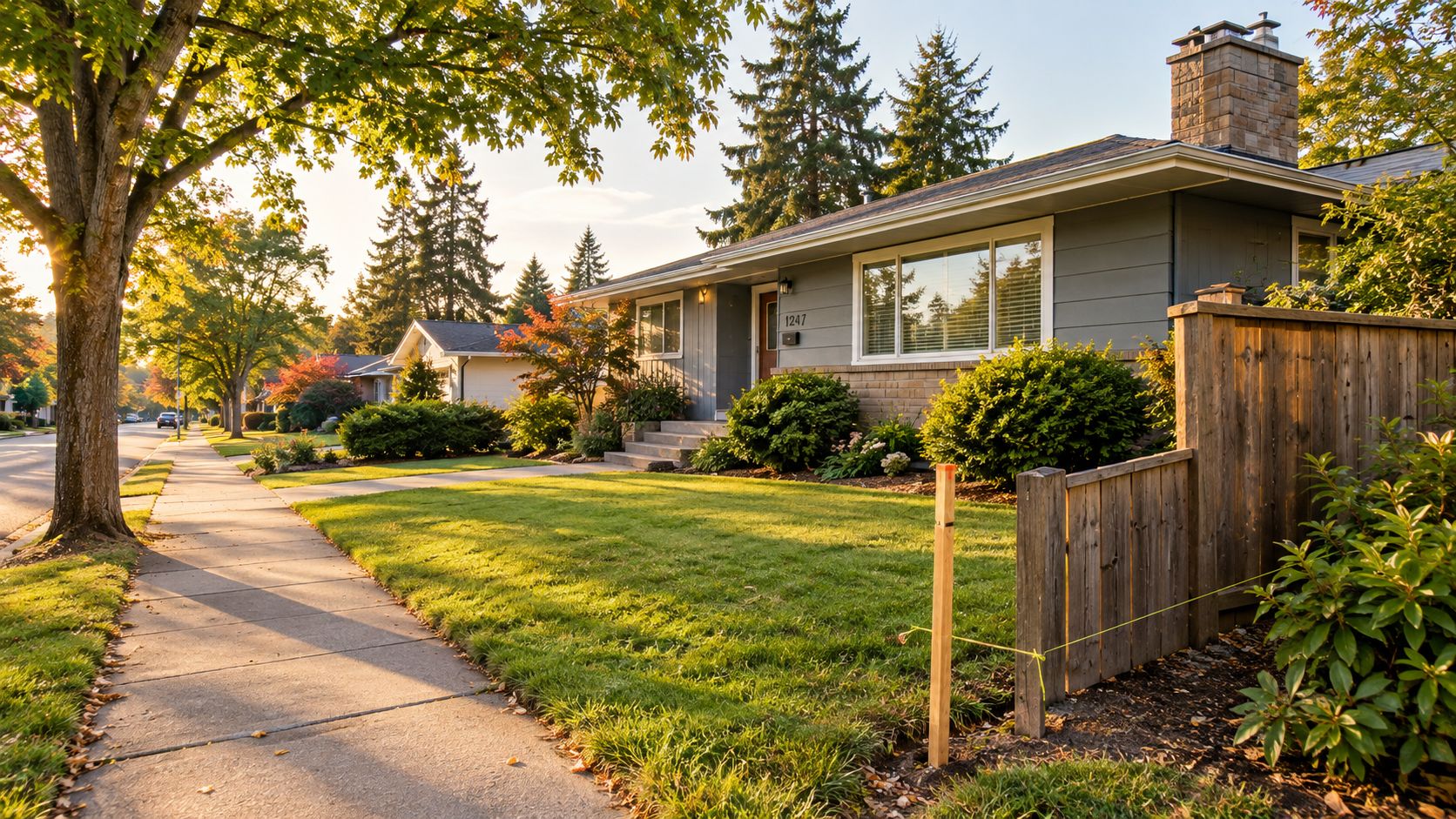
For a Pitt Meadows property with a larger lot, boundaries, easements and legal access may deserve closer attention. A fence can be in the wrong place, a structure can cross a line, or access rights may not be as clear as the driveway suggests. An updated survey provides information, while title insurance may provide protection for certain unknown survey or encroachment risks.
Strata and ownership records
A strata unit introduces another layer of documentation. A legal-description issue, registration problem or covered lien may affect the unit's title, while strata minutes, bylaws, financial records and building-maintenance information address different questions. Title insurance doesn't replace that strata-document review.
Fraud and forgery are another concern. A false transfer or forged document can create an ownership dispute or threaten financing. Policies commonly address specified fraud and forgery risks, but the buyer must rely on the policy's definitions, exclusions and conditions.
Buyers handling an estate transaction should also understand how ownership and authority are verified. The BC probate process guide provides related background, although a lawyer or notary must address the specific transaction.
What Title Insurance Costs in BC
BC title insurance pricing is usually standardized and based on purchase price, rather than built around extensive property-by-property underwriting. The figures below are time-sensitive and should be confirmed for the specific transaction.
For properties under C$1,000,000, one BC legal source states that a combined owner and lender policy is generally C$225. The same source says each additional C$1,000 above C$1,000,000 adds about C$0.90. Those figures appear in BC title insurance general information.
Other BC sources describe lender-only policies starting around C$179, with owner coverage available as an add-on. There's generally no annual premium for the standard arrangement. The exact amount can vary by provider, property and coverage selected, so the lawyer or notary should confirm the current quote rather than rely on an older estimate.
What the fee means in context
The cost is modest relative to the value of a typical real estate transaction, but that doesn't make the policy automatically appropriate for every buyer. The decision becomes more meaningful when a Maple Ridge home has a long renovation history, when a strata unit has complicated registration details, or when a Pitt Meadows property raises survey, access or boundary questions.
A one-time premium can transfer certain risks that might otherwise create expensive legal, remediation, enforcement or financing problems. It still doesn't cover every loss, and a purchaser should understand the exclusions before agreeing to coverage. Buyers can place the figure alongside legal fees, transfer tax and other completion expenses with a BC closing-cost calculator, while treating all current amounts as estimates until the closing professional confirms them.
When You Need Title Insurance and How to Buy It
For purchasers in British Columbia, title insurance is generally optional. Many mortgage lenders still require lender coverage, however, so a buyer may encounter the policy as a financing condition even when the buyer's own owner policy remains a separate choice. A cash buyer usually has more discretion, but the property's characteristics and legal review still matter.
The practical route at closing
The easiest way to obtain title insurance is through the lawyer or notary handling the purchase. The professional can discuss the available policy, identify whether it protects the owner, the lender or both, and arrange it during closing, often without a separate ordering fee. The buyer should ask for the policy terms and exclusions before signing the final documents.
A short decision checklist can help:
- Financing: Has the lender required lender coverage?
- Property history: Are there older additions, renovations, garages or permit questions?
- Survey information: Is a current survey available, and does the buyer need certainty about boundaries before making future changes?
- Ownership record: Does the transaction involve an estate, unusual registration history or other title complexity?
- Strata documents: Has the buyer reviewed the unit's legal description and related records, while keeping title questions separate from building-condition questions?
- Protection sought: Does the buyer want owner coverage for equity and ownership risks, rather than only the lender's protection?
A buyer preparing documents digitally may find a general real estate PDF guide useful for organising paperwork, but document organisation doesn't replace legal review.

This is general information, not legal advice. Buyers should confirm the lender's requirements, available coverage and policy exclusions with the lawyer or notary responsible for the transaction.
Title Insurance Questions Buyers Ask Most
Does title insurance replace a land-title search?
No. A title search examines the registered record and helps the lawyer or notary identify matters requiring attention before closing. Title insurance adds protection for certain covered risks that may not have been found. It doesn't replace the legal professional's review.
Does it replace a survey?
No. A survey can show physical boundaries, structures and possible encroachments before closing. Title insurance may protect against certain unknown survey-related losses, but a buyer planning a fence, addition or other work may still need direct boundary information.
What happens if a covered defect appears years later?
The owner should notify the insurer and follow the claim process in the policy. The insurer may investigate, defend the title or address an insured financial loss, depending on the facts and wording. A buyer shouldn't make assumptions about coverage before the claim is assessed.
Can coverage be purchased after closing?
Title insurance is commonly arranged during purchase or refinance, but existing homeowners may have options in some circumstances. Availability and terms can differ, so an owner should ask a real estate lawyer about the specific property and concern.
How does it work with a strata property?
Coverage can apply to certain title defects affecting a strata unit, but it doesn't cover every strata-related cost or the corporation's overall financial condition. Buyers still need to review strata records, bylaws, insurance information and planned repairs separately.
Working With Royal LePage Brookside Realty on Your Purchase
The short answer to what is title insurance in BC real estate? is a one-time policy for specified hidden title risks. It's generally optional for buyers, although lenders often require their own coverage. Buyers in Maple Ridge and Pitt Meadows can discuss the decision with their lawyer or notary while the estate team helps prepare questions for the closing conversation.
Royal LePage Brookside Realty works with buyers on purchase planning, property-specific due diligence and connections with local lawyers and notaries. The team can also help organise practical closing information alongside resources such as realtor marketing tools when a purchase involves broader planning, and buyers can learn more about the local office through Royal LePage Maple Ridge.
Royal LePage Brookside Realty offers buyer guidance for Maple Ridge, Pitt Meadows and surrounding Fraser Valley purchases, including help preparing for title insurance and other closing discussions. Buyers planning a purchase can visit Royal LePage Brookside Realty to connect with the team and discuss the property-specific questions to bring to a lawyer or notary.