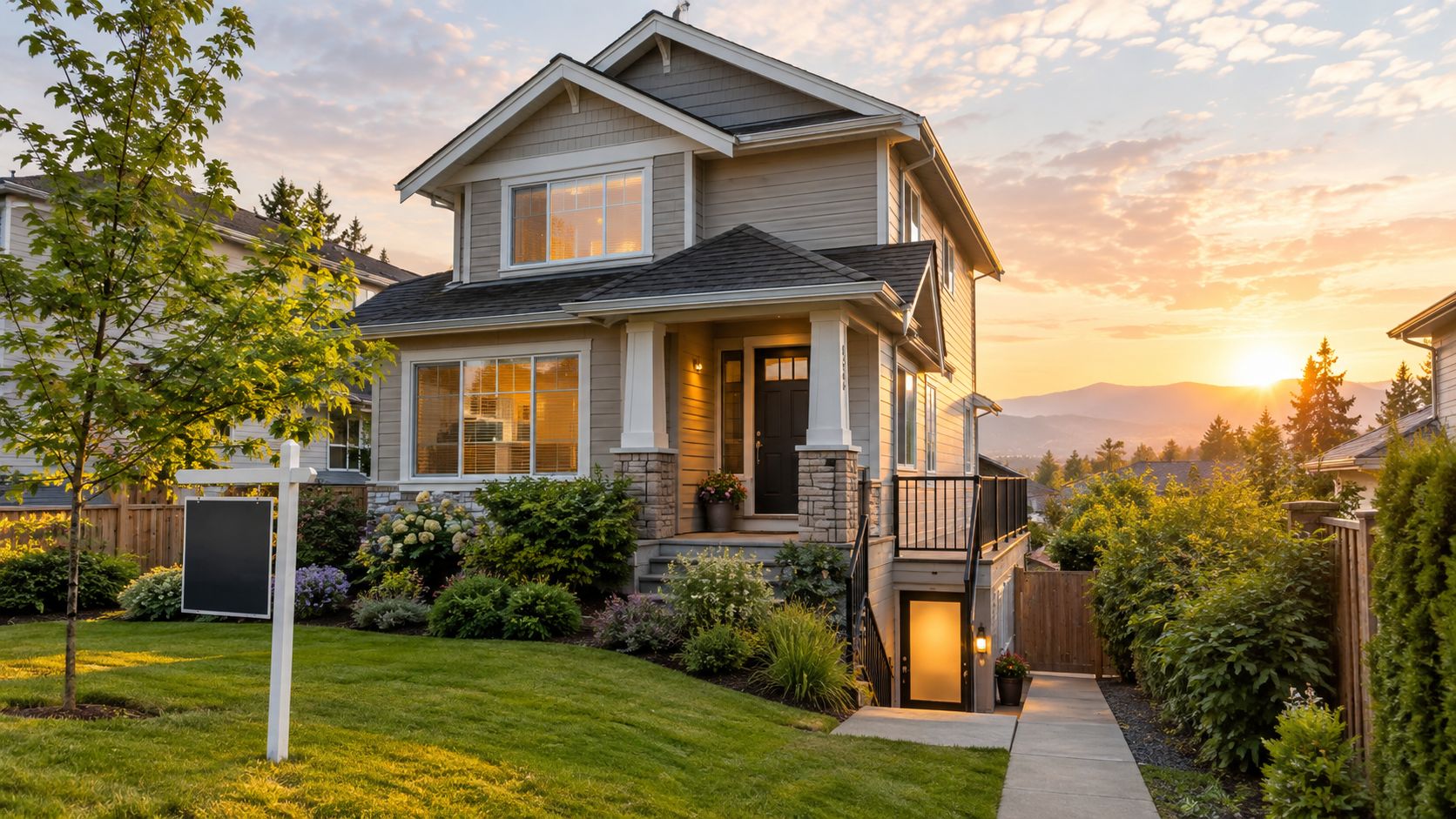
A buyer in Pitt Meadows sees a house with a finished basement, a separate entrance and enough space downstairs to imagine a tenant helping with the mortgage. The listing calls it a suite, but that description alone doesn't establish whether the space is permitted, code-compliant or legally rentable.
That distinction matters. Houses for sale in Pitt Meadows with basement suites can offer flexible living arrangements and rental support, but a finished basement can also bring permit questions, insurance concerns and renovation costs. Buyers need to verify the suite before treating projected rent as part of the purchase decision.
This guide from Royal LePage Brookside Realty follows a practical buyer's process, from searching listings and checking zoning to assessing rental assumptions, inspecting the basement and writing suitable offer conditions. Buyers can begin by reviewing Pitt Meadows homes for sale, then narrow the search to properties where the suite's legal status and income potential can be documented.
Table of Contents
- How to Search for Basement Suite Homes
- Navigating Zoning and Permit Requirements
- Estimating Rental Income and Mortgage Impact
- Conducting Inspections and Renovation Evaluations
- Negotiating Offers and Partnering with a Local Realtor
- Conclusion and Next Steps
How to Search for Basement Suite Homes
The search should start with the property's likely eligibility, not with the word “suite” in a listing description. Listing remarks may use terms such as mortgage helper, in-law accommodation, unauthorized suite or finished basement. Those phrases describe different levels of certainty, so each property needs separate verification.
Start with a practical screening process
Use the following sequence before booking a viewing:
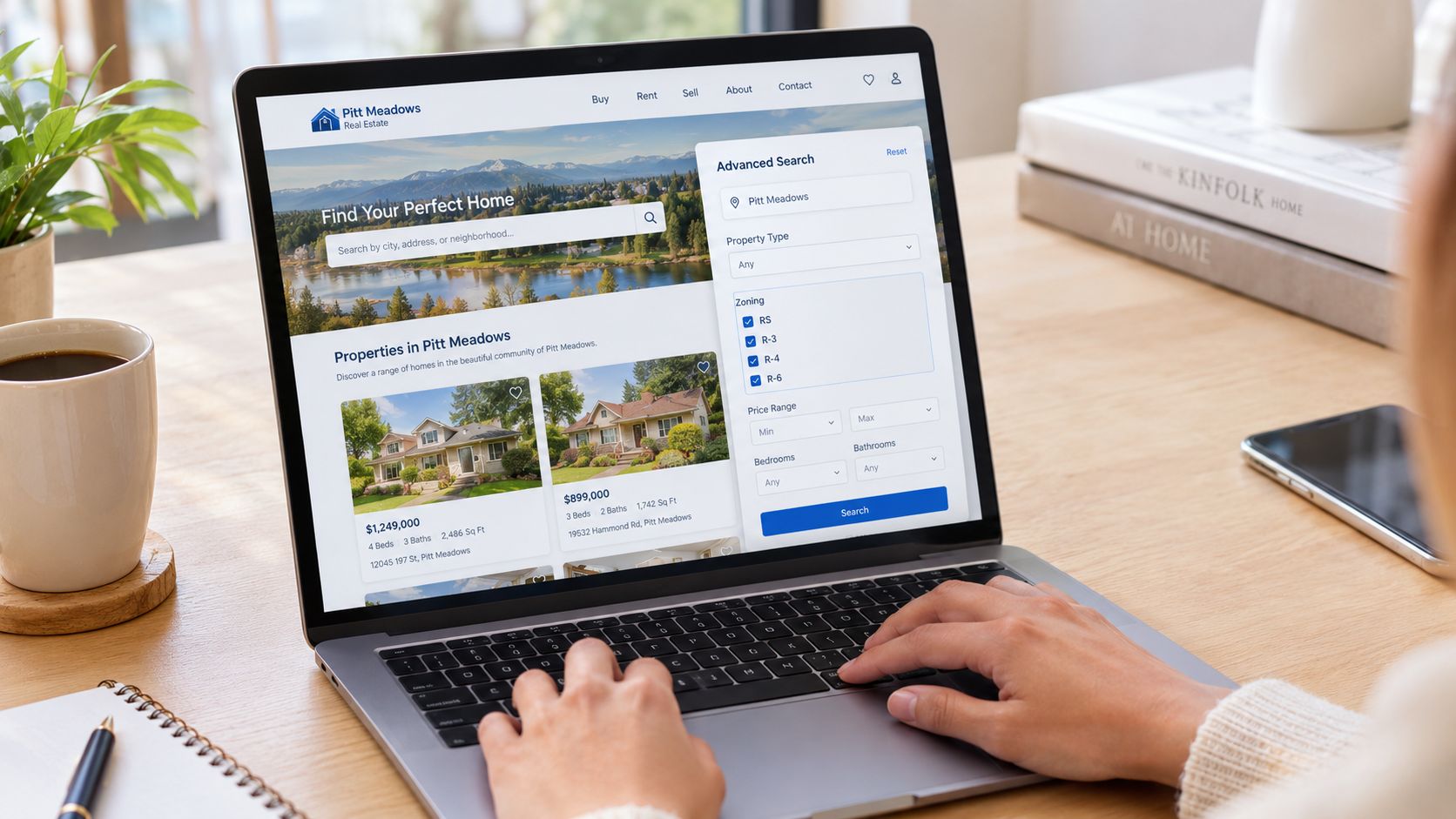
- Search broadly, then filter carefully: Look for detached homes with a separate entrance, kitchen or rough-in, laundry arrangement and bedroom-level windows. Treat these features as screening clues, not proof of legality.
- Check the zoning designation: Pitt Meadows allows secondary suites in specified zones, so the address should be checked against the city's zoning information before the buyer relies on rental income.
- Review the listing documents: Ask for permit information, any suite registration material, floor plans and disclosures. A seller's statement that a suite is “legal” should lead to records, not end the inquiry.
- Study the layout before visiting: Aerial imagery and listing photographs can help identify a separate entrance, parking arrangement and apparent access to the lower level. They can't confirm fire separation, ceiling height or permit history.
- Track new opportunities: Buyers can monitor new Pitt Meadows listings while keeping a separate shortlist for verified suites, possible suites and finished basements that require investigation.
A 2011 Census recorded 650 secondary suites in Pitt Meadows, while Metro Vancouver data indicated that suites represented about 23% to 25% of regional rental households. These figures, documented in the city's secondary-suite information, show that suites are an established housing form, but they don't confirm the status of any individual property. (Pitt Meadows secondary-suite information)
Separate the search categories
A useful shortlist has three labels:
- Documented legal suite: Municipal records and the property's physical condition support lawful rental use.
- Potential suite: The space appears suitable, but permits, zoning or code compliance remain unconfirmed.
- Finished basement: The area may work for family use, guests or recreation, but there's no basis yet for rental underwriting.
That classification prevents a common mistake. Buyers often compare the asking prices of two homes as though both generate the same rental income, even though one may have a documented suite and the other may require substantial work before tenancy is possible.
Navigating Zoning and Permit Requirements
Pitt Meadows doesn't permit a secondary suite in every residential property. The city's guide identifies Agriculture zones A-1 and A-2, Rural Residential zones RR-1 to RR-5, and Urban Residential zones RS, R-3, R-4 and R-6 as zones where secondary suites may be permitted. The same guide states that a principal dwelling can have one suite, the suite must be 33 m² to 90 m², and short-term rentals such as Airbnb aren't permitted. (Pitt Meadows Guide to Secondary Suites)
Confirm the address before valuing the suite
A buyer should ask for the property's zoning designation and compare it with the city's current rules. Zoning eligibility is only the first layer. The buyer also needs to determine whether the existing space was approved, whether permits were closed, and whether the completed work matches the approved plans.
| Zone | Suite Size Range (m²) |
|---|---|
| A-1 and A-2 | 33 to 90 |
| RR-1 to RR-5 | 33 to 90 |
| RS, R-3, R-4 and R-6 | 33 to 90 |
The table identifies the city's stated size range for the permitted zone groups. It doesn't mean every property in those zones automatically qualifies. Site conditions, building configuration, parking, access and construction details can still affect the outcome.
Use a three-layer approval test
A basement suite should pass all three checks:
- Municipal permission: The zoning and property records must support a secondary suite on that lot.
- Building-code compliance: The construction must satisfy applicable BC requirements, including life-safety features.
- Registration or licensing where required: The buyer should confirm the municipality's current process and whether the suite has the required status.
A suite that fails one layer shouldn't be treated as legal rental space. Buyers should ask the municipality how to obtain records and should have qualified professionals review technical questions. This isn't legal advice, and a real estate representative can't replace municipal, building, insurance or legal advice.
For readers comparing a basement suite with other small residential accommodation options, a 2026 ADU planning guide can provide broader planning context. It shouldn't be used as a substitute for Pitt Meadows zoning confirmation.
The physical work also deserves financial scrutiny. Buyers assessing unfinished or partially finished space can use the brokerage's discussion of basement completion cost as a starting point, then obtain property-specific estimates from qualified contractors.
Estimating Rental Income and Mortgage Impact
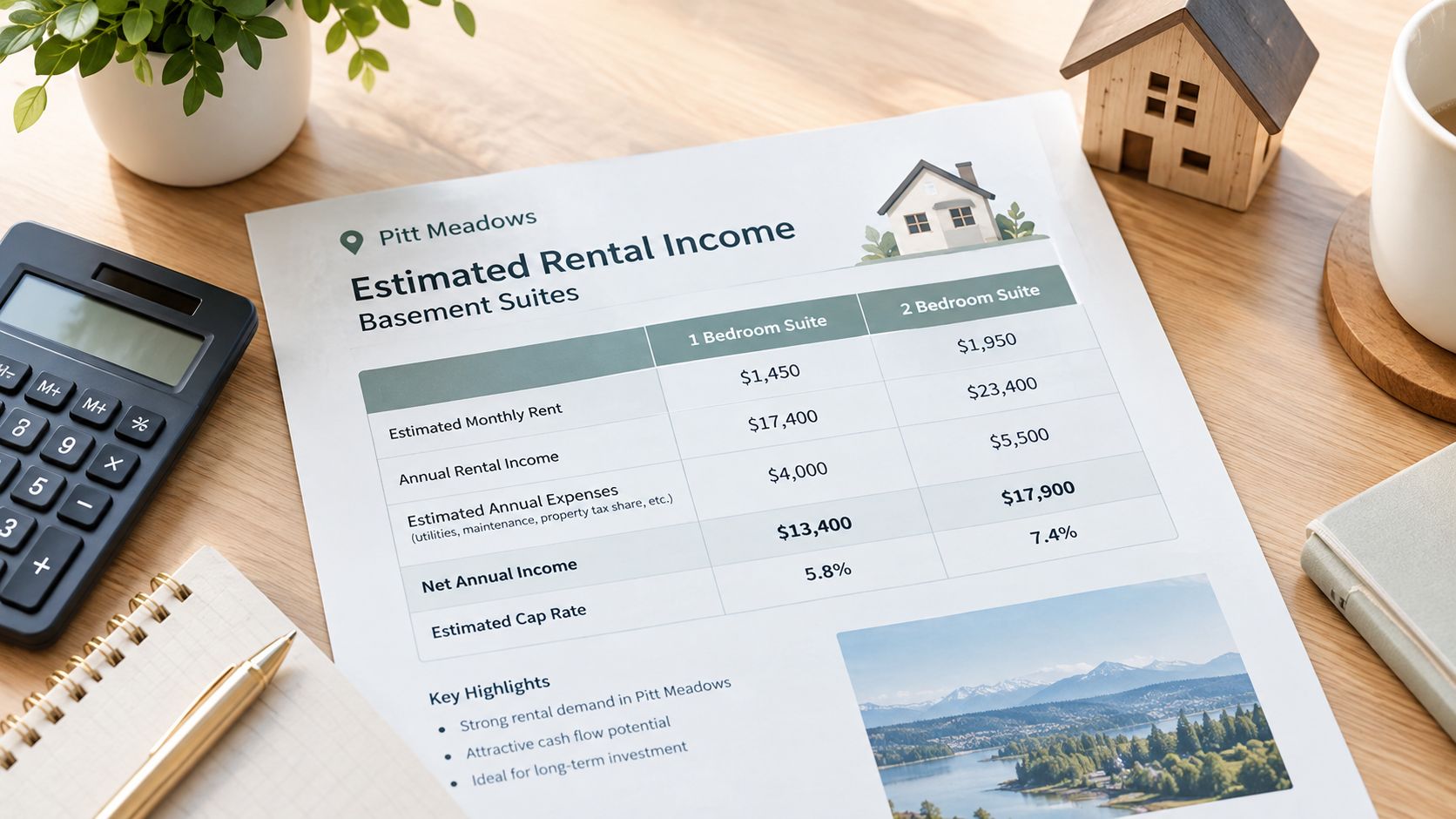
A suite's rent should be treated as an underwriting assumption, not a guaranteed mortgage payment. Published 2026 Metro Vancouver benchmarks place one-bedroom basement suites at about $1,800 to $2,400 per month, and two-bedroom suites at about $2,200 to $3,200 per month. These are regional benchmarks, not a rent guarantee for a particular Pitt Meadows address, and the figures are time-sensitive. (2026 basement-suite requirements and rent benchmarks)
Build two scenarios
The clearest comparison is between the home with its suite income and the same home without it. A simple worksheet can include:
- Purchase price and mortgage payment
- Property taxes, insurance and utilities
- Expected monthly rent based on the suite's size, condition and privacy
- Vacancy allowance and repairs
- Compliance work, if the suite isn't documented
- Net monthly contribution after operating costs
The buyer should run the numbers using a conservative rent assumption within the published range, rather than selecting the highest figure. A one-bedroom suite with poor natural light, limited parking or shared laundry may not compete with a well-separated unit. A two-bedroom suite may attract stronger demand, but its larger space can also mean higher heating, maintenance and renovation costs.
Practical rule: Rent only belongs in the affordability calculation after the buyer has established that the suite can legally support long-term tenancy.
Include the costs listings often omit
Rental income can be reduced by repairs, turnover, insurance adjustments, utility sharing and property management. The buyer should also ask how the heating system, electrical service, hot water and laundry are divided between the main home and the suite. A separate meter may simplify allocation, but its existence and capacity need confirmation rather than assumption.
Landlord responsibilities continue after closing. A buyer reviewing plumbing fixtures, drainage, water pressure or future repair exposure may find the guide to landlord plumbing obligations useful as general planning material. It doesn't replace professional advice or the applicable tenancy rules.
The brokerage's rental property ROI calculator can help structure the comparison, but the result is only as reliable as the buyer's inputs. An unpermitted suite can produce an attractive spreadsheet while creating financing, insurance and resale problems. The correct approach is to model the suite at zero income until its eligibility and operating assumptions are supported.
Conducting Inspections and Renovation Evaluations
A finished basement can look move-in ready and still fail the requirements for a legal suite. The inspection should focus on life safety, access, services and construction quality, not just paint, flooring and cabinetry.
Check the high-risk areas first
A practical walkthrough should cover:
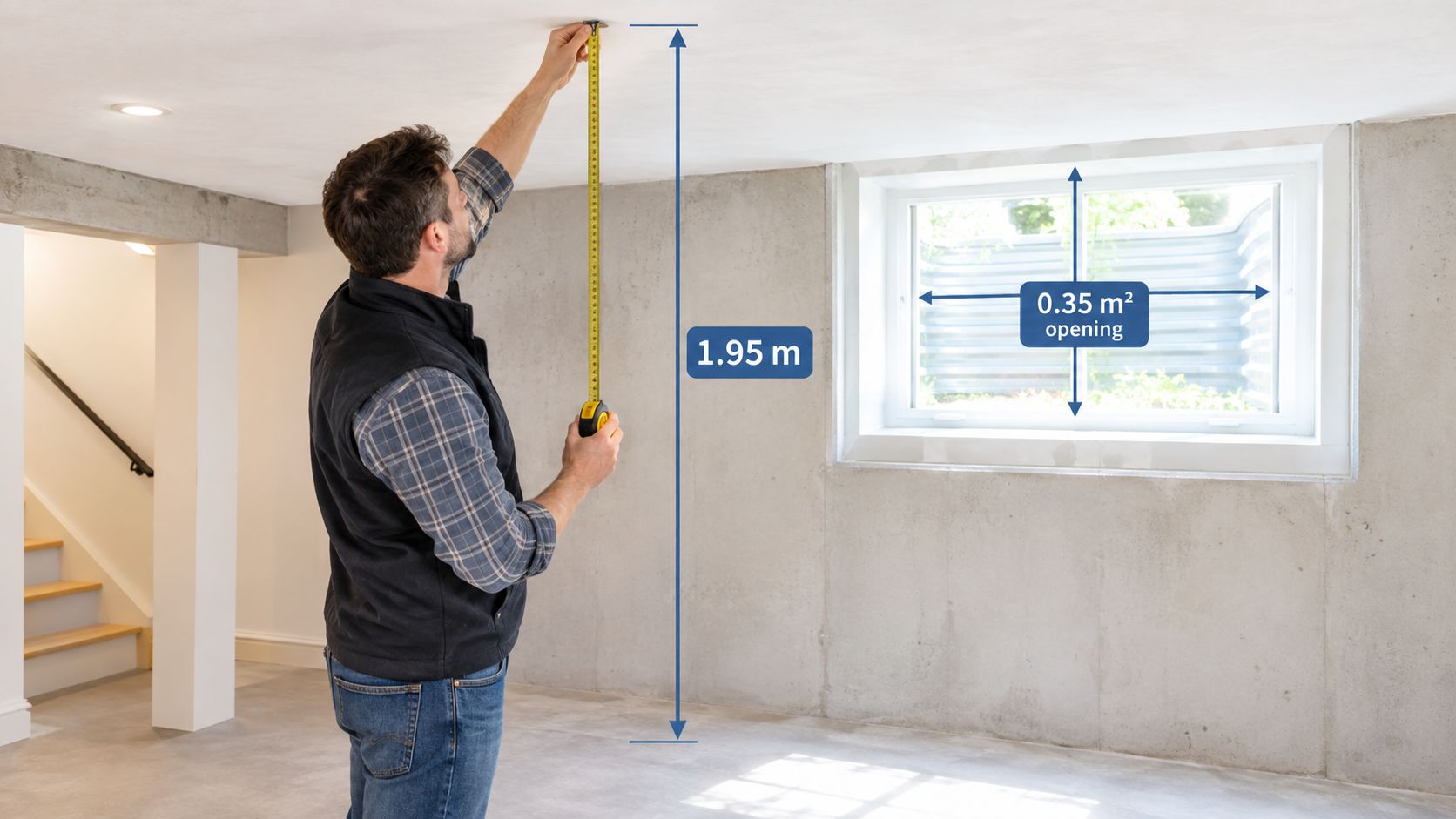
- Ceiling height: One BC legal-suite checklist identifies a minimum ceiling height of 1.95 m.
- Bedroom egress: The same checklist cites an egress opening of at least 0.35 m², with no dimension under 380 mm.
- Alarms: Smoke and carbon-monoxide alarms should be interconnected where required, rather than installed as isolated devices.
- Separate entrance: The suite needs a compliant entrance and appropriate separation from the principal dwelling.
- Fire separation: Walls, ceilings, doors and penetrations should be reviewed for the required protective construction.
- Electrical and heating: The buyer should determine whether the service and heating system can safely support the lower level.
- Moisture and drainage: Look for staining, odours, efflorescence, sump-pump dependence and evidence of past water entry.
- Parking and access: The tenant's access and parking arrangement should work without creating conflict with the main household.
These requirements are summarized in the BC secondary-suite legal checklist. A home inspector can identify visible concerns, but specialized questions may require a contractor, electrician, fire-safety professional or municipal inspection.
Price the work before removing conditions
An unpermitted suite can require more than a permit application. The municipality may identify deficiencies involving stairs, windows, alarms, plumbing, electrical work, insulation, ventilation or fire separation. A contractor should inspect the actual assembly before quoting, because finished surfaces can hide inaccessible work.
The buyer should request written estimates for two outcomes:
- Legalization of the existing layout, if the municipality considers the arrangement viable.
- Redesign or partial reconstruction, if the layout cannot meet current requirements as built.
A staircase that opens directly into a shared living area, a bedroom without suitable egress or a ceiling with inadequate height can change the project substantially. If the work is uncertain, the offer should reflect that uncertainty instead of treating the advertised suite as completed income-producing space.
Negotiating Offers and Partnering with a Local Realtor
Negotiation becomes more precise when the buyer can distinguish a documented suite from an attractive but unverified basement. The seller may have invested in finishes, but finishes don't establish rental eligibility. The buyer's advantage comes from the cost and uncertainty required to confirm the space.
Most Pitt Meadows listings with basement suites emphasize price and monthly payment rather than the relationship between suite eligibility and rental upside. Buyers who negotiate around compliance risk and realistic income potential can seek terms that better reflect the property's actual condition. (Pitt Meadows market discussion)
Write conditions around evidence
A buyer's representative can help structure conditions that address the specific property, subject to advice from the buyer's lawyer, lender and other professionals. Possible areas for review include:
- Municipal confirmation of zoning and suite records
- Permit history and any outstanding inspections
- A professional inspection of the basement
- Contractor estimates for required work
- Insurance availability and premium implications
- Lender treatment of projected suite income
- Review of leases, deposits and tenancy documentation where a tenant is present
The wording and deadlines matter. A condition that merely says “subject to suite approval” may be too vague to protect the buyer if it doesn't identify who will confirm what, by when and to what standard.
Compare price concessions with risk transfer
A seller may prefer a price reduction, while a buyer may need time for records, inspections or financing review. Those are not interchangeable. A lower price doesn't automatically solve an insurance issue, permit gap or construction defect.
The buyer should compare the negotiated price with the cost of making the suite usable, the income forgone during work and the possibility that approval won't be available. The most useful negotiation package is factual: identify the missing document, obtain a professional estimate where possible, and explain how the uncertainty affects the buyer's valuation.
A local representative who works with Maple Ridge and Pitt Meadows transactions can coordinate listing information, municipal questions, inspection timing and lender communication. Buyers can review guidance on choosing a local agent in Pitt Meadows before selecting representation. The right support should make the buyer's decision clearer, not encourage the buyer to count unverified rent.
Conclusion and Next Steps
The safest way to evaluate houses for sale in Pitt Meadows with basement suites is to treat the suite as a separate asset within the home. Search for the right physical features, verify the zoning, confirm permits and required status, test the building-code details, estimate rent conservatively and negotiate around documented risk.
A legal suite may support affordability, family living or long-term rental planning. A finished basement without approval may offer useful space, but it shouldn't be valued as dependable rental income until qualified professionals and municipal records support that conclusion.
Buyers ready to compare current Pitt Meadows and Maple Ridge opportunities can ask for a shortlist divided into documented suites, potential suites and finished basements. That approach creates a clearer basis for inspections, financing and offers.
Royal LePage Brookside Realty helps buyers review Pitt Meadows and Maple Ridge listings, organize suite-focused due diligence and compare realistic rental assumptions with carrying costs. Visit Royal LePage Brookside Realty to connect with local guidance before making an offer on a home with a basement suite.