

A Maple Ridge landlord tenant dispute resolution case goes through the Residential Tenancy Branch using one of four processes, direct request, facilitation, participatory hearing, or expedited hearing. In 2023, the branch averaged 2,005 applications per month, and standard hearing waits were about nine weeks.
A typical dispute starts with a familiar problem. Rent hasn't arrived, a repair remains unfinished, or a tenant and landlord disagree about a deposit deduction. The first instinct may be to send another message, but formal landlord tenant dispute resolution in BC is handled through the Residential Tenancy Branch, commonly called the RTB.
The important practical point is that an RTB decision is only one stage. A landlord may still need to serve the order, arrange enforcement, or use the Supreme Court and bailiff process before possession or payment becomes real. That post-decision work is where many small landlords discover that winning on paper and recovering what is owed aren't the same thing.
Table of Contents
- Resolving Disputes Through the Residential Tenancy Branch
- Choosing the Right RTB Process for Your Situation
- Filing Your RTB Application and Serving Documents
- Preparing Evidence for a Participatory Hearing
- Enforcing Orders and Recovering What You Are Owed
- Next Steps for Maple Ridge and Pitt Meadows Landlords
Resolving Disputes Through the Residential Tenancy Branch
A Maple Ridge landlord notices that rent hasn't arrived and sends a polite reminder. The tenant replies that a repair has been ignored and says payment will follow once the problem is addressed. The conversation becomes tense, and both sides start collecting screenshots. At that point, informal communication may still solve the matter, but a formal route may be necessary if neither party will compromise.
The RTB is BC's main landlord-tenant dispute resolution system. The provincial housing ministry says it receives about 200,000 requests for information or help each year and more than 20,000 dispute-resolution applications. The Province's 2023 update reported that applications averaged 2,005 per month, up 10% from 1,811 per month in 2022.

Why the first conversation still matters
Filing shouldn't be the first move for every disagreement. A clear written message can identify the issue, establish what each party wants, and create a record that later helps an arbitrator understand the timeline. A landlord should state the rent or repair issue plainly, give the tenant a reasonable opportunity to respond, and avoid threats or emotional language.
That doesn't mean a landlord should wait indefinitely. In the same provincial update, the RTB reported average application processing of about 1.4 days, phone wait times under seven minutes, and general email responses averaging one business day. The hearing itself may still take time, so early documentation matters even when initial administrative processing is quick.
BC's current system also reflects a long legal development. Landlord-tenant legislation has existed in the province since 1897, and reforms in the late 1960s and early 1970s created the provincially regulated Rentalsman, an earlier version of today's centralized system. Recent decisions became searchable by topic on the RTB website effective October 2008, while the Arbitration Review Panel was discontinued in 1999, as described in the legal-history material cited by the RTB dispute-resolution background guide.
Practical rule: Keep the dispute narrow, written, and chronological. A calm record usually helps more than a long argument.
The RTB process is intended to be the formal step after the parties try to resolve the conflict themselves. For a landlord in Pitt Meadows or Maple Ridge, that means practical preparation begins before the application, with the agreement, notices, messages, receipts, photographs, and a clear remedy.
Choosing the Right RTB Process for Your Situation
Choosing the process is a triage decision. A landlord seeking an order about a narrow, undisputed issue shouldn't automatically prepare for a full hearing, while a tenant facing an urgent safety problem shouldn't treat an emergency as an ordinary scheduling matter.
The Province identifies four RTB paths. Each has a different purpose, and using the wrong one can waste time or leave an important remedy outside the process.
Direct request
A direct request is designed for limited situations where the facts and requested order fit a defined category. Examples include an unpaid deposit after move-out or an undisputed order of possession. It isn't a general shortcut for every rent dispute.
A Maple Ridge landlord who has a tightly documented claim that matches the direct-request requirements may avoid presenting the entire disagreement in a participatory hearing. The key is eligibility. If the tenant contests the relevant facts or the remedy doesn't fit the narrow scenario, another process may be required.
Facilitation
Facilitation is useful when the parties may still reach an agreement with structured assistance. It can be a sensible choice for disputes involving communication breakdowns, scheduling, or a practical repair arrangement where both sides want to avoid a contested hearing.
The trade-off is that facilitation depends on cooperation. It won't replace a formal determination when one party denies the facts or refuses a workable resolution.
Participatory hearing
A participatory hearing is the ordinary route for disputed claims involving rent, repairs, damage, deposits, or possession. Both parties present their evidence and submissions to an arbitrator. This is generally the relevant path for a landlord who says rent is unpaid and a tenant who disputes the amount, or for a repair claim where the landlord contests responsibility.
Landlords assessing their options can also review practical information about landlord rights in BC, while remembering that an informational guide isn't legal advice.
Expedited hearing
An expedited hearing is reserved for emergencies where waiting for a regular hearing would be unfair. It isn't just a faster option for a landlord who wants an ordinary rent or possession dispute resolved sooner.
A serious emergency repair issue may justify considering this path, but the application needs to explain why the delay associated with a regular hearing would cause unfairness. A routine disagreement over a deposit or ordinary maintenance generally calls for a standard process instead.
The best starting question is simple: What specific order is needed, and which RTB process is expressly designed for it? A narrow unpaid-rent issue, an emergency repair, and a contested possession dispute may all require different doors.
Filing Your RTB Application and Serving Documents
Once the process is selected, accuracy becomes more valuable than speed. A rushed application with the wrong remedy, incomplete dates, or poor service can create a second problem on top of the original dispute.
Prepare the file before opening the application
The application should tell a short, verifiable story. Gather the tenancy agreement, rent ledger or receipts, notices, inspection records, repair requests, photographs, messages, and any document that proves the order being requested. Separate facts from conclusions. “Rent was not received for the agreed payment date” is more useful than calling the tenant unreliable.
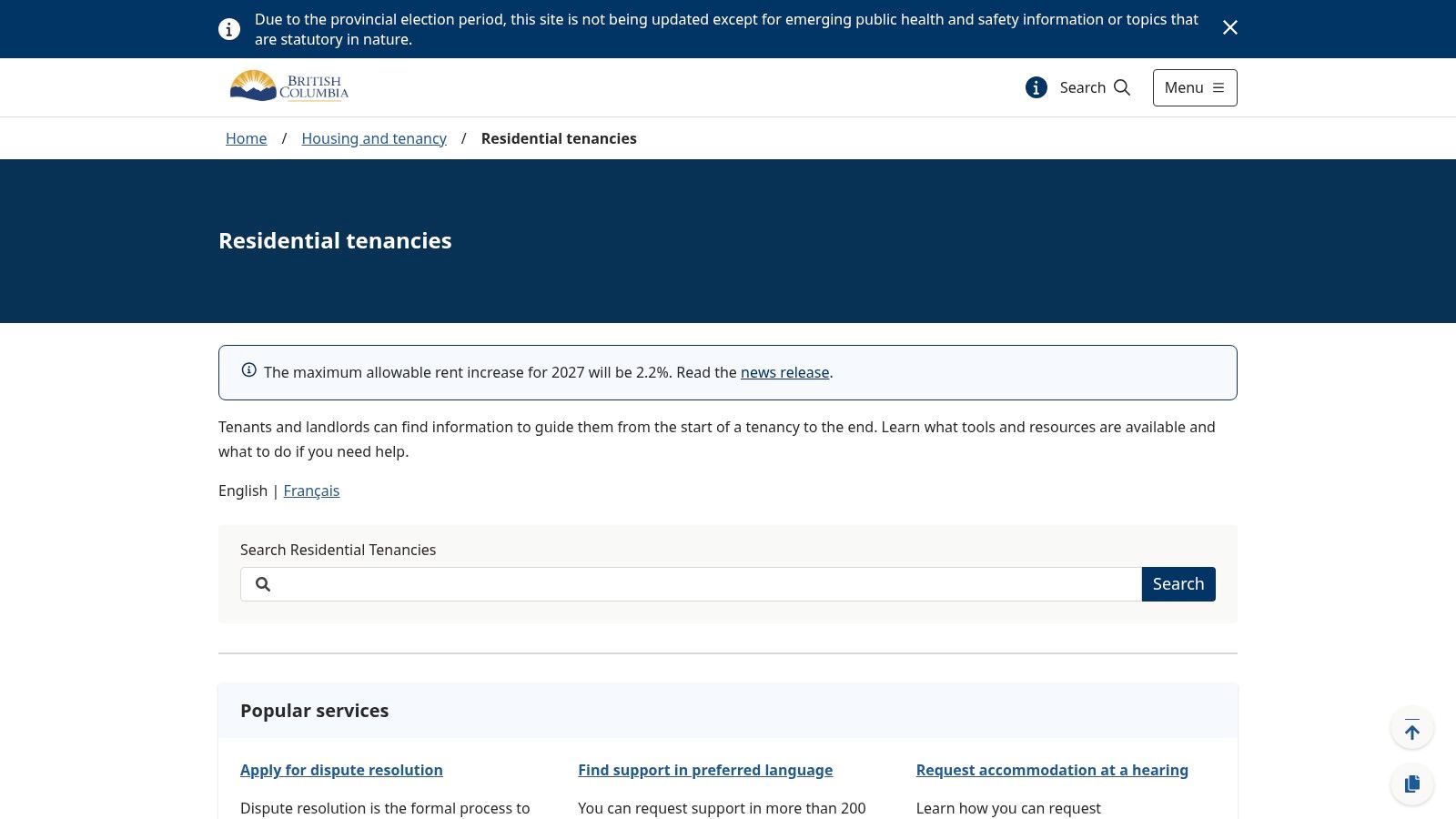
A direct-request application has a $100 filing fee, and applicants can submit evidence by mail, fax, in person, or online. A fee waiver may be available for an applicant who meets the applicable requirements. The filing method doesn't change the need to submit a complete package.
Check the deadline before relying on old records
The Residential Tenancy Act generally allows a two-year limitation period from the end or assignment of a tenancy for a dispute-resolution application. The deadline is a legal risk, not an administrative suggestion. A landlord who waits until records are lost, witnesses move, or messages become difficult to retrieve may weaken a claim permanently.
The RTB form guidance for BC tenancy disputes can help identify the paperwork relevant to the issue, but the applicant still has to match the form and remedy to the actual facts.
Serve every document properly
The RTB requires each party to submit evidence to the branch and serve it on the other party. Filing with the RTB alone isn't enough. The other party must have a fair opportunity to see and answer the material being relied upon.
A service record should identify what was served, when it was served, how it was delivered, and where it was sent or delivered. Keep delivery confirmations, photographs where relevant, and copies of the exact package. If a deadline is close, don't assume that uploading a document automatically proves service.
The applicant's evidence must be received by the RTB at least 14 days before the hearing. Respondents have a different deadline, and must submit evidence as soon as possible so the RTB and applicant receive it no less than seven days before the hearing. Missing those dates can affect whether the arbitrator allows the evidence to be considered.
Preparing Evidence for a Participatory Hearing
A participatory hearing rewards organisation. The arbitrator needs to identify the agreement, the alleged breach, the notice, the response, and the remedy without sorting through an unstructured archive of messages.
Build a chronology, not a document dump
Start with a one-page timeline. Put the tenancy start, payment dates, repair requests, inspections, notices, responses, and key events in order. Then number the supporting documents so each important statement points to a specific item.
The RTB says accepted evidence can include tenancy agreements, condition inspection reports, emails, texts, receipts, photographs, video, audio, and witness statements. The strongest package usually uses the smallest set of documents that proves the relevant points.
A landlord claiming unpaid rent should connect the agreement's payment term to the ledger and then to the notice served. A landlord claiming damage should distinguish pre-existing condition from new damage and show how the amount requested relates to the actual loss. A repair dispute should identify the defect, the date the landlord was notified, the steps taken, and the order sought.
Respect the two evidence deadlines
| Role | Action | Deadline |
|---|---|---|
| Applicant | Submit evidence to the RTB and serve it on the other party | Received at least 14 days before the hearing (RTB evidence rules) |
| Respondent | Submit evidence to the RTB and serve it on the applicant | Received no less than 7 days before the hearing after receiving the applicant's evidence (tenant dispute guidance) |
Service and admissibility are separate issues. At the hearing, each party must present the evidence again, and only evidence properly served before the hearing can be presented. A landlord shouldn't assume that an arbitrator will accept a late photograph, new invoice, or last-minute message just because it seems relevant.
Keep repair claims separate from possession disputes
Repair cases deserve particular discipline. An SFU capstone analysis of RTB participatory hearing decisions found that 81% of repair-related applications were dismissed or settled without repair terms. The most common dismissal pattern involved tenants contesting evictions at the same time, with possession issues taking priority.
The same analysis found that emergency-repair-only applications had the highest success rate at 50%, while other repair-related application types ranged from 0% to 20%. Those findings don't guarantee an outcome, but they show why issue framing matters.
Evidence principle: If the requested repair order is buried inside an eviction dispute, the repair issue may receive less practical attention.
For landlords, the lesson is to avoid broad, overlapping claims. Identify the defect, prove notice, show the response, and ask for the remedy that matches the problem. For deposit disputes, a condition inspection record and clear move-in and move-out photographs can be more useful than a general statement that the unit was left in poor condition. Guidance on damage deposits in BC is a useful starting point for organising that record.
Enforcing Orders and Recovering What You Are Owed
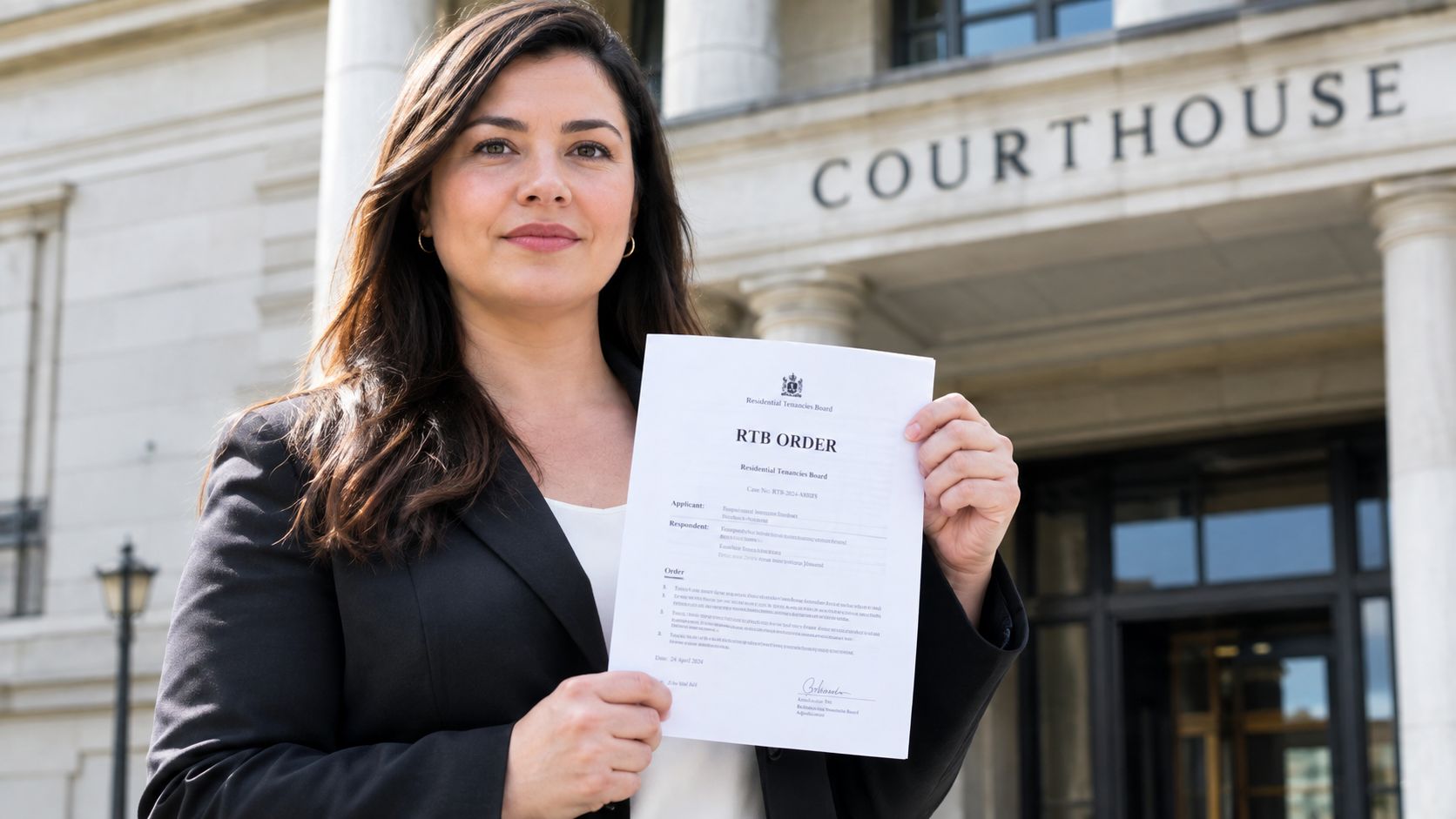
An RTB order may confirm a landlord's right to possession or payment, yet it does not place the keys in your hand or the money in your account. A small landlord can finish the application and hearing, then discover that enforcement is a separate job with its own paperwork, delay, and cost. In practice, a successful RTB decision is not the same as a completed recovery.
Possession requires a lawful enforcement route
If an occupant remains after an order of possession takes effect, do not change the locks, remove belongings, or attempt a self-help eviction. British Columbia separates obtaining the order from serving and enforcing it. Before escalating, review the dispute resolution mechanisms available in BC so the route matches the type of order you received.
Enforcement may require a court-appointed bailiff and a Supreme Court writ package. Filing fees, document preparation, and communication with the bailiff can add work before anyone attends the property. The BC guidance on serving and enforcing an order of possession explains the government process and distinguishes the RTB order from the later enforcement steps.
A payment order can still be difficult to collect
A monetary order remains a paper result until the respondent pays or the landlord uses an available collection method. Recovery can depend on whether the former tenant can be located, what income or assets can be reached, and how much additional time and money the landlord can commit.
For an owner with one rental home in Maple Ridge or Pitt Meadows, the calculation is practical. The dispute has already consumed time, and enforcement may bring more forms, professional assistance, and upfront spending. Compare the order amount with the likely recovery and the cost of pursuing it before committing further funds.
Review applications are limited
A review application is not a general appeal. Recognised grounds include being unable to attend because of unforeseeable and uncontrollable circumstances, having new and relevant evidence that was unavailable at the original hearing, or showing that fraud affected the decision. Under the RTB's policy guideline on reviews, an Order of Possession can be reviewed only within 2 days of receipt.
Use this five-step sequence:
- Read the order carefully. Confirm the parties, amount, possession date, conditions, and service requirements.
- Serve the order correctly. Keep proof of delivery and an exact copy of what was served.
- Wait for voluntary compliance. A tenant or former tenant may pay or leave without enforcement.
- Escalate lawfully. If compliance does not happen, follow the bailiff and Supreme Court route instead of taking physical action yourself.
- Record the added cost. Keep invoices, filing receipts, and correspondence for any recoverable amount or later accounting issue.
Consider enforcement risk before spending heavily on a claim. File within the limitation period, preserve the order and service record, and treat recovery as its own project.
Next Steps for Maple Ridge and Pitt Meadows Landlords
A landlord facing a dispute should first preserve the tenancy agreement, payment record, notices, inspection reports, and all written communication. Next, identify the exact remedy, confirm the RTB process, check the limitation date, and create a service calendar for the evidence deadlines.
Owners who want fewer disputes can also improve the tenancy before a problem begins. Clear written terms, consistent inspections, prompt repair records, and organised rent documentation make later decisions easier. For owners preparing a vacancy, guidance on marketing rentals that convert can help create clearer expectations before a tenant applies.
A licensed local property-management service can assist with tenant communication, documentation, RTB paperwork, evidence preparation, and hearing representation. Royal LePage Brookside Realty provides property-management support for owners in Maple Ridge and Pitt Meadows, with broader Fraser Valley service when appropriate. Legal advice may still be necessary for a complex or high-risk dispute.
Royal LePage Brookside Realty helps local landlords organise tenancy administration, prepare for RTB processes, and manage rental-property decisions in Maple Ridge and Pitt Meadows. Visit Royal LePage Brookside Realty to discuss practical property-management support before a dispute becomes an enforcement problem.