
Listing or selling a property does not end a BC tenancy, and the buyer becomes the landlord on the same terms unless a valid notice ends the tenancy. Sellers need to choose among three paths before promising possession: the tenant stays, the parties negotiate a voluntary move-out, or a qualifying purchaser-occupancy process applies.
The familiar advice to give notice and then list skips the most important question: what lawful basis exists for ending this particular tenancy? For a Maple Ridge house or a Pitt Meadows condo, that answer affects the likely buyer, the documents attached to an offer and the dates the seller can responsibly accept.
Table of Contents
- Three Ways a Tenanted Sale Can Close
- Showings That Keep the Tenant and the Sale
- Negotiating Offers and Tenancy Conditions
- How Purchaser Occupancy Notice Works
- Rent Deposits and Records the Buyer Inherits
- Choose the Path Before You List
Three Ways a Tenanted Sale Can Close
A seller transfers more than a building when the tenant stays. According to the BC government's guidance on selling rental property, the tenancy continues during marketing and after completion, the buyer becomes the landlord on the existing terms, and neither party needs to sign a replacement agreement. Wanting to sell isn't, by itself, a reason to end the tenancy.
That makes the possession plan a starting decision, not a detail to settle after accepting an offer. An occupied property can be sold successfully, but the listing and contract must describe what the seller can deliver.
Three ways to sell a tenanted home in BC
| Path | Who ends the tenancy | Timing | Money to the tenant | What the buyer gets |
|---|---|---|---|---|
| Sale with tenant in place | Nobody, unless a separate valid notice is served | Tenancy continues through listing and after completion | No sale-based compensation | The property plus the existing tenancy and landlord obligations |
| Negotiated voluntary move-out | The tenant voluntarily agrees with the landlord in writing | A date the parties actually agree | What the written deal provides, rather than purchaser-occupancy compensation | Vacant possession only if the agreement is carried out |
| Purchaser occupancy | Seller serves the prescribed notice following the buyer's written request | After sale conditions are satisfied, using the statutory notice period and rental-period ending | Statutory rent-based compensation | Occupancy for the buyer or a qualifying close family member, subject to the required commitment |
| Building with five or more rental units | Purchaser-occupancy termination may be unavailable under the statutory conditions | Eligibility must be checked before promising notice | No purchaser-occupancy payment creates eligibility; another lawful route has its own terms | Often the existing tenancy, unless another lawful path applies |
The building restriction, notice period, compensation and occupancy commitment require a separate eligibility review before the purchaser-occupancy route is selected. A buyer's preference doesn't establish eligibility.
Which buyer fits the available possession plan?
Consider an investor comparing rental properties in Maple Ridge. A documented tenancy, reliable payment history and clear maintenance records let that buyer assess the property as an operating rental. Removing the tenant first could mean losing rent while preparing and marketing a vacant home, without knowing whether the eventual buyer would have preferred an occupied investment.
A family buying a home to occupy has a different problem. Their purchase may involve a school schedule, another sale or temporary accommodation. They need a credible route to physical possession, not an assurance that the tenant will probably leave.
Neither buyer type automatically makes one path more profitable. The seller needs to compare carrying costs, any negotiated move-out payment, preparation expenses and the risk of delayed possession against the likely buyer pool.
Practical rule: Price the property being offered, including its actual tenancy and possession terms, rather than the vacant version the seller hopes to deliver.
A seller should also distinguish willingness from agreement. A tenant saying that moving might be possible isn't a documented move-out arrangement, and a buyer expressing interest in living there isn't a completed statutory process.
This is practical transaction guidance, not legal advice. Uncertain tenancy terms, disputed notices or unusual building arrangements warrant review before the listing promises a result.
Showings That Keep the Tenant and the Sale
A listing agreement does not give buyers access to an occupied home. The BC government's showing guidance requires tenant permission or proper written notice, generally at least 24 hours before each showing, unless the parties have agreed to a schedule. A text message is not sufficient notice, and open houses require the same care.

Predictable access helps the sale proceed while respecting the tenant's home. The tenant needs reasonable notice, buyers need appointments they can rely on, and the seller needs a schedule the listing licensee can honour.
What belongs in a written showing protocol?
Put practical arrangements in writing, separately from the legal notice. An agreed calendar helps coordinate visits, but it does not make the home available whenever a buyer requests access.
- Grouped viewing windows: Suggest recurring time slots that account for work shifts, sleep schedules, pets and accessibility needs. Grouping appointments reduces repeated disruption.
- Named attendance: Identify the licensee responsible for each visit. A lockbox does not authorize unescorted buyers to enter.
- Pet arrangements: Confirm which doors must remain closed and which animals should not be approached.
- Photography consent: Agree in advance on the rooms to photograph and any areas to exclude. Photography should be scheduled separately from a buyer visit.
- Visit records: Keep a brief note of the appointment, attending licensee and any access issue. Record observable facts rather than opinions about the tenant.
Inspections and buyer showings need separate appointments. Use the BC landlord inspection notice and checklist guide to help arrange an inspection, rather than treating a showing window as inspection access.
What happens when a proposed time is disputed?
Start by identifying the scheduling conflict. If a night-shift worker objects to a daytime appointment, offer another time instead of treating that objection as a refusal of all access.
Restate the written notice and propose alternative slots. Narrow the viewing windows where practical. Daily appointments imposed on a disputed schedule can interfere with quiet enjoyment and make cooperation harder.
A marketing plan should never promise more access than the seller can lawfully provide.
If the disagreement continues, stop promising unrestricted access and seek tenancy guidance. Entry without proper permission or notice is not an acceptable shortcut.
Provincial rental availability does not establish that a particular tenant can relocate quickly. A broad vacancy measure cannot confirm that a suitable replacement home is available to that household. Showings need to be arranged around the tenancy that exists, while the seller decides whether the sale will proceed with the tenant in place, by voluntary agreement to move, or through the statutory purchaser-occupancy process.
Negotiating Offers and Tenancy Conditions
A strong offer identifies what happens to the tenancy instead of burying the issue beneath a possession date. The Province's rental-property sale guidance distinguishes a sale from a lawful end to the tenancy. The contract should therefore reflect the chosen path, not assume that completion produces an empty home.
For an occupied sale, pricing should reflect the rent, agreement and obligations the buyer will inherit. A projected market rent isn't the same as the current lawful rent, and an advertisement shouldn't blur the difference.
What should the buyer review before removing conditions?
The buyer needs a readable tenancy package, not scattered screenshots and verbal explanations. The agreement should match the rent ledger and the seller's disclosures.
- Tenancy terms: Provide the current agreement, addenda, tenancy status and any documented changes.
- Money held and owing: Identify current rent, deposit amounts, arrears and any unresolved payment disagreement.
- Property obligations: Disclose open maintenance matters, promised repairs and relevant inspection records.
- Outstanding notices: Include notices served or received and explain whether any matter is disputed.
The guide to what a lease agreement contains can help sellers organise the agreement before assembling the sale file. Missing pages or undocumented amendments should be addressed early rather than left for the buyer's final review.
Offer conditions can provide time to review tenancy documents and inspect the property. Where purchaser occupancy is contemplated, the contract should also address the purchaser's written occupancy intent and the documents needed to support that route.
Those conditions must be resolved before a purchaser-use notice is served. The seller shouldn't treat an accepted conditional offer as authority to begin removing the tenant.
How should a voluntary move-out be negotiated?
A voluntary move-out is an agreement, not an eviction technique. The tenant must agree, without being told that the sale itself requires departure.
The written arrangement should address the move-out date, key return, deposit handling, any negotiated payment and the event that triggers that payment. Payment timing matters: money released before the agreed handover presents a different risk from money coordinated with verified departure.
A handshake doesn't establish dependable vacant possession. Even with a signed arrangement, the sale contract needs to address what happens if the tenant doesn't leave as expected, rather than assuming enforcement will be immediate.
For a Maple Ridge or Pitt Meadows strata property, review the strata documents for applicable bylaws and use requirements. Don't assume a rental restriction exists, or suggest that a bylaw automatically cancels an existing tenancy; any apparent conflict needs proper review.
Late rent, disputed notices and unresolved repairs belong in the sale file. Concealing an awkward issue doesn't remove it from the transaction, and it leaves the buyer making decisions on an incomplete picture.
Choose the path first, then build price, showings and the completion date around it.
How Purchaser Occupancy Notice Works
Purchaser occupancy is a post-condition process, not a method for tidying a listing before buyers arrive. Under the BC government's eviction guidance, this route requires the purchaser's written request and a sale with conditions satisfied; the current notice period is three months, ending on the last day of a rental period, with one month's rent in compensation generally due by the effective date, and qualifying occupancy for at least 12 months.
The same guidance identifies restrictions affecting certain buildings with five or more rental units. Those restrictions must be checked against the actual property before the seller agrees to use this process.
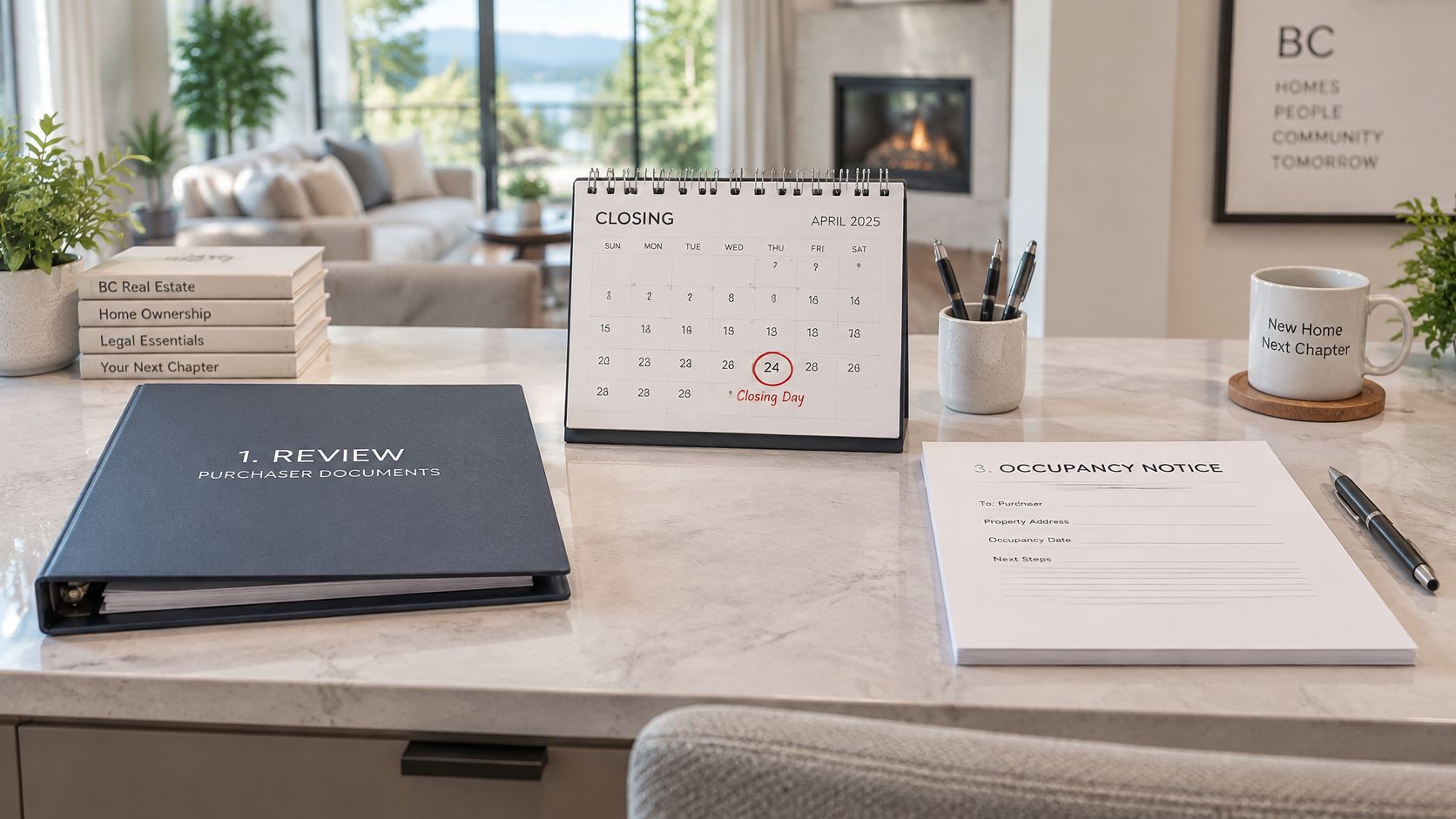
What sequence should the seller follow?
Confirm genuine occupancy intent. Establish whether the purchaser or a qualifying close family member will occupy the particular rental unit. Keep the buyer's signed request naming the intended occupant and describing the intended use.
Resolve the sale conditions. Wait until a sale agreement exists and every condition has been satisfied or properly waived. Keep the signed subject-removal or waiver confirmation with the purchase contract; a verbal statement that financing looks fine isn't the same record.
Check building eligibility. Review whether the property falls within a restricted building category. Keep the property information and any professional advice used to resolve eligibility, rather than relying on an assumption based on how the property is marketed.
Generate the official notice. Use the Residential Tenancy Branch's prescribed form-generation process, not a homemade letter. Retain the generated notice and the service record.
Calculate the effective date from the rental period. Work from the tenant's rent cycle and the applicable notice and service requirements, not backwards from the buyer's preferred moving day. Keep the calculation and the supporting tenancy documents in the file.
Arrange compensation and document payment. Budget the required rent-based compensation before committing the seller's proceeds elsewhere. Keep proof of payment or the properly documented compensation arrangement.
Document the occupancy plan. The purchaser or qualifying family member must begin occupancy within a reasonable period and fulfil the required occupancy commitment. Keep the buyer's written plan, including the intended occupant and expected move-in arrangements.
The BC tenancy notice guide offers additional context for reviewing notice timing. The official process and the circumstances of the tenancy still govern the actual notice.
Which dates must remain separate?
Completion, the notice effective date and physical move-in aren't interchangeable. Completion transfers ownership; the notice addresses the tenancy; actual possession depends on what happens at the property.
A buyer's wish for vacant possession doesn't authorise eviction. Nor should a renovation plan or a different landlord-use purpose be squeezed into a purchaser-occupancy notice because that route appears convenient.
A dispute can delay possession even when the parties have scheduled movers. The contract, financing arrangements and buyer's accommodation plan should allow for that risk, with independent legal advice where the consequences of delay are significant.
Rent Deposits and Records the Buyer Inherits
Completion transfers the landlord's job along with title. The buyer needs enough information to administer the existing tenancy correctly, not merely a rent figure entered on the statement of adjustments.
A change of owner doesn't reset the rent clock. The BC government's rent-increase guidance permits a regular increase only once every 12 months, requires at least three full months' written notice stating the exact amount and effective date, and sets the 2026 residential limit at 2.3%.
Those are time-sensitive rules, so any proposed increase needs checking against the current provincial requirements. A sale isn't grounds for an immediate informal rent change.
What should the seller hand over?
The handover package should let the buyer trace each important obligation back to a document. A clear index is more useful than an unlabelled folder of attachments.
| Record | What the buyer needs to establish |
|---|---|
| Current tenancy agreement and addenda | The terms actually agreed with the tenant |
| Rent ledger | Current rent, payment history, arrears and when rent was established or last lawfully increased |
| Condition-inspection reports | The recorded condition and any unresolved inspection matters |
| Notices served or received | Existing deadlines, claims and disputed issues |
| Security and pet-damage deposit records | What was collected, what must be accounted for and how the buyer receives responsibility |
| Maintenance and communication summary | Outstanding repairs, commitments and the supporting correspondence |
Deposit records deserve particular care. The seller and buyer should confirm handling with their conveyancers before completion, including how the transfer or adjustment will appear in the closing records.
The BC damage-deposit rules guide can help identify the records requiring attention. A voluntary move-out payment should remain separately identifiable rather than being casually combined with a deposit settlement.
How should the handover work?
The seller should prepare a written summary of current rent terms and open tenant issues, then check it against the underlying records. If the ledger shows a balance but correspondence records a repair-related disagreement, the buyer needs both, not just the balance.
A useful handover also identifies the contact change for maintenance and tenancy communication. The parties should coordinate that message so the tenant isn't left wondering who receives rent or handles a leaking fixture after ownership changes.
For an occupied sale, the buyer takes over an occupied property at completion. Contract language should make that operational handover clear rather than describing the home as though it were empty.
Where a move-out has been arranged, physical possession still needs its own planning. It shouldn't be casually promised for the same afternoon as title transfer, particularly when cleaning, key collection or verification of departure remains outstanding.
Handover check: Every rent adjustment, deposit entry and unresolved tenant issue should have a document behind it.
The most useful closing file tells the buyer what must happen next, who is responsible and where the supporting record can be found.
Choose the Path Before You List
Before setting a price or promising vacant possession, decide how the sale will close: the tenant stays, agrees in writing to move out, or a purchaser qualifies for occupancy under the applicable notice process. The sale itself does not end the tenancy. Each path affects the completion date and what the buyer receives.
Gather the tenancy agreement, rent ledger, inspection reports, deposit status and notices. Use these records to identify gaps that could affect pricing or an offer. Owners still weighing a sale can use the Maple Ridge rent-or-sell guide to compare selling the occupied rental with pursuing a move-out.
What should be settled before photography and pricing?
If the tenant may leave voluntarily, settle who will sign the written move-out agreement and when it must be signed. Keep any agreed move-out terms clear and separate from the sale contract. The buyer's possession expectations must match the path the parties can document.
Confirm the intended completion date against the tenancy and any applicable notice process before marketing the property with a vacant-possession date. If the tenant is staying, price and present the property as an occupied rental, with the tenancy records ready for a prospective buyer.
For photography, follow the agreed access arrangements and respect the tenant's belongings. Photo Speak's AI photo editing for property marketers can inform preparation discussions, but editing must not disguise defects or replace consent around personal belongings.
Royal LePage Brookside Realty provides residential and commercial sales, home valuations, investment guidance and licensed residential property management, primarily in Maple Ridge and Pitt Meadows. A local licensee can help assess how the chosen possession path affects pricing and contract terms. For tenancy disputes or notice requirements, consult official Residential Tenancy Branch guidance and, where needed, independent legal advice.
Do not guarantee a sale price or vacant-possession date until the chosen path is documented and its risks assessed. Maple Ridge and Pitt Meadows sellers can contact Royal LePage Brookside Realty to review tenancy documents and plan marketing around a realistic possession strategy.