
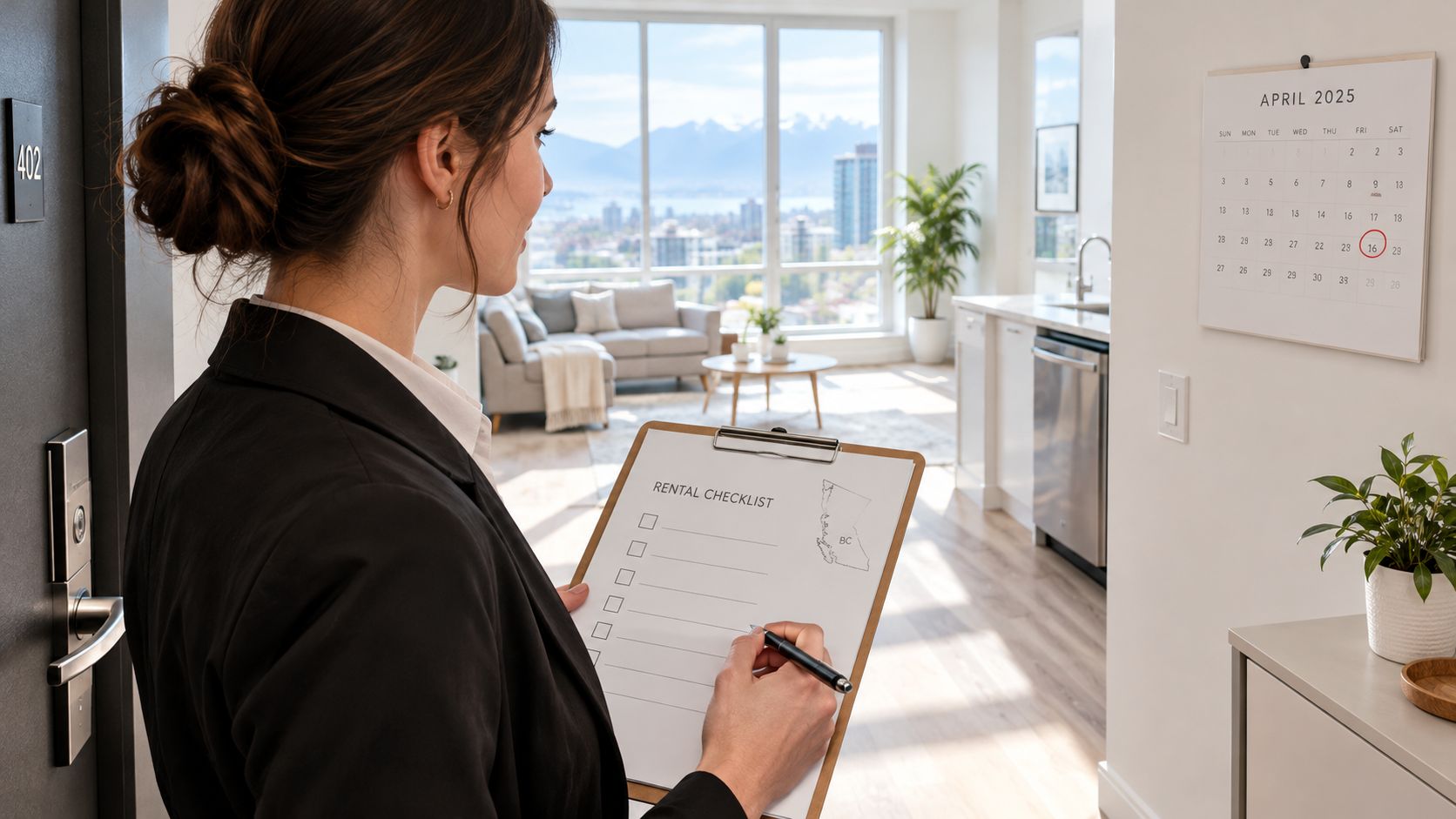
A landlord in Maple Ridge does a quick stop by a unit after hearing about a faint smell near the kitchen. The tenant is annoyed, the visit wasn't scheduled properly, and suddenly a routine check has turned into a dispute about privacy, notice, and whether the landlord had any right to be there at all. That kind of mess is avoidable when the inspection is handled as a compliance task, not a casual favour.
BC landlord inspection rules, notice and checklist work best when every visit can survive a later challenge at the Residential Tenancy Branch. The law is fairly plain on the basics, but the paperwork and timing matter more than many landlords expect. A defensible inspection is about notice, entry time, the right form, and a record that tells the same story months later.
Table of Contents
- What BC landlords can and cannot do during an inspection
- Notice periods, valid reasons, and entry times under the RTA
- The move-in and move-out inspection report
- How the same checklist works at three different stages
- Routine inspections versus repairs versus emergencies
- A practical room-by-room inspection checklist
- Common mistakes that weaken a landlord's position
- Putting it into practice and getting local support
What BC landlords can and cannot do during an inspection
A common Maple Ridge scenario goes like this. A landlord gets a concern about a unit, wants to “just have a quick look,” and thinks that being reasonable should be enough. The tenant hears a knock, asks whether notice was given, and the whole thing shifts from property care to access rights.
That's the wrong way to treat it. In British Columbia, a landlord may inspect a rental unit's condition once per month during an active tenancy, and each routine inspection needs written notice at least 24 hours before entry and no more than 30 days in advance. The province's guidance is clear that a casual visit is not the same thing as a lawful inspection, and repeated informal drop-ins don't become acceptable just because they feel routine. For a landlord who wants a plain-English overview of the broader rights and limits, the Brookside guide to landlord rights in BC is a useful companion.
What the rule is really protecting
The point isn't to make inspections difficult. The point is to stop a landlord from treating occupied housing like an empty asset that can be checked at will. Tenants are entitled to live without surprise entry, and landlords are entitled to protect the unit if they follow the rules.
Practical rule: if the visit would look awkward in writing, it probably needs a proper notice trail.
A proper inspection, a repair visit, and an emergency entry are not interchangeable. The rest of the article breaks those apart so a landlord can match the situation to the right process instead of guessing in the hallway.
Notice periods, valid reasons, and entry times under the RTA
The cleanest way to handle access is to start with the legal sequence and follow it every time. First, confirm the person entering has authority to do so, whether that's the landlord or an agent acting for the landlord. Then confirm the purpose really is an inspection, repair, or another lawful entry, not just a convenient excuse to check up on the tenancy.
Written notice for a routine inspection has to fit a narrow window, at least 24 hours before entry and no more than 30 days in advance. The notice also has to identify the date, the entry time, and a reasonable purpose for entering. Entry generally must happen between 8:00 a.m. and 9:00 p.m., unless the tenant agrees to another time. The province's inspection guidance lays out that monthly condition inspections are permitted, but that permission does not erase the notice requirement.
What belongs in the notice
A notice that says only “inspection” is weak. A notice that says “annual inspection” when the law is about monthly condition inspections is also weak. The better practice is to state a specific purpose that a tenant can understand, such as checking the unit's condition or following up on a reported maintenance concern.
A good notice file should preserve:
- The notice date and delivery method, so there's a record of when and how it was sent.
- The stated reason, so the purpose is obvious later.
- The scheduled time window, so the timing can be checked against the rules.
- The tenant's response, especially if a different time was agreed.
The notice should read like a real record, not a note written to sound official.
If the notice is defective, the landlord has a problem before the door even opens. A Residential Tenancy Branch dispute often turns on whether the landlord can show lawful notice, lawful timing, and a lawful reason. For a broader statutory refresher, the Brookside explanation of the BC Residential Tenancy Act helps frame the access rules inside the larger tenancy system.
The move-in and move-out inspection report
The most important inspection document in a BC tenancy isn't the landlord's memory, it's the Condition Inspection Report. That report is what turns a walk-through into evidence. Without it, a landlord is left arguing over what was damaged, when it happened, and whether the unit showed ordinary wear.
What the report has to capture
BC's inspection process expects the landlord and tenant to inspect together and record the condition on a report such as the provincial RTB-27 form. The report needs the landlord's and tenant's full legal names, the rental-unit address, the date the tenant receives the keys, the landlord's address for service, and the inspection date. It should also show the condition of the unit room by room, along with signatures and dates from both parties.
A practical file should also hold:
- Room-by-room notes, not vague summary language.
- Photo references, especially where there's pre-existing wear or damage.
- Tenant comments, if the tenant disagrees with any item.
- Meter or appliance readings, where they matter.
- The completed copy, kept with the tenancy records.
The Province says the landlord must provide the tenant a copy of the condition inspection report within 7 days after the move-in inspection and within 15 days after the move-out inspection, or within 15 days after receiving the tenant's forwarding address in writing. That deadline matters because the report is only useful if both sides can rely on it at the time the deposit question comes up. For a simple move-out workflow, the Brookside tenant move-out checklist is a practical reference, and landlords who want a broader turnover-style cleanup checklist can also compare it with fast Miami rental turnover tips.
How the same checklist works at three different stages
A solid checklist doesn't change its DNA just because the tenancy has moved on. What changes is the decision the landlord is trying to make with it. In Maple Ridge and Pitt Meadows, the same form can protect the landlord at move-in, keep the tenancy safe in the middle, and settle a deposit question at the end.
Move-in, mid-tenancy, and move-out
At move-in, the unit should be empty unless both parties agree otherwise. That's when the landlord establishes the baseline, notes every pre-existing mark, and photographs anything that could be confused later with damage. The point is to make the unit's starting condition visible, not to race through a checklist and hope the details hold.
At mid-tenancy, the same checklist becomes a safety and compliance tool. The focus shifts to items that can affect habitability or lease compliance, such as alarms, appliances, visible leaks, or signs that a problem needs follow-up. The landlord isn't rebuilding the move-in report. The landlord is confirming the unit is being maintained and that any issue gets written down properly.
At move-out, the checklist becomes a comparison document. It helps separate ordinary wear from damage that likely needs a conversation about responsibility. If the move-in record was done properly, the landlord can compare room by room instead of relying on memory or an old text thread.
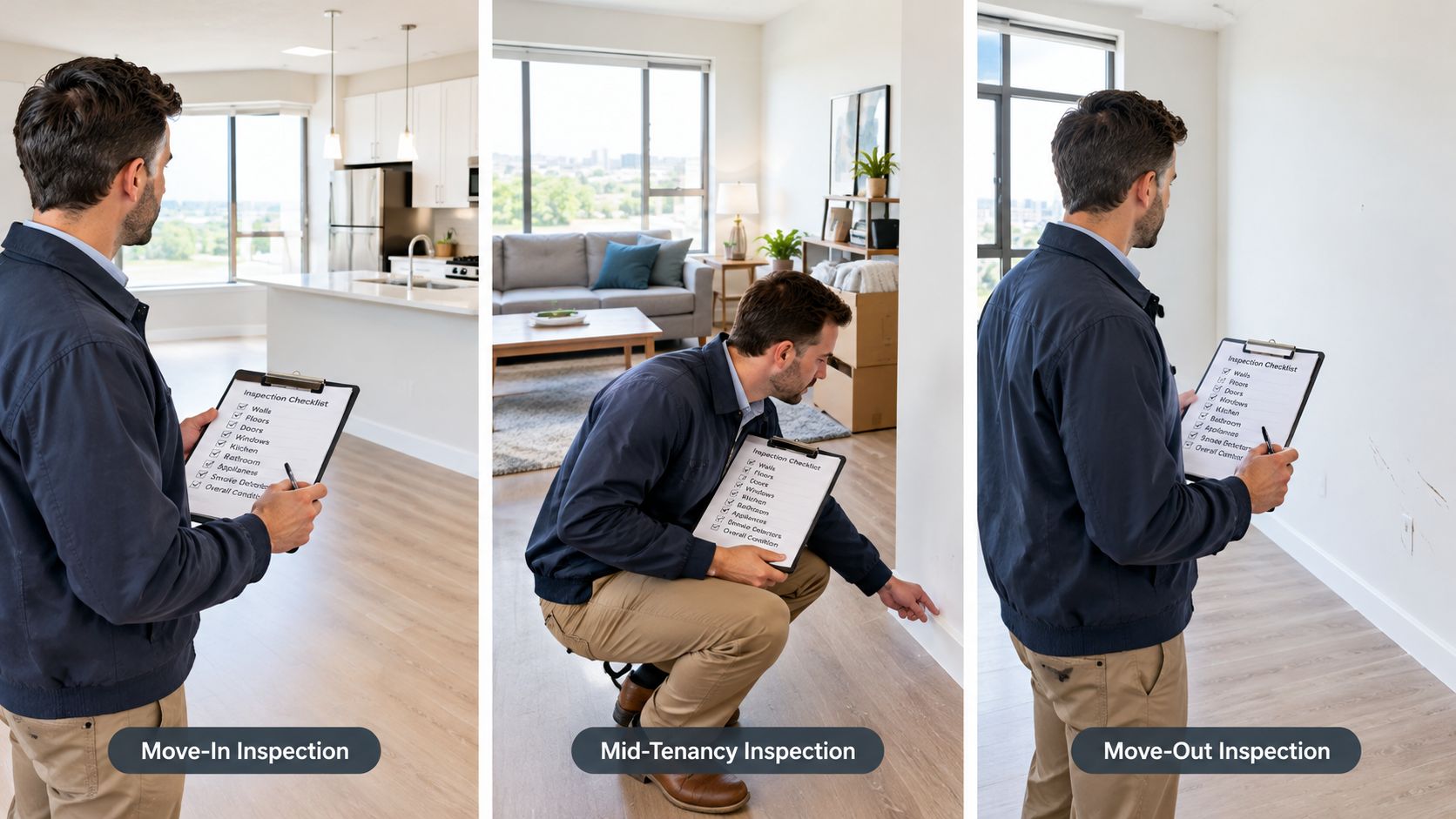
A checklist only earns its keep when it can be compared against the last one.
A careful landlord should keep the same structure across all three stages, then write different notes depending on the purpose of the visit. That consistency is what makes the record useful later.
Routine inspections versus repairs versus emergencies
Not every entry is governed by the same rule, and landlords get themselves into trouble here. A monthly condition inspection is one thing. A repair visit is another. An actual emergency is the exception, not the rule.
| BC entry types and notice requirements | |||
|---|---|---|---|
| Entry type | Written notice | Time of entry | Valid reason |
| Routine inspection | Yes, with the usual notice rules | Generally 8:00 a.m. to 9:00 p.m. unless the tenant agrees otherwise | Check the unit's condition |
| Repair or maintenance entry | Usually yes, unless another lawful route applies | Must still respect lawful access timing | Carry out needed work or assess a reported issue |
| Emergency entry | No, when immediate access is needed to protect life or property | As necessary for the emergency | Address imminent risk to people or property |
That table is where the distinction matters most. A repair request doesn't automatically make the timing urgent, and a landlord's convenience doesn't turn an issue into an emergency. The same goes for drive-by looks, insurance photos, or last-minute “check-ins”, they may feel practical, but they still need to fit the lawful access path.
A useful habit is to write the reason in plain language before the notice goes out. If the reason sounds thin on paper, it usually sounds thin in a dispute too. The record should show the landlord was dealing with a real tenancy issue, not using an inspection as cover for another purpose.
A practical room-by-room inspection checklist
A usable checklist should travel from room to room without losing the legal basics. The foundation is fixed, the party names, rental address, possession date, service address, inspection date, and a signed record of condition for every applicable area. That structure is what makes the report defensible if the tenant later disputes a deduction or says a defect was there first.
What to record as you walk through
The checklist should cover the entryway, living room, dining room, kitchen, bedrooms, bathrooms, stairs and halls, exterior spaces, balconies or patios, yards, garage, parking area, basement, and storage areas where they apply. It should also track tenant-provided-use items such as flooring, window coverings, appliances, furniture, fixtures, electrical outlets, and electronic connections. Every repair or maintenance issue should be written down while it's in front of the landlord, not left for later.
A practical working sheet can include:
- Condition note, using direct descriptions instead of “good” or “fine”.
- Tenant comment, for agreement or disagreement.
- Photo reference, so the image matches the line item.
- Follow-up needed, if a repair or service call is required.
That same logic applies to alarms and other safety items. A separate guide for Brisbane landlords on alarms, the smoke alarm testing resource from DLG Electrical, is useful for understanding how disciplined alarm checks support a clean inspection record, even though BC landlords still need to follow BC rules.
A clean checklist is not about documenting every scratch in a paranoid way. It's about capturing the facts that matter later, especially where a landlord may need to show the condition changed during the tenancy. For a more detailed working template, the Brookside rental property inspection checklist is worth comparing with an in-house form.
Common mistakes that weaken a landlord's position
The mistakes are usually small on the day and expensive later. A landlord thinks a quick verbal heads-up is enough, or assumes the tenant won't care, then discovers the inspection record won't carry much weight when there's a deposit dispute.
Habits that cause problems
- Entering without proper written notice. If the visit wasn't noticed correctly, the landlord starts from the wrong side of the line.
- Treating the inspection as a casual walkthrough. Informal language doesn't fix missing dates, missing reasons, or missing signatures.
- Skipping the tenant signature. Without both parties signing and dating the report, the document is much easier to challenge.
- Reusing an old report. A stale form doesn't prove the condition at the time of the current inspection.
- Relying on memory instead of dated photos. Memory fades fast, photos don't.
If a landlord can't tell the story from the file alone, the file isn't finished.
The cleanest response is to build one process and use it every time. If a dispute still happens, the landlord can point to the signed report, the notice trail, the photos, and the sequence of events instead of trying to reconstruct everything from recollection. For situations that have already gone sideways, the Brookside overview of RTB dispute resolution gives a practical sense of the next step.
Putting it into practice and getting local support
A Maple Ridge or Pitt Meadows landlord can tighten the whole process this week by standardising the notice template, saving proof of delivery, and filing the signed report with its photos right after the visit. The notice should always show the date, entry time, and purpose, and the inspection file should keep the tenant's response, not just the landlord's notes. If a concern looks like more than a routine access issue, it's time to slow down and make sure the next step fits the Residential Tenancy Branch process.
For landlords who want the routine handled carefully, licensed property management can remove a lot of missed steps. Royal LePage Brookside Realty offers local rental management and documented inspection handling in Maple Ridge and Pitt Meadows, which is useful when the priority is getting the paperwork right every time.
Royal LePage Brookside Realty helps landlords in Maple Ridge and Pitt Meadows keep inspections organised, documented and lawful. For local support with rental management, tenant-ready records and tenancy process questions, visit Royal LePage Brookside Realty.