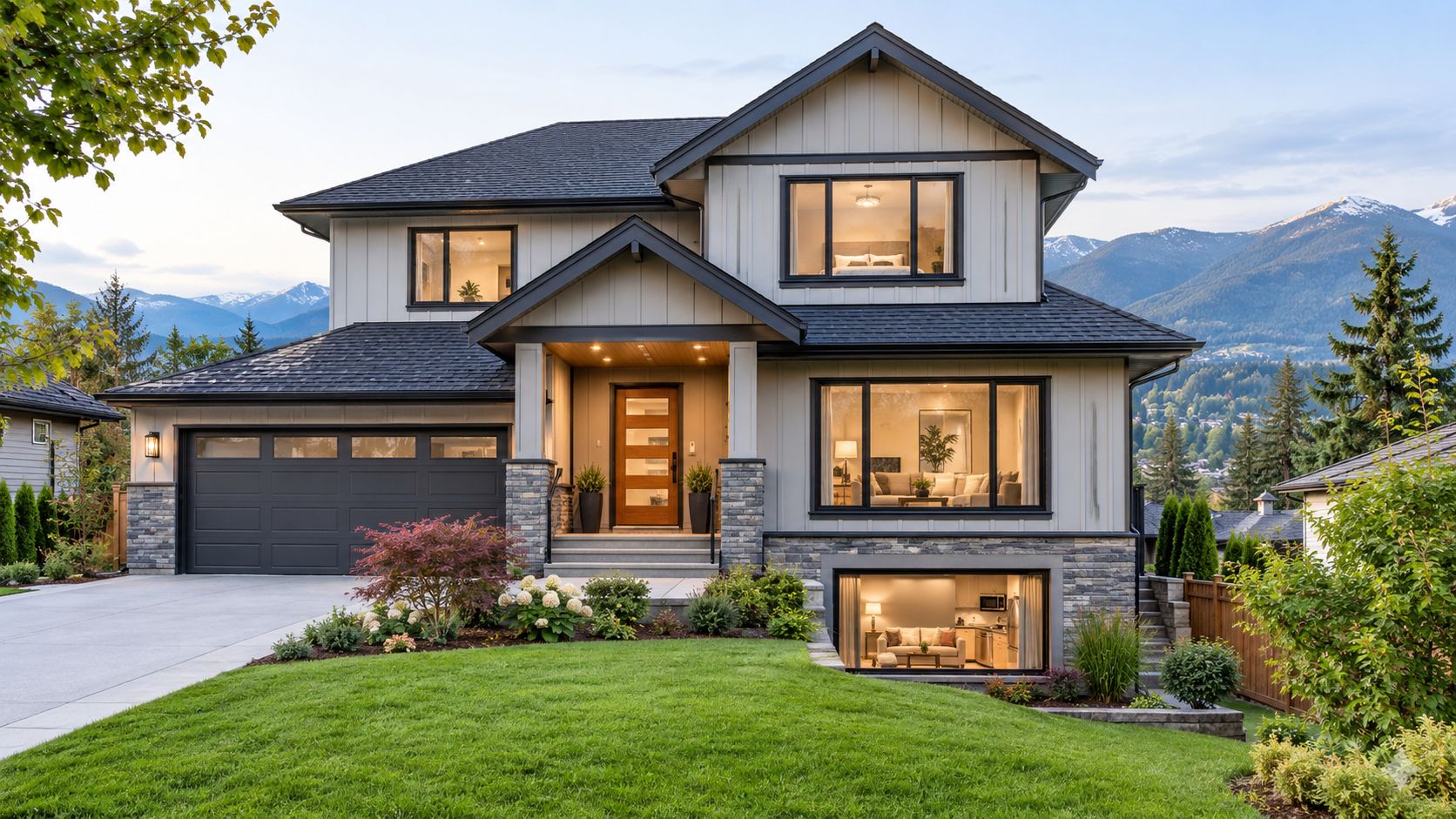

A BC foreclosure purchase is a court-supervised judicial sale controlled by the BC Supreme Court, and the process typically takes roughly 3 to 8 months from offer to completion. Between 1 January and 31 July 2026, detached foreclosures in the Greater Vancouver, Fraser Valley and Chilliwack boards sold at a median of $1,382,000, compared with $1,495,000 for ordinary detached sales, a gap of only 7.6%.
That reality challenges the most popular advice about how to buy a foreclosure property in BC. A court-ordered sale can create an opportunity, but it isn't automatically a bargain. Competition, repairs, insurance, financing uncertainty and the possibility of being outbid after the lender accepts an offer can reduce the apparent discount quickly.
For buyers in Maple Ridge and Pitt Meadows, the right approach is disciplined rather than impulsive. The property needs to be assessed as an as-is purchase, the court timetable needs to fit the buyer's financing, and the maximum price needs to reflect the home's condition after completion, not the excitement of finding a foreclosure listing.
Table of Contents
- Why Foreclosure Discounts Are Smaller Than They Look
- Understanding BC Court-Supervised Sales
- Finding Foreclosure Listings in Maple Ridge
- Evaluating and Bidding on Foreclosure Properties
- Common Pitfalls and Local Considerations
- Working with a Local Maple Ridge Expert
Why Foreclosure Discounts Are Smaller Than They Look
The advertised discount is often the least dependable part of a foreclosure purchase. Recent regional data puts the opportunity in perspective. Between 1 January and 31 July 2026, 232 court-ordered residential sales completed across the Greater Vancouver, Fraser Valley and Chilliwack boards, compared with 140 during the same period in 2025, an increase of 66%. Detached foreclosures sold at a median of $1,382,000, while ordinary detached sales had a median of $1,495,000, a difference of 7.6% (recent BC foreclosure sale data).
That regional median does not predict the result for a particular property in Maple Ridge, Pitt Meadows or another Fraser Valley community. A house needing major repairs, unavailable insurance or unusual financing can cost more overall than a conventional listing with a higher asking price.

Why the discount narrows
A low list price draws attention quickly. Once several buyers identify the same apparent value, the lender's accepted offer becomes the opening position for a court hearing, not a guaranteed final purchase price. Competing bids generally need to be subject-free and supported by a deposit. A prepared buyer can still lose to a stronger bid presented in court.
The property may also have spent months in the legal process before reaching the market. That history does not prove physical distress, but it can leave the buyer with limited information, uncertain access and fewer seller assurances than an ordinary resale provides.
Practical rule: Treat the advertised price as an invitation to investigate, not as proof of equity.
Calculate the full cost before deciding what the property is worth. Include the purchase price, legal work, inspection, immediate repairs, insurance availability, financing carrying costs and the possibility that court approval changes the outcome. Buyers who need a finished, financeable and predictable home may receive better value from a standard resale, even with a higher list price.
The transaction also creates a timing risk. Buyers commonly work through the lender's lawyer, remove conditions such as financing, inspection and insurance, then wait for a separate court approval stage. The court date is typically set 2 to 4 weeks in advance, leaving little time to resolve a financing problem after the offer becomes firm (BC foreclosure process overview). Understanding the broader process helps buyers judge whether the potential saving justifies the uncertainty (BC foreclosure process overview).
Understanding BC Court-Supervised Sales
A foreclosure property in British Columbia is not a normal resale with a distressed seller and a fixed bargain price. The BC Supreme Court supervises the key stages, so an accepted offer remains subject to a later approval hearing. That court stage can create a second bidding contest, add legal uncertainty and reduce the value of any apparent discount.
The process from default to sale
The process usually starts when a lender files a petition in BC Supreme Court. The borrower has 21 days to respond, after which the court may issue an Order Nisi. The order states the amount required to redeem the mortgage and sets a redemption period, usually six months, during which the homeowner can pay the arrears and keep the property (BC court foreclosure practice).
Six months is the usual statutory period, but the court can shorten or extend it when the circumstances justify a different result (BC Laws on redemption periods). If the mortgage is not redeemed, the lender may seek conduct of sale or a final order transferring title to the lender. Conduct of sale allows the property to be marketed and sold under court direction rather than through an ordinary private transaction (foreclosure remedies in British Columbia).
By the time a property reaches the market, much of the legal process may already be complete. The buyer generally does not negotiate directly with the homeowner. The offer moves through the lender's process, then the court decides whether the proposed sale should proceed.
That distinction affects both price and risk. A lender may accept the strongest available offer, but court approval can expose the buyer to a higher competing bid. The buyer can also spend money on inspection, financing work, legal review and insurance arrangements without knowing whether the court will approve the transaction.
The buyer's two-stage timeline
The first stage is offer preparation and due diligence. Arrange financing, inspect the property where access is available, confirm insurance, review title and understand the contract before removing subjects. The second stage is court approval, where another bidder may submit a competing offer.
| Milestone | Timeframe | Buyer Action Required |
|---|---|---|
| Lender files a petition | Early court stage | Obtain professional advice and monitor the legal status |
| Borrower responds | 21 days | Do not assume the property is immediately available |
| Order Nisi and redemption period | Usually 6 months | Wait for conduct of sale or another court direction |
| Conduct of sale and accepted offer | After redemption period | Complete due diligence before removing subjects |
| Court approval hearing | Often set 2 to 4 weeks ahead | Prepare for a subject-free competing bid and deposit |
| Completion | After court approval | Have funds, insurance and legal closing arrangements ready |
The timeframes above come from BC foreclosure practice materials and the Court Rules Act provisions on redemption periods.
Buyers should also separate BC procedure from timelines used in other jurisdictions. The 90-day foreclosure timeline explained describes a different legal setting, so it should not guide a BC offer or court strategy.
The court can set the sale method, appoint the person conducting it, establish a reserve or minimum price, determine who may bid, require payment into court or to trustees, and request evidence of value. After completion, the sale result must be certified and filed promptly under the BC Supreme Court foreclosure rules. Review the property-specific court materials before writing an offer. This explanation of court-ordered sales in BC also helps clarify why an accepted offer is not the same as a completed purchase.
Finding Foreclosure Listings in Maple Ridge
Foreclosure opportunities don't all appear at the same point in the process. Some properties reach the public market after a lender obtains conduct of sale, while others may be visible through court documents, notices or legal representatives before a conventional listing attracts attention. The most useful search strategy combines discovery with verification.
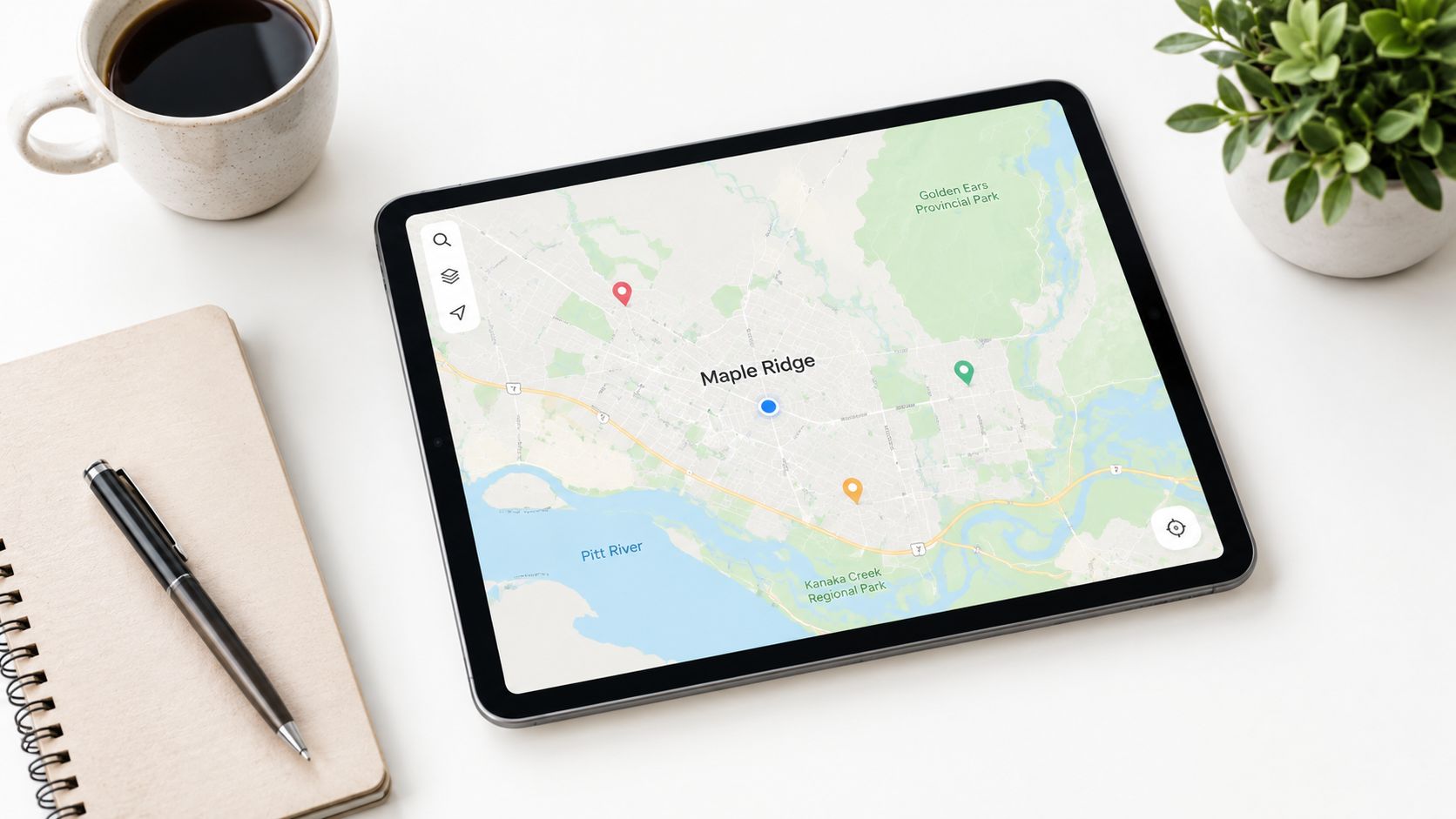
Where buyers can look
Many court-ordered properties are marketed through familiar real estate channels once the lender has authority to sell. Buyers can also monitor public court notices and work with a local representative who follows court activity, lender instructions and upcoming approval dates. Government buildings and court facilities may carry notices, but access, timing and the amount of useful property information can vary.
Direct lender-owned listings can be another category, although buyers need to confirm whether a property is lender-owned or is still being sold under conduct of sale. Those are different legal positions. A property in the foreclosure pipeline isn't necessarily available to purchase, and a public notice doesn't replace title, condition or court-document review.
A practical search should record more than the address. It should capture:
- Legal status: Determine whether the matter is still in redemption, has conduct of sale, or has an accepted offer awaiting approval.
- Sale mechanism: Confirm whether the court has directed private negotiation, auction, tender, a sheriff's sale or another method. BC rules permit several approaches, so the process is property-specific (BC foreclosure sale methods).
- Access conditions: Ask whether an interior inspection is possible and whether the occupant remains in possession.
- Court timing: Record the approval date, deposit requirements and deadlines for competing bids.
- Property evidence: Collect the listing information, title documents, available photographs, disclosures or notices, and any information about zoning or improvements.
A local search needs patience
Maple Ridge and Pitt Meadows buyers shouldn't judge a foreclosure by a single photograph or an asking price. A detached property with deferred maintenance may require a different budget from a condominium with limited exterior responsibility. A home near a preferred school route, commercial area or transportation connection may also attract competition that erases a projected discount.
The search process should be organised around a financial decision, not a hunt for a dramatic bargain. Buyers can use a local guide to houses for foreclosure near Maple Ridge as a starting point, then verify the legal stage and property facts for each opportunity.
A listing that appears early isn't always the best opportunity. Early access may come with less information, while a later listing may provide better inspection access but attract more bidders. The right choice depends on the buyer's ability to fund repairs, tolerate uncertainty and complete the purchase if the court approves the transaction.
Evaluating and Bidding on Foreclosure Properties
A foreclosure offer should be built backwards from the buyer's maximum safe cost. Start with the property's likely completed value, subtract realistic renovation and carrying costs, and allow room for defects that can't be confirmed before the court deadline. The remaining figure is the ceiling, not the opening bid.
Compare the available approaches
The first bidder negotiates through the lender's lawyer and may establish the offer that proceeds to court. This route can give the buyer time to investigate before removing conditions, but it also exposes the buyer to the cost and stress of triggering a public approval hearing. A competing bidder waits for that hearing and may avoid the first negotiation stage, but the bid must be subject-free and ready to close if accepted.
| Strategy | Best For | Risk Level |
|---|---|---|
| Negotiate the first offer | Buyers who can complete due diligence early and want to establish a purchase position | High, because court approval can still attract a higher bid |
| Bid at the approval hearing | Buyers with confirmed funds, strong legal preparation and a clear maximum price | High, because the bid generally can't depend on later financing or inspection |
| Walk away from an unsuitable property | Buyers who find uncertain condition, title or financing risk beyond their tolerance | Lower financial risk, but the opportunity is lost |
The offer may need to be subject-free after negotiations, with a deposit attached. That means financing isn't something to arrange after the court hearing. A lender should review the property and transaction structure early, and the buyer should confirm that insurance is available before making an irreversible commitment.
Inspect what can be inspected
Foreclosure properties are commonly sold as-is under court oversight. If access is available, the inspection should focus on structure, moisture, roof condition, electrical and plumbing systems, heating, windows, appliances and any evidence of unauthorised alterations. A general resource on assessing a Florida home with water damage isn't BC-specific, but it illustrates why visible moisture can require investigation beyond surface repairs.
Title review matters just as much as the physical inspection. A lawyer should assess the title, court order, charges, permitted encumbrances and contract terms. The buyer also needs to understand whether possession will be vacant and what happens if the current occupant remains in the property.
A useful inspection reference is this home inspection checklist for buyers, but no checklist can remove the legal or financial risk of a subject-free bid. It can only make the decision more informed.
Bidding discipline: The strongest bid isn't necessarily the highest number. It's the bid the buyer can fund, insure and complete without relying on an assumption that the property will cost less than it appears.
At court, competing offers may be subject-free and accompanied by a deposit. A buyer should decide the maximum before hearing other bids, because the court setting can encourage emotional escalation. If the approved price exceeds the completed-value calculation, the correct decision is to stop.
Common Pitfalls and Local Considerations
The expensive mistakes usually begin before the bid. A list price can suggest room for profit, but that apparent margin may disappear through repairs, legal work, insurance complications, financing delays and a higher competing offer in court. Buyers need to assess the transaction as a complete project, not as a low purchase price.
The cost of a discount
Use a complete cost model before deciding that a foreclosure is underpriced. For example, a purchase at $1,382,000, followed by $60,000 in repairs and $18,000 in carrying and legal costs, produces an effective cost of $1,460,000 before financing costs, insurance changes or unexpected work. That leaves only a narrow gap against the ordinary detached-sale comparison discussed earlier. The 7.6% median difference can disappear quickly when the property needs more than cosmetic improvements.
The earlier regional finding does not mean every foreclosure is fairly priced. It shows why buyers should not treat the category as a guaranteed deep-discount opportunity. Compare the property with ordinary alternatives in the same Maple Ridge or Pitt Meadows area and property category. Then adjust for condition, lot characteristics, zoning, permitted use and likely resale appeal.
The most common pitfalls include:
- Underestimating repairs: Obtain written estimates where possible. Price unknown systems conservatively, especially when access is limited or the property has been vacant.
- Skipping title review: Charges, registration issues, permitted encumbrances and court-order terms may not be visible during a showing. Have a real estate lawyer review the available documents before making an irreversible commitment.
- Ignoring insurance: Confirm that coverage is available on acceptable terms. Mortgage approval does not guarantee that an insurer will accept the property or its condition.
- Assuming vacant possession: Determine whether the home is occupied and read the sale documents carefully. Possession may involve uncertainty, delay or additional legal work.
- Overbidding at court: A competing offer can turn a reasonable purchase into an ordinary purchase at an unreasonable price, particularly when buyers react to the room rather than their own numbers.
Maple Ridge and Pitt Meadows decisions
Local resale value depends on the property and its surroundings, not the foreclosure label. Review access, nearby uses, lot configuration, permitted suites and municipal requirements. Verify zoning and building history through the appropriate authorities, especially if a suite, addition or conversion supports the financial plan.
The intended exit also changes the risk calculation. Someone buying a long-term home may accept renovation work but have little tolerance for uncertain possession. An investor may understand construction risk yet still need enough capital to cover delays, interest and a slower resale.
A guide to foreclosures versus court-ordered sales in BC can clarify the terminology. It cannot determine whether a particular Maple Ridge transaction suits the buyer. That decision depends on the order, documents, property condition, financing and exit plan.
A foreclosure creates value only when the buyer understands every cost between court approval and a usable, financeable property.
Court pressure can also distort judgment. After losing one bid, a buyer may raise the budget on the next property to avoid another disappointment. Set a written maximum before the hearing, including repair, legal, carrying and insurance allowances. If the approved price exceeds the completed-value calculation, stop.
Working with a Local Maple Ridge Expert
Court-ordered purchases require coordination between the buyer, lender, lawyer, inspector, insurer and the person handling the sale. A local real estate professional can help identify the legal stage, request available documents, organise access and prepare an offer that reflects the court timetable. The professional can't guarantee approval, a discount or a successful bid.
Local knowledge also helps with the less visible part of the decision. A representative familiar with Maple Ridge and Pitt Meadows can help buyers compare a foreclosure with ordinary homes, assess likely resale considerations and question assumptions about renovations, suites or neighbourhood demand. That perspective is useful when the court process creates pressure to act quickly.
Royal LePage Brookside Realty is a family-owned brokerage in downtown Maple Ridge with local roots dating to 1969 and ownership under Jim Isherwood since 1982. Its services include residential and commercial sales, home valuations and investment guidance, with primary coverage in Maple Ridge and Pitt Meadows and additional service in Mission, Abbotsford and the Fraser Valley.

Buyers can also review guidance from a Maple Ridge real estate expert before deciding whether a court-ordered purchase fits their finances and timeline. The practical objective is simple, assess the property without assuming a bargain, prepare for court competition and proceed only when the buyer can complete the transaction safely.
Royal LePage Brookside Realty offers local guidance on foreclosure searches, property comparisons, valuations and the coordination required before a BC court approval hearing. Buyers considering a court-ordered property in Maple Ridge, Pitt Meadows or the Fraser Valley can visit Royal LePage Brookside Realty to start a focused discussion about suitable opportunities and the risks to review before bidding.