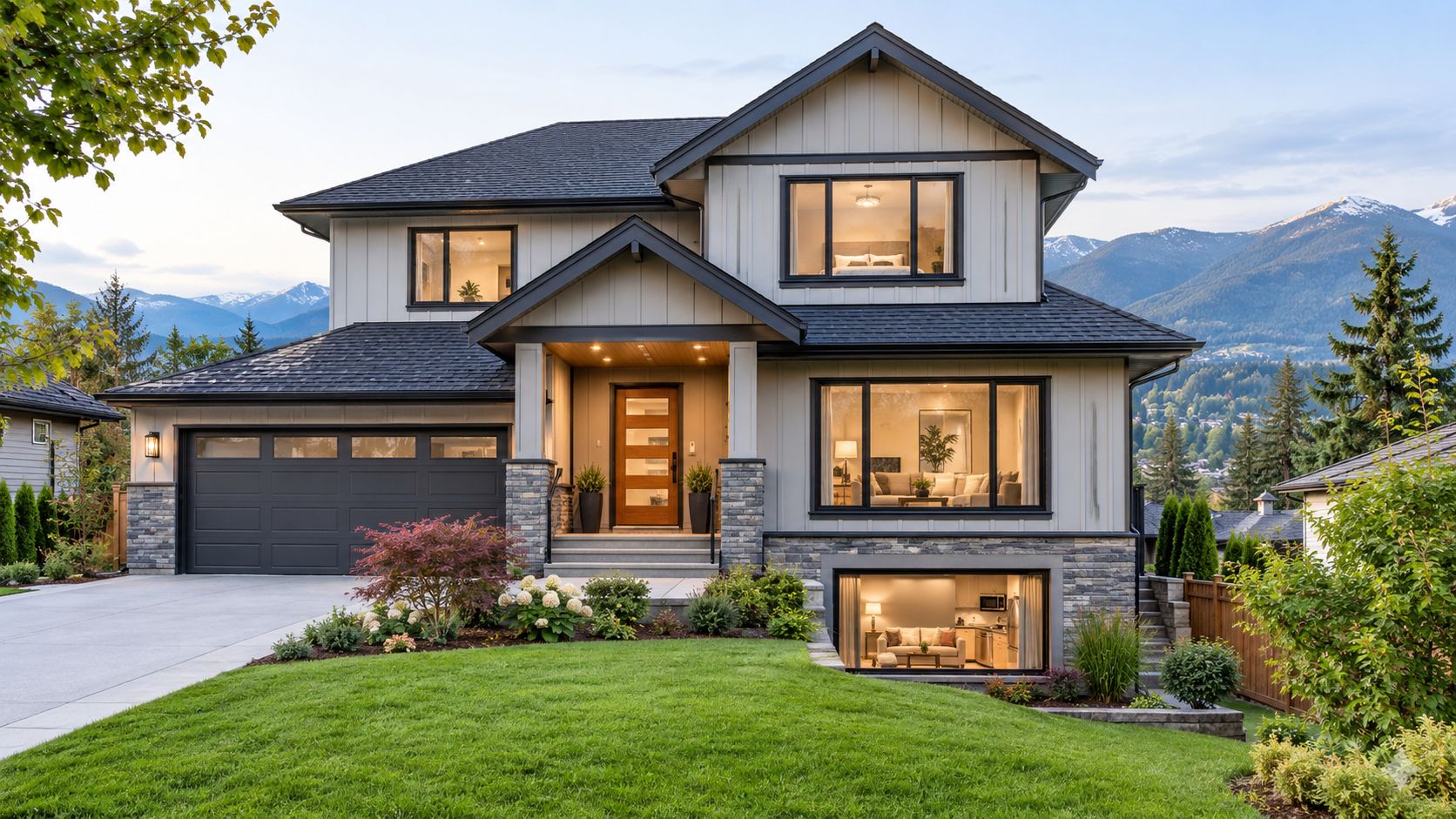

Maple Ridge detached-home benchmarks sit at $578,400, near 44 per cent of the $1,305,600 Metro Vancouver benchmark, making ownership access significantly more realistic while daily costs remain comparable across most categories. Vancouver still offers shorter urban commutes and a different housing mix, but the largest financial distinction is the entry point for a detached home.
That distinction changes the decision. The cost of living in Maple Ridge vs Vancouver is not just a question of whether groceries or utilities cost less in one municipality. It's about whether a household can buy the type of home it wants, how much cash remains after housing costs, and whether the commute and local routine suit daily life.
Table of Contents
- The Maple Ridge and Vancouver Cost Gap at a Glance
- Housing Ownership and Rent Comparisons
- Monthly Expenses Beyond Housing
- Understanding Maple Ridge Property Taxes
- Who Benefits Most from Moving to Maple Ridge
- Practical Steps for Buyers and Sellers in Maple Ridge
- Next Steps and Local Guidance
The Maple Ridge and Vancouver Cost Gap at a Glance
The detached-home entry gap is about $727,200. Maple Ridge detached housing is listed at $578,400, compared with $1,305,600 across Metro Vancouver, according to the local detached-home benchmark comparison. For a buyer comparing similar detached properties, that difference can affect the required down payment, mortgage size, home condition and funds available for repairs.
See how the Vancouver benchmark price translates across Metro Vancouver for added context. A lower Maple Ridge purchase price does not automatically mean a low-cost household. It changes the ownership calculation first, especially for buyers who need a yard, extra rooms or more storage.
Monthly spending shows a smaller gap. One comparison estimates costs including rent at $2,668 for one person in Maple Ridge and $2,783 in Vancouver. For a family of three, the estimates are $4,929 in Maple Ridge and $5,278 in Vancouver. The same comparison places Maple Ridge at roughly 4 per cent less overall, with utilities and internet contributing to the difference.
| Cost area | Maple Ridge | Vancouver | What it suggests |
|---|---|---|---|
| One-person monthly costs with rent | $2,668 | $2,783 | A modest overall difference |
| Family-of-three monthly costs with rent | $4,929 | $5,278 | Household composition affects the gap |
| Detached benchmark | $578,400 | $1,305,600 Metro Vancouver benchmark | Ownership entry creates the clearest difference |
These figures are directional, not a personal budget. A renter's monthly cost depends on unit size, building services, parking, utilities and lease terms. An owner must also account for financing, insurance, maintenance, property taxes and the home's condition. The same municipality can produce very different results for two households.
Where the difference matters most
Maple Ridge has its clearest financial advantage for buyers comparing detached ownership. A household that would stretch to purchase a detached home in Vancouver may have more choice in Maple Ridge, including different property conditions, lot sizes or usable living space. The trade-off is that rent parity is much closer. Renters may see only a modest monthly saving, so moving east solely to reduce rent may not produce the same benefit as buying.
Maple Ridge still carries substantial housing costs. Its benchmark housing market is listed at $890,800 in early September 2026, while average rent is listed at about $1,972 per month in the broader comparison. The ownership gap is therefore the more useful point of comparison, not a claim that Maple Ridge is inexpensive across every category.
Practical rule: Compare the monthly payment for a specific Maple Ridge property with the payment for the Vancouver property type the household would otherwise buy. Include taxes, insurance, maintenance and commuting costs before deciding whether the ownership gap outweighs the location trade-off.
Housing Ownership and Rent Comparisons
A detached benchmark of $578,400 in Maple Ridge compares with $1,305,600 across Metro Vancouver. Maple Ridge therefore sits at roughly 44 per cent of the regional benchmark, a difference of about $727,200 (detached housing benchmark figures). For buyers focused on detached ownership, that entry-point gap is the strongest financial reason to compare the two markets.
| Metric | Maple Ridge | Metro Vancouver |
|---|---|---|
| Detached single-family benchmark | $578,400 | $1,305,600 |
| Relationship to Metro Vancouver benchmark | Roughly 44 per cent | 100 per cent regional benchmark |
| Benchmark gap | About $727,200 lower | Regional comparison point |
These are benchmark figures, not guarantees for a specific listing. A Maple Ridge home may differ from a Vancouver property in age, condition, lot size, location and usable space. Even so, the lower purchase price can give a buyer more choice within the same financing capacity. It may also leave more room for repairs, renovations or future financial flexibility.
The ownership advantage needs a property-level budget. Buyers should include the mortgage, property taxes, insurance, utilities, repairs, strata costs where applicable, commuting and a reserve for irregular expenses. A lower purchase price can improve debt-service comfort, while a home needing substantial work may absorb part of that benefit. Buyers weighing Maple Ridge or Pitt Meadows can also review this comparison of buying a home versus renting before choosing between tenure options.
Rent is a closer comparison
Rental figures narrow the gap. An October 2025 comparison lists Metro Vancouver rental-zone averages of $1,426 for a one-bedroom, $1,653 for a two-bedroom and $2,026 for three bedrooms or more. The corresponding Vancouver census metropolitan area averages are $1,807, $2,364 and $2,820. The same comparison lists average two-bedroom rent at $864 in Maple Ridge versus $1,368 in Vancouver.
Those figures vary by source, geography and rental sample. They should guide a like-for-like search, not serve as a promise of what a tenant will pay. Building quality, parking, utilities, availability and proximity to employment can narrow the monthly difference.
Rent parity is where Maple Ridge gives back some of its ownership advantage. A renter may save less than a buyer gains from the detached-home price gap, particularly when the available Vancouver and Maple Ridge units differ in size or condition. Moving east solely for a lower lease may therefore produce a smaller benefit than moving to access ownership or more usable space.
For renters planning to buy, Maple Ridge can support a savings strategy when space and a future purchase matter. A tenant whose work and social commitments remain concentrated in Vancouver must also price routine travel, time and transportation costs. The sound comparison is rent plus commuting, not rent alone.
Monthly Expenses Beyond Housing
Housing creates the clearest ownership gap between Maple Ridge and Vancouver, but monthly spending still shapes whether that advantage works for a particular household. Groceries, clothing, personal services and household purchases depend on shopping habits, provincial costs and the retailers available nearby. A move east may lower some bills without making every receipt smaller.
Utilities and internet can create a local difference, especially when comparing similar homes. The estimate discussed earlier places Maple Ridge's overall monthly cost below Vancouver's, with utilities and internet identified among the main contributors. Treat that finding as a broad reference point, not a promise for a specific property. Home size, heating system, occupancy and service plans can change the result considerably.
A detached home that is within reach for an owner may still come with different operating costs than a Vancouver property. Larger lots can require more maintenance, while older homes may need attention to heating, plumbing, insulation or exterior upkeep. Those expenses do not appear in a simple purchase-price comparison.
Commuting can reverse the apparent saving
A resident who works in Vancouver may spend enough time and money travelling to reduce the practical benefit of a lower-cost home. The effect depends on the employer's location, work schedule, vehicle use, parking, transit arrangements and the number of daily trips. A household with local work patterns may keep more of the housing saving than one travelling into Vancouver regularly.
Test the commute at the times you expect to travel. A map distance does not show congestion, transfer time, parking availability or the cost of using a vehicle. A transit-dependent renter and a two-vehicle homeowner can experience the same location very differently.
Build a household budget by behaviour
Use the actual property and routine rather than a regional average:
- Utilities and internet: Confirm what the lease, strata fee or purchase arrangement includes, then price the remaining services for the specific home.
- Transportation: Calculate commuting, parking, fuel, insurance and vehicle maintenance. Include school, childcare and regular shopping trips where they apply.
- Groceries and services: Compare the household's normal shopping pattern, including how often members travel elsewhere for appointments or activities.
- Insurance and maintenance: Owners should budget for home insurance, repairs and ongoing upkeep. This guide to home insurance costs in British Columbia outlines the categories to include.
Non-housing costs are generally closer between the two locations than detached-home purchase prices. That keeps the ownership-entry gap meaningful, while rent parity can give Maple Ridge less of an advantage for tenants. A move makes stronger financial sense when the household can work locally, use the additional space or accept the commute without undermining its monthly budget.
Understanding Maple Ridge Property Taxes
Maple Ridge property tax is not a single municipal charge. The 2026 property tax notice combines municipal taxes, utility services and levies from other taxing authorities, including the Province, BC Assessment and TransLink. Rates are applied per $1,000 of assessed value, rather than charged as a flat annual fee (Maple Ridge property tax rate bylaw and attachments).
That distinction matters when comparing the ownership-entry gap between Maple Ridge and Vancouver. A lower purchase price can make a detached home more accessible, but the monthly carrying cost still depends on assessed value, tax rates, utilities and other levies. Rent parity may give tenants less of a financial advantage than buyers receive from the ownership gap.
Purchase price affects financing, while property tax is calculated from assessed value and applicable annual rates. Those figures do not always match market value, so buyers should review both before treating an estimate as final. The difference is explained in this guide to assessment versus market value.
What the 2026 increase means
Maple Ridge council approved a 3.5 per cent property tax increase for 2026. The city's budget explanation gives an example of about $101 for a property assessed at the local average value of $1.04 million (2026 Maple Ridge property tax explanation). That is an example, not a standard bill. The property's assessment, services, utility charges and other levies can change the final amount.
Request current tax information for any property under consideration and include it in the monthly ownership calculation. Sellers should expect buyers to assess taxes alongside mortgage costs, insurance and maintenance when setting an offer.
Owners planning exterior work can use landscape design software for homeowners to organise ideas, while keeping contractor pricing and municipal requirements separate from the tax estimate.
Who Benefits Most from Moving to Maple Ridge
Maple Ridge tends to suit households that place a high value on ownership access and usable space. It can be a logical option for a first-time buyer whose Vancouver budget supports only a smaller property type, provided the buyer is comfortable assessing commute costs and local services alongside the mortgage.
A move-up family may see the detached-home gap differently. The benefit isn't a lower price alone. It may be the ability to trade a constrained layout for additional rooms, outdoor space or a home that better fits the household's next stage. That choice still requires careful review of school catchments, daily travel and the condition of the property. School availability and catchments should be verified directly before an offer, because they can change the practical value of a location.
Different households experience the gap differently
- First-time buyers may gain the most from a lower ownership entry point, but shouldn't stretch just because a home costs less than a comparable Vancouver property. A sustainable payment matters more than the maximum approval.
- Move-up families can use the price difference to assess more space, but the calculation should include commuting, maintenance and any renovation work.
- Downsizers may prefer to remain closer to Vancouver if access to established routines matters more than additional space. Maple Ridge can still work when the desired property and local convenience outweigh the distance.
- Landlords and investors need to examine rent, vacancy assumptions, insurance, maintenance, taxes and financing together. A lower purchase price alone doesn't establish a suitable investment.
Pitt Meadows belongs in the same practical conversation, particularly for buyers who are comparing eastern communities rather than focusing only on Vancouver boundaries. Mission and Abbotsford may become relevant when the ownership budget is the primary constraint, but those choices bring their own commuting and service considerations. They shouldn't be treated as interchangeable with Maple Ridge.
The lower entry price works best for households that can use the space and accept the location. It works poorly for households that buy on price alone, then discover that every essential routine requires a long trip.
A buyer's priority list should therefore rank three things before viewing homes: the acceptable monthly housing cost, the maximum tolerable commute, and the property features that justify the move. That process turns a broad affordability claim into a decision that can be tested.
Practical Steps for Buyers and Sellers in Maple Ridge
Buyers and sellers need different forms of local analysis, but both benefit from current, property-specific evidence. Broad city comparisons establish context. They don't set an offer price or prove what a particular home will sell for.

A buyer should first define the complete carrying-cost limit, including taxes, insurance, utilities, repairs and commuting. Next, comparable properties should be assessed by type, condition, location and recent market evidence rather than by asking price alone. Pitt Meadows should be evaluated as its own market choice, not as a simple extension of Maple Ridge.
A seller's preparation should begin with a realistic valuation and a review of the home's condition. Pricing strategy, presentation, timing and negotiation expectations need to reflect the property and its likely buyer pool. A high asking price unsupported by comparable evidence can reduce useful feedback, while under-preparation can make buyers focus on avoidable concerns.
For a landlord, the same discipline applies to projected income and expenses. Rent, insurance, taxes, repairs and professional management should be reviewed before deciding whether a property fits the investment plan. Royal LePage Brookside Realty provides residential and commercial sales, valuations, investment guidance and licensed residential property management for clients in Maple Ridge and Pitt Meadows.
Next Steps and Local Guidance
The central finding is straightforward. Maple Ridge offers its clearest financial advantage at the detached-home ownership entry point, while rent and everyday household costs can sit much closer to Vancouver than buyers expect. Commute patterns, property condition, taxes and maintenance determine whether the headline saving becomes a practical benefit.
Buyers, sellers and landlords should use current property-level information before making a decision. The Maple Ridge real estate guidance resource can help frame the local questions, but each valuation, purchase and rental plan still needs individual review.
Royal LePage Brookside Realty helps buyers and sellers evaluate Maple Ridge and Pitt Meadows homes through local valuations, property comparisons and transaction guidance. Landlords can also discuss licensed residential property management and carrying-cost considerations. Visit Royal LePage Brookside Realty to arrange a conversation based on the property, budget and commuting priorities.