
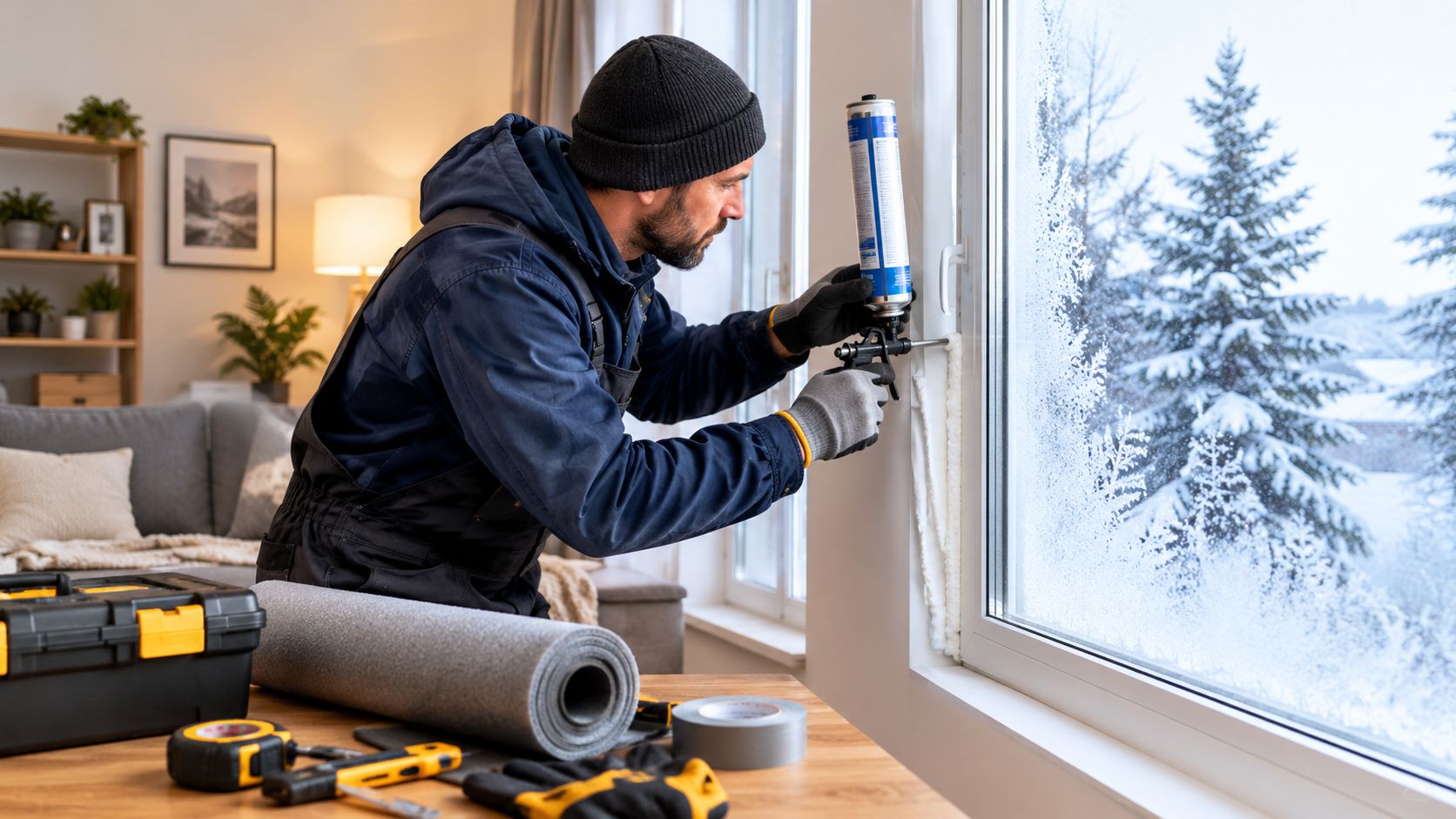
A cold snap arrives overnight, the tenant texts about a heating failure before breakfast, and the landlord discovers that an exterior hose bib was never drained. In Maple Ridge, that combination can turn a routine seasonal task into frozen plumbing, water damage, an urgent repair, and a tenancy dispute.
How to winterize a rental property in BC starts with more than insulation and weatherstripping. Landlords need a repeatable process that protects the building, preserves essential services, respects tenant responsibilities, and creates a clear record of what was inspected and repaired.
Table of Contents
- Understanding Your Legal Heating Obligations
- Executing the Plumbing Shutdown and Protection Sequence
- Diagnosing Heat Loss and Improving Insulation
- Managing Vacancy Risk and Insurance Requirements
- Coordinating Tenant Behaviour and Emergency Protocols
- Finalizing Your Winter Readiness Plan
Understanding Your Legal Heating Obligations
A winter checklist is also a compliance document. In British Columbia, landlords must keep rental units and the property in a condition that meets health, safety, and housing standards. Provincial guidance identifies heating, hot water, electricity, door and window locks, and fire-safety features as basic systems that must remain available for a livable tenancy. Landlords must also arrange repairs within a reasonable amount of time after receiving notice of a problem. The province's repairs and maintenance guidance explains the baseline, while landlords needing broader context can review this BC Residential Tenancy Act explanation.
That duty matters most when temperatures fall. A failed furnace, a plumbing leak, or drafts that leave parts of a unit dangerously cold can affect whether the home remains reasonably suitable for occupation. A landlord who delays action because a contractor is inconvenient, or because the tenant has another small heat source, may be creating a larger habitability problem.
Practical rule: Treat every report of lost heat, frozen plumbing, or a major leak as a time-sensitive maintenance matter. Record when the tenant reported it, what response was arranged, and when access was provided.
The temperature conversation
BC Housing's tenant handbook advises residents not to reduce indoor heat below 15°C (59°F) during winter, even when they'll be away for a long period. That benchmark is useful when communicating with tenants because low indoor temperatures can increase the risk of frozen pipes and damage, particularly near exterior walls, utility closets, crawlspaces, and other poorly protected areas.
The landlord still remains responsible for maintaining the heating system. Tenant communication supports the building's protection, but it doesn't replace functioning equipment, prompt repairs, or a sensible inspection routine.
Before freezing weather, the landlord should confirm that the heating system operates, explain how to report a failure, and identify the emergency contact who can respond. A written protocol is more reliable than an assumption that everyone understands what to do.
Executing the Plumbing Shutdown and Protection Sequence
Frozen plumbing usually reflects a sequence failure. The exterior tap remains connected to a hose, the interior valve is never closed, or a pipe in an unheated cavity is overlooked. A Maple Ridge landlord should follow the same order at every property and keep a simple record that another person can understand.

A practical shutdown order
Test the main shutoff. Locate the valve, confirm that it operates, and note its position. If it's difficult to turn, arrange service before an emergency requires it.
Close exterior hose bib valves. The interior shutoff should be closed before the outside line is drained. Leaving the bib pressurized allows water to remain vulnerable when temperatures drop.
Remove hoses and drain exterior lines. BC Housing specifically advises shutting off outside taps from inside the unit and removing hoses from hose bibs. Tenants should receive this instruction in writing, particularly where exterior taps are accessible from the rental unit.
Protect exposed supply lines. Inspect crawlspaces, basements, utility rooms, and other unheated areas. Use suitable insulation or approved heat-trace where appropriate, and pay attention to pipes in exterior-wall cavities or enclosed cupboards.
Label and photograph the system. Mark the main shutoff, exterior valves, drain points, and protected pipe runs. A superintendent or contractor should be able to reverse the process without guessing.
BC condominium winterizing guidance recommends maintaining minimal indoor heat of 16°C and shutting off water to hot-water tanks and appliance lines when a unit will be vacant. Those measures should be applied only with attention to the property's systems and the insurer's requirements. The BC winterizing buildings guidance provides useful detail for documenting the sequence, while this home plumbing winterization guide offers additional general plumbing context.
A rental inspection record should include valve locations, visible insulation, signs of moisture, and any contractor recommendations. The rental property inspection checklist can help organise that documentation.
Diagnosing Heat Loss and Improving Insulation
Lowering heating costs shouldn't mean lowering the temperature to a point that places plumbing or habitability at risk. The better approach is to find where heat escapes, correct the practical defects, and separate low-cost maintenance from larger capital work.
Start with an occupied inspection arranged according to the tenancy's access rules. Check whether rooms feel unevenly heated, whether air moves around window and door frames, and whether curtains or furniture block radiators or vents. Inspect weatherstripping, caulking, vents, attic access points, basement ceilings, and exposed pipes. A handheld temperature reader can help identify colder surfaces, but a visible draft, damp insulation, or condensation pattern often points to the underlying issue.
Spend where the building needs it
Small air leaks around a door or window may respond to new weatherstripping or properly applied sealant. Larger problems, such as damp or incomplete insulation in a crawlspace, require a more careful assessment because covering a moisture problem can trap damage rather than solve it.
The trade-off is straightforward:
- Routine sealing and adjustment usually address immediate comfort and heat loss without major disruption.
- Insulation improvements can protect vulnerable plumbing and improve temperature stability, but the scope should be confirmed before committing to a larger project.
- Heating equipment work should be handled promptly where performance or safety is in question. A cheaper temporary fix isn't a substitute for a reliable primary system.
BC Housing advises occupants to use bathroom and kitchen fans, or open windows when appropriate, to reduce condensation. That matters because winter preparation isn't only about keeping cold air outside. Moisture control helps reduce dampness and mould risk, while the landlord remains responsible for most rental-unit repairs and the tenant remains responsible for reporting maintenance needs and performing basic upkeep. The BC retrofit accelerator update may be useful background when a landlord is considering broader building improvements.
Managing Vacancy Risk and Insurance Requirements
A vacant rental creates a different decision than an occupied home. Keeping heat operating helps protect the building, but a landlord must also understand what the insurance policy requires. Shutting off water and draining lines can reduce plumbing exposure, but doing so without considering heating, appliances, or property systems can create separate risks.
The Insurance Bureau of Canada says standard policies usually cover resulting damage from frozen or burst pipes only when the pipes are in the heated portion of the home and reasonable steps were taken to maintain heat. It also advises shutting off water and draining lines in vacant homes. The extreme-cold insurance guidance should be read alongside the specific wording of the landlord's policy.
| Strategy | Upfront Cost | Insurance Risk | Best Use Case |
|---|---|---|---|
| Keep heat operating | Ongoing utility and monitoring cost | Heat failure or inadequate monitoring may affect coverage | Short vacancy where systems remain active |
| Shut off water and drain lines | Contractor time and possible system-specific work | Incorrect draining or failure to follow policy conditions can create uncertainty | Vacancy where the insurer specifically supports this approach |
| Maintain heat with documented inspections | Inspection or management cost | Missed inspections may undermine the protection expected by the policy | Property requiring active oversight during vacancy |
| Arrange insurer-approved vacancy coverage | Additional policy cost may apply | Existing coverage may not respond as expected once occupancy changes | Longer or uncertain vacancy periods |
The correct choice depends on the property and policy, not a generic online checklist. Before a tenant moves out, the landlord should ask the insurance broker when vacancy begins, whether water damage restrictions apply, whether inspections are required, and which winterization steps preserve coverage.
A general landlord insurance guide can help identify questions to raise, but it isn't a substitute for BC policy wording. Landlords can also review this rental property insurance coverage resource when organising their records and renewal questions.
Coordinating Tenant Behaviour and Emergency Protocols
A well-maintained rental can still suffer damage if occupants don't know what to report or whom to contact. The landlord should provide a short seasonal notice that explains how tenants can help protect the unit without shifting the landlord's maintenance duties onto them.
The notice should cover:
- Exterior water: Remove hoses and report a tap that won't shut off or drain.
- Indoor temperature: Avoid turning heat below the advised winter level, especially during an extended absence.
- Ventilation: Use kitchen and bathroom fans to manage condensation.
- Access: Respond to lawful inspection and repair notices so urgent work isn't delayed.
- Emergency contact: Call the designated number immediately for lost heat, frozen pipes, or a major leak.
Frozen pipes and major pipe leaks are identified as repair emergencies in BC tenancy materials. Tenants are expected to notify the landlord promptly about frozen pipes because delayed reporting can increase the risk of serious water damage, as outlined in the repairs and maintenance factsheet.
Make the response traceable
The emergency protocol should state what counts as an emergency, provide a primary and backup contact, and explain what information the tenant should send. A useful report includes the room or fixture affected, whether water is flowing, whether heat is operating, and whether the tenant can safely access the main shutoff.
The landlord should keep copies of texts, emails, notices, contractor instructions, invoices, and access arrangements. This record helps the contractor work faster and demonstrates that the landlord responded rather than relying on informal conversations. Tenants looking for answers about reporting and maintenance can also consult the tenant FAQ.
Finalizing Your Winter Readiness Plan
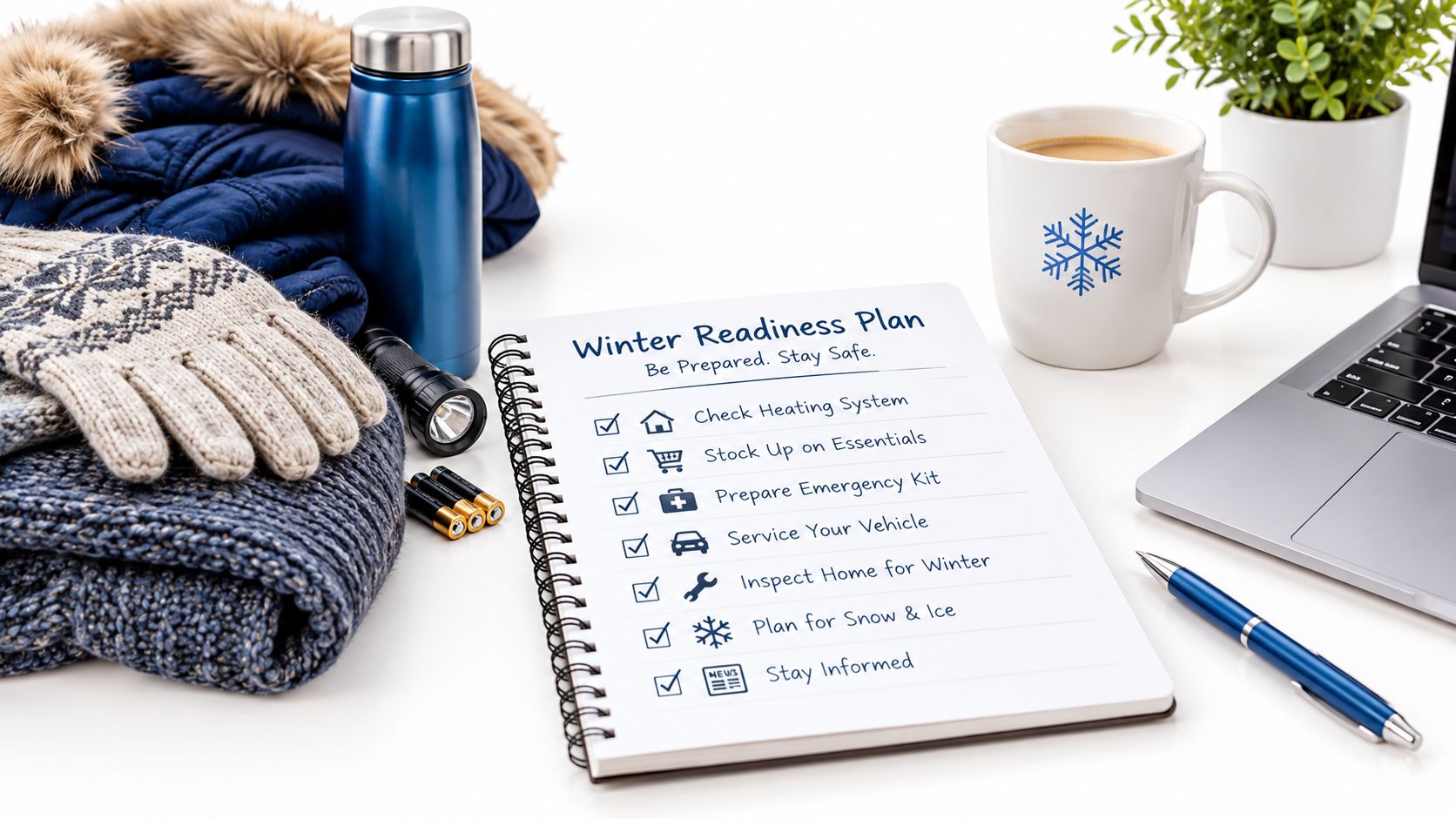
Winter readiness works best as a dated, repeatable process. Before freezing weather, the landlord should inspect heat sources, test detectors, confirm emergency contacts, review exterior plumbing, assess exposed pipe protection, and plan safe access for snow and ice. The property file should show who completed each task and what remains outstanding.
The final landlord checklist
- Heating: Verify operation and arrange prompt service for defects.
- Plumbing: Test the main shutoff, close exterior valves, remove hoses, drain exposed lines, and protect vulnerable runs.
- Moisture: Confirm ventilation works and investigate condensation or damp insulation.
- Safety: Test detectors and keep access routes usable during snow or ice.
- Communication: Give tenants written reporting instructions and an emergency contact.
- Vacancy: Notify the insurer before occupancy changes and follow the policy's heat, inspection, water, and drainage conditions.
- Records: Save photographs, valve labels, inspection notes, notices, and repair timelines.
Provincial tenancy guidance also places responsibility for winterizing tanks and fields where necessary on landlords, while tenants must report maintenance issues during the tenancy. It recommends practical preparedness measures for occupants, including strategic window-covering use, heating occupied zones, and keeping flashlights, batteries, warm blankets, and backup power available during outages. Further roof-specific maintenance questions can be considered with these roof winterization steps for homeowners.
A written protocol protects more than pipes. It helps landlords respond consistently, coordinate access, and show that heating and repair obligations were taken seriously.
Royal LePage Brookside Realty provides licensed residential property management, tenant placement, documented inspections, maintenance coordination, and emergency response support for rental owners in Maple Ridge and Pitt Meadows. Landlords preparing a property for winter can visit Royal LePage Brookside Realty to discuss practical management support for year-round BC tenancy responsibilities.