A homeowner in Albion can spend an evening counting bedrooms, checking a survey for lot size, and wondering whether a two-car garage satisfies Maple Ridge's parking rule. The listing may look ideal for weekend visitors, families heading toward Golden Ears, or guests using the West Coast Express, but the address itself decides whether the business is legal.
That's the reality of a short term rental in Maple Ridge after the City's shift to a regulated framework. A property now needs to pass local eligibility checks, municipal licensing, provincial registration, insurance review, and a realistic revenue test. The most attractive projected income means little if the home can't qualify, the owner can't meet the principal-residence requirement, or the operating workload overwhelms the household.
What a Short Term Rental in Maple Ridge Actually Looks Like Today
A Webster's Corners owner preparing a spare suite might begin with a simple question: can this home legally host paying guests? The answer isn't based on the number of bedrooms or how attractive the neighbourhood feels. Maple Ridge moved from a prohibition-style environment to a regulated short-term rental framework in 2025, after Council endorsed the framework in April and the City began accepting business licence applications. The City's short-term rental framework sets the first filter.
The property must be the operator's principal residence, fit an approved housing form, meet the lot-size and parking requirements, and stay within the guest limit. By January 1, 2026, operators also had to register with British Columbia's provincial short-term rental registry, with the municipal licence step coming first. That makes preparation more than a listing exercise. It's a property-level due diligence process.
The owner's practical questions usually follow in this order:
- Does the address qualify? The housing form, lot, parking arrangement, strata documents, and residence status all matter.
- What does compliance cost? Licensing is only one line in the operating budget. Insurance, safety work, cleaning, supplies, utilities, taxes, and management can change the result.
- What revenue is realistic? Gross bookings aren't the same as profit, particularly when occupancy varies by season.
- Who will operate it? A resident host may handle guest communication personally, while an owner with work, travel, or family commitments may need local support.
A listing near Albion's family-oriented streets won't operate like a downtown hotel. A Silver Valley home may attract park visitors and larger households, while a property closer to central Maple Ridge may appeal to longer business or family stays. Location still matters, but compliance determines whether the location can generate short-term rental income at all.
Practical rule: Treat STR readiness as a feature that must be verified, not as an assumption attached to every Maple Ridge home.
Which Maple Ridge Homes Qualify Under the New Rules
Maple Ridge owners can screen a property with a short checklist before spending money on furniture, photography, or software. The City permits short-term rentals only in certain housing forms, including single-detached homes, duplexes, triplexes, fourplexes, secondary suites, and detached garden suites. Townhouses and apartments in multi-family developments aren't permitted, which removes a substantial category of otherwise tempting investment properties. The City's operator guide sets out the permitted forms.
The principal-residence rule is the most important checkpoint. The operator must live in the home as their principal residence, and the short-term rental use cannot be treated as a separate, freely transferable investment operation. A secondary suite may appear suitable, but the owner still needs to confirm how the residence requirement applies to the specific arrangement.
The address-by-address test
| Rule | City Requirement | Does My Property Qualify? |
|---|---|---|
| Principal residence | The operator's principal residence must be the home used for the STR | Yes or no, confirm residence status |
| Housing form | Single-detached homes, duplexes, triplexes, fourplexes, secondary suites, and detached garden suites are eligible forms | Yes or no, verify the property type |
| Lot size | Minimum lot size of 371 square metres | Yes or no, check the parcel information |
| Parking | At least one off-street parking space per listing | Yes or no, identify the legal on-site space |
| Guest count | Maximum six guests per listing | Yes or no, set the occupancy limit |
| Licence count | Only one STR business licence per property | Yes or no, check whether another licence exists |
The parking question deserves careful attention. The City's requirement is one off-street space per listing, so a garage may help, but an owner shouldn't assume that every usable area automatically qualifies. The parking layout should be clear, safe, and consistent with the application materials.
Common no-go scenarios include an apartment or townhouse where the housing form isn't permitted, a lot below the 371-square-metre threshold, a property where the operator doesn't live, or a strata building with bylaws prohibiting short-term use. The guest cap also changes the economics. A four-bedroom house can't be marketed to a large group if the listing must remain within six guests.
The right next step is an address-specific confirmation through the City, strata review where applicable, and document checks before an offer is written or a renovation begins.
Getting Your Licence and Provincial Registration in the Right Order
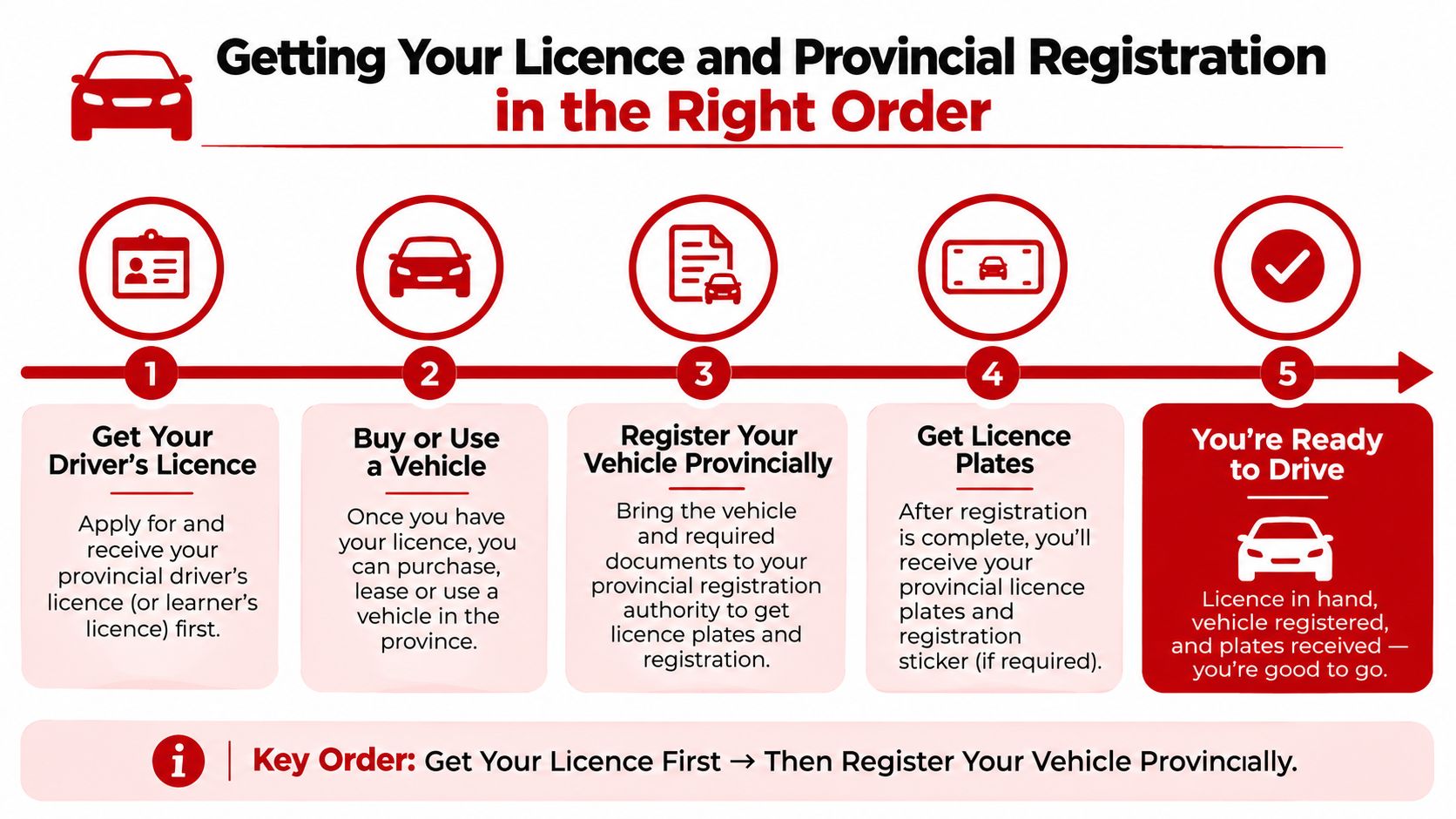
The sequence matters. Maple Ridge operators need to secure the City business licence first, then complete the mandatory British Columbia provincial registration. The provincial framework requires registration for hosts, platforms, and strata hotel platforms, and the provincial registry applies to short-term rental operators across B.C. as of May 1, 2025. British Columbia's short-term rental legislation explains the provincial structure.
For a Maple Ridge owner, the practical path looks like this:
- Confirm property eligibility. Verify principal-residence status, housing form, lot size, parking, guest capacity, and any strata restrictions.
- Prepare supporting information. Gather proof of residence, parcel details, ownership information, and a parking layout that matches the proposed listing.
- Apply for the City business licence. Use the City's application process and provide the information required for the address.
- Complete provincial registration. Once the municipal licence is secured, use that information for the provincial registry application.
- Set up the listing and operations. Display the required licence information, align the listing with the approved guest limit, and keep renewal dates on a calendar.
The January 1, 2026 milestone is especially important because Maple Ridge's municipal licence must come before the provincial registration step for local operators. The City's operator deadline reminder highlights the sequencing issue. An owner who starts with the provincial form may reach a practical dead end without the City licence.
Registration isn't a one-time administrative task. Provincial host registration requires annual renewal, and municipal requirements should be reviewed whenever the property, residence arrangement, ownership, or operating model changes. The Maple Ridge short-term rental rules can serve as a local reference, but the City and provincial registry remain the places to confirm current requirements before accepting bookings.
The workable timeline is licence, registration, listing, then guest check-in. Reversing those steps creates avoidable compliance risk.
What Real Revenue Looks Like for a Maple Ridge STR
Revenue has been active, but the headline needs interpretation. AirDNA's Maple Ridge revenue page reports that short-term rental revenue rose 37.5% from June 2025 to June 2026, while average daily rate increased only 0.3% over that period. AirDNA's Maple Ridge revenue data indicates that the revenue growth was not primarily a pricing-power story. Occupancy, booking volume, or the mix of available properties likely mattered more than a large increase in nightly rates.
That distinction changes how an owner underwrites a Silver Valley or Webster's Corners property. Summer demand can benefit from access to Golden Ears Provincial Park and Alouette Lake. Shoulder periods may be softer, while holiday dates around Christmas and Canada Day can create short bursts of stronger demand. A credible projection needs to allow for empty nights, maintenance, cancellations, and slower booking periods.
The following is an illustrative planning scenario, not a market guarantee. It uses a two-bedroom home with a working assumption of 55% to 65% annual occupancy and an ADR near $145, then shows how gross revenue differs from cash left after operating expenses.
| Line Item | Low Estimate | Mid Estimate | High Estimate |
|---|---|---|---|
| Occupancy assumption | 55% | 60% | 65% |
| Average daily rate assumption | $145 | $145 | $145 |
| Approximate booked nights | 201 | 219 | 237 |
| Gross booking revenue | $29,145 | $31,755 | $34,365 |
| Operating costs | Variable | Variable | Variable |
| Net operating result | Must be modelled | Must be modelled | Must be modelled |
The occupancy and ADR assumptions above are planning inputs, not verified Maple Ridge performance data. Cleaning, supplies, platform fees, utilities, repairs, insurance, taxes, and management can consume a meaningful share of gross bookings. An owner should not call the property profitable until those costs, mortgage obligations, vacancy risk, and licensing work have been tested together.
Compliance may support a cleaner guest experience because clear rules, safe operations, and accurate listing information reduce avoidable friction. That doesn't guarantee higher rankings or reviews. The dependable method is to compare the home with a 12-month Maple Ridge comp set using tools such as AirDNA or PriceLabs, then stress-test the result against weaker occupancy and unexpected repairs. Pricing strategy guidance for local owners is available in this Maple Ridge rental pricing resource.
Setting Up the Listing So It Books Consistently
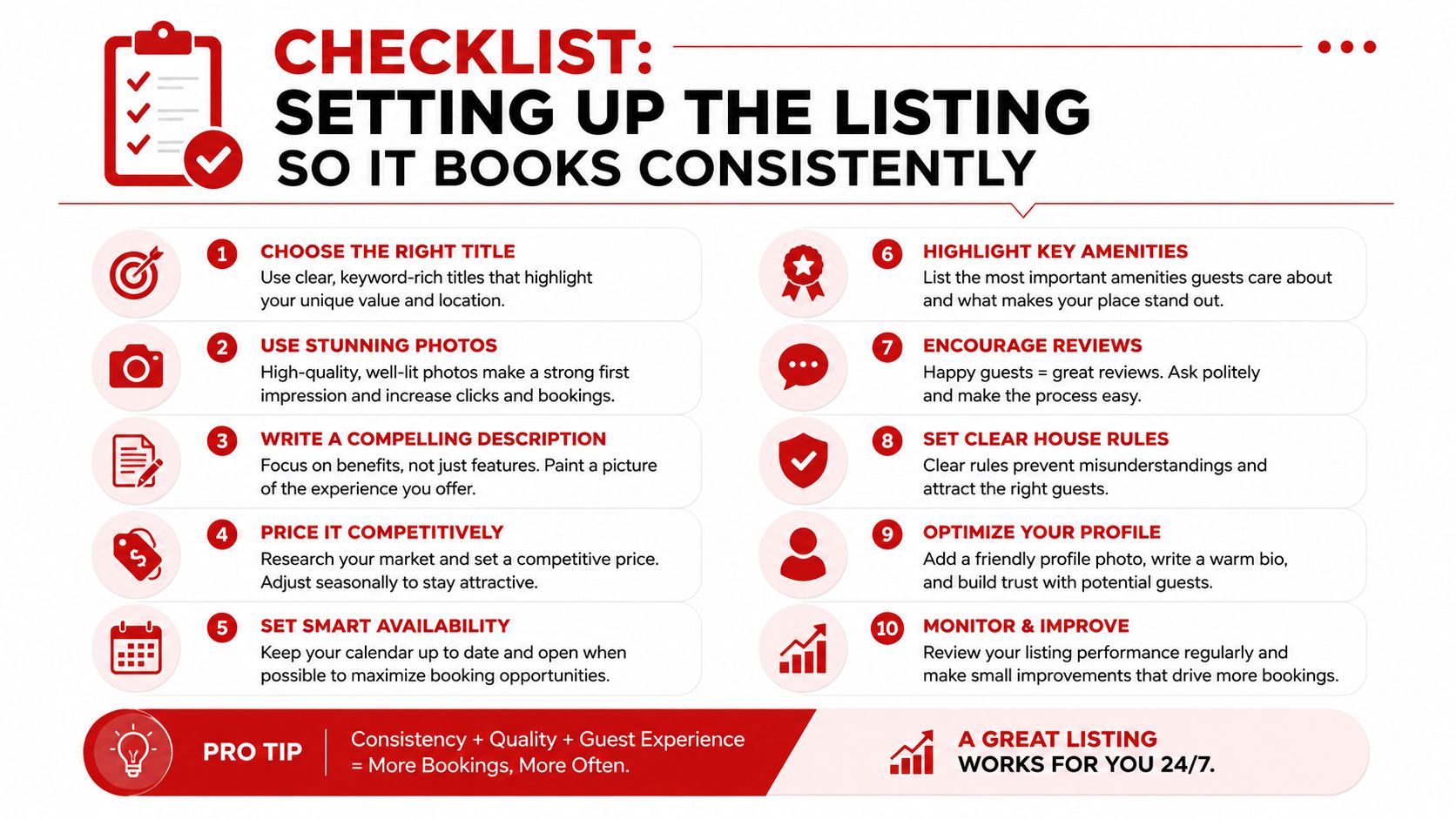
A Maple Ridge listing succeeds or fails through small operational choices. Guests visiting Golden Ears, relocating through the Fraser Valley, or spending time near downtown Maple Ridge aren't just booking a bed. They're booking a dependable base with parking, comfortable sleep, useful storage, and instructions that work.
Start with the physical setup. Durable furnishings suit family stays better than delicate décor. Blackout blinds improve bedroom usability, a proper desk helps remote workers, and storage keeps a week-long stay from turning the living room into luggage space. A two-bedroom home in Silver Valley should be furnished for the guests it can legally host, not for an imaginary larger group.
Build the listing around the neighbourhood
Professional photography should show natural light, parking, sleeping arrangements, work space, and the route guests will use through the home. A professional real estate photography guide offers useful context for presenting rooms accurately rather than relying on heavily edited images.
Listing copy should name the neighbourhood and explain practical access. “Near Golden Ears Provincial Park,” “convenient for the West Coast Express,” and “minutes from downtown Maple Ridge” are more useful than “close to everything.” Distances should be accurate and expressed in a way travellers can understand.
Dynamic pricing tools such as PriceLabs or Wheelhouse can help adjust rates against a Maple Ridge comparison set, but software doesn't replace local judgement. Owners still need to review holidays, park-related demand, local events, minimum stays, and sudden gaps in the calendar.
Guest screening should be polite and consistent. Ask about trip purpose, total guests, and pets before confirming, then make the house rules match the City's guest cap and the home's quiet-hours expectations. A reliable turnover process matters just as much as the listing page, so owners may find a local Airbnb turnover cleaning service useful when scheduling laundry, restocking, inspections, and damage checks.
A practical pre-launch routine includes:
- Calendar sync: Connect every booking channel and test blocked dates.
- Guest flow: Complete a test reservation from search through check-in instructions.
- Safety review: Check locks, lighting, alarms, emergency information, and visible parking directions.
- Licence display: Confirm the licence number appears wherever the listing requires it.
- Neighbour readiness: Give guests clear parking, waste, noise, and arrival instructions.
Insurance, Taxes, and When to Hand Off to a Manager
Gross revenue can look attractive until the cost stack is visible. Standard homeowner insurance may exclude short-term rental activity, so the owner needs an appropriate commercial policy or STR endorsement and should confirm liability limits against platform and lender requirements. A booking platform's protection shouldn't be treated as a replacement for a policy reviewed by a licensed insurance professional.
Income tax needs separate attention. STR income is taxable, and potentially deductible expenses can include an appropriate portion of utilities, mortgage interest, insurance, cleaning, and depreciation. The principal-residence rules can also limit principal residence exemption claims, so an owner should obtain tax advice before assuming the home's future sale treatment is unchanged.
GST creates another compliance trigger. Once gross short-term rental revenue crosses the $30,000 threshold in a rolling 12-month period, registration and remittance become mandatory. The Canada Revenue Agency's GST/HST information should be checked directly for registration and filing obligations. Municipal business licence costs and operating expenses sit on top of that tax work.
The management decision
Self-management can work for an owner who lives at the property, responds quickly, coordinates cleaning, handles minor maintenance, and can manage difficult guest conversations. It becomes less attractive when the owner works full time, lives elsewhere, or wants predictable time away from the home.
| Factor | Self-Managing Owner | Local Property Manager |
|---|---|---|
| Guest communication | Owner handles messages and problems | Manager handles routine communication and escalations |
| Turnovers | Owner coordinates cleaners and inspections | Manager coordinates vendors and quality checks |
| Pricing | Owner reviews demand and adjusts rates | Manager may use market tools and operating experience |
| Time commitment | Higher and less predictable | Lower for the owner, subject to the service agreement |
| Management cost | No management fee, but substantial unpaid time | Commonly 20% to 25% of booking revenue, a market assumption that must be confirmed with each provider |
| Revenue fit | Works at varied booking levels if time is available | Often considered when annual gross bookings reach roughly $40,000 to $50,000, though the economics depend on the home and contract |
A local provider such as Royal LePage Brookside Realty Property Management can be one option for owners comparing hands-on operation with delegated guest and property coordination. The decision should be based on net income, response expectations, maintenance coverage, and the owner's available time, not on gross revenue alone. More context is available in this Maple Ridge property management comparison.
Deciding If a Short Term Rental Makes Sense for Your Property
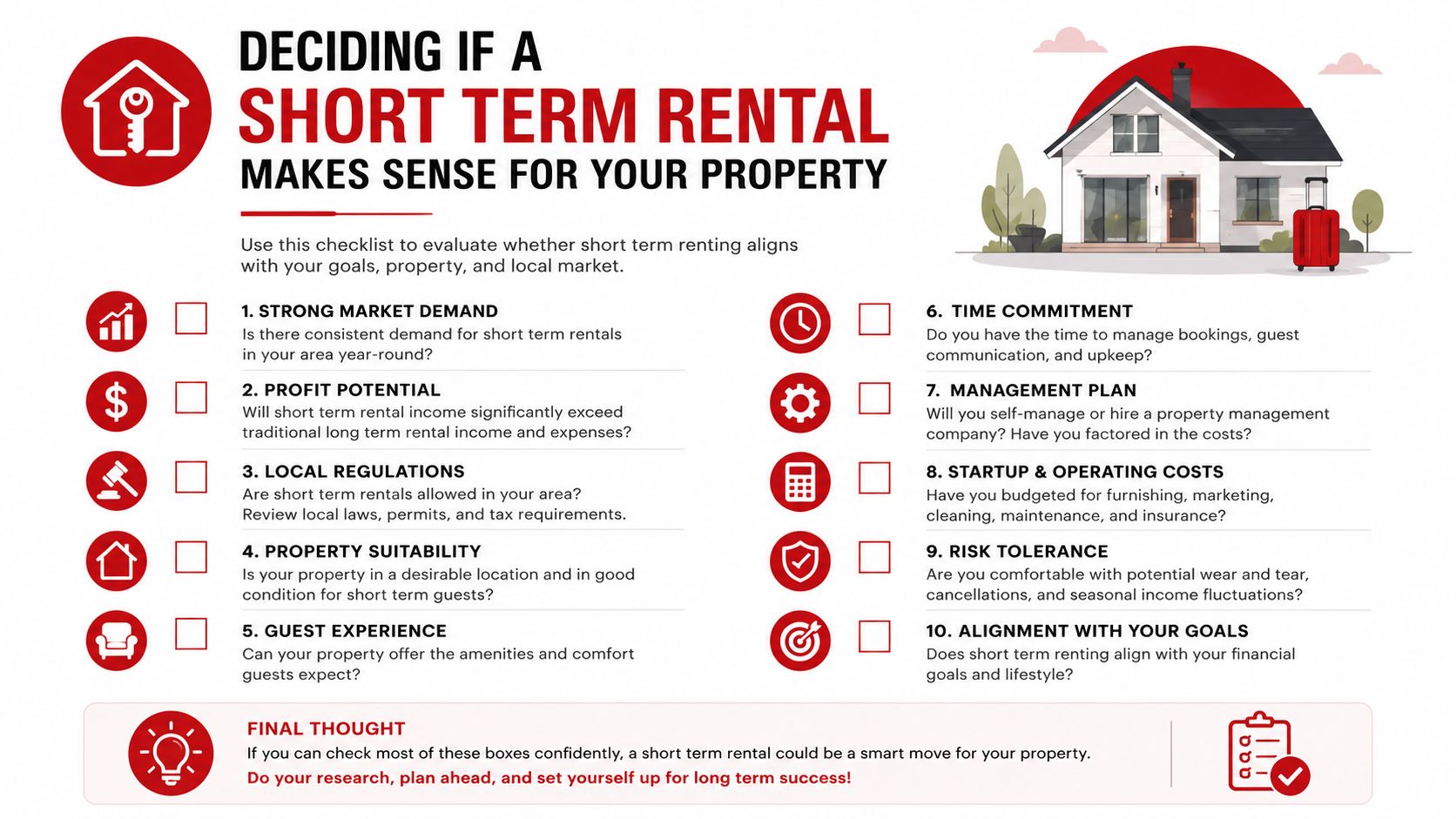
The right decision is specific to the address, not the general appeal of Maple Ridge. A home in Kanaka Creek, Albion, Silver Valley, Cottonwood, or West Maple Ridge may attract different guests and face different practical constraints, but every owner should reach the same core question: can this property operate legally and profitably after all costs?
Clear go
A clear-go property generally has a principal-residence arrangement, an approved housing form, a lot of at least 371 square metres, compliant off-street parking, no strata prohibition, and an owner prepared for guest communication and upkeep. The next step is verification, not immediate furnishing. Confirm residence status, collect parcel information, review insurance terms, and build a conservative revenue model.
Clear no-go
A non-principal residence, an undersized lot, a prohibited townhouse or apartment, a strata property that bans short-term stays, or a mortgage whose terms prohibit STR use should be treated as a no-go until a qualified professional confirms otherwise. A property can still work as a long-term rental, family home, or resale asset. It just shouldn't be valued as though short-term income is guaranteed.
Needs work
Some homes are close but not ready. The owner may need to clarify a secondary-suite arrangement, resolve parking, update insurance, confirm mortgage permission, or adjust the guest plan. Each gap needs a written answer before the property is marketed as an STR.
For insurance-specific background, an owner can also review this guide to vacation rental insurance for Miami, while recognising that Maple Ridge owners still need advice suited to British Columbia policies and local requirements. The final test is a complete operating budget that includes cleaning, supplies, utilities, platform charges, repairs, taxes, insurance, licence work, and management if used.
Owners weighing whether to buy, hold, or sell a Maple Ridge property can visit Royal LePage Brookside Realty Property Management for neighbourhood-specific guidance on STR readiness, realistic property positioning, and the implications for a future purchase or sale. A local conversation can clarify whether a home in Albion, Silver Valley, Kanaka Creek, Cottonwood, or West Maple Ridge is better suited to short-term hosting, long-term rental, or another real estate strategy.