

An open house can attract attention and still fail to help a seller make a better decision. In Maple Ridge and Pitt Meadows, the stronger result comes from using the event as a guided presentation, feedback session, and follow-up system, not by just opening the front door.
Buyers are often comparing space, outdoor access, commuting practicality, schools, parks, storage, and total ownership costs. A home in Albion may need to communicate family flow, while a property in Silver Valley or Kanaka Creek may need to make its connection to trails, greenery, and outdoor living obvious. A townhome or condo may compete more directly on layout, maintenance, and convenience.
Market context should shape the plan. BCREA reported 7,162 residential unit sales in British Columbia MLS® systems in June 2025, up 1.3% from June 2024, a reminder that buyer activity can change from month to month (BCREA statistical releases). Maple Ridge sellers should therefore treat preparation, timing, pricing, presentation, traffic control, digital information, and follow-up as one connected workflow. These eight open house tips for sellers provide that process.
1. Stage Your Home for Maple Ridge Buyers' Lifestyle Expectations
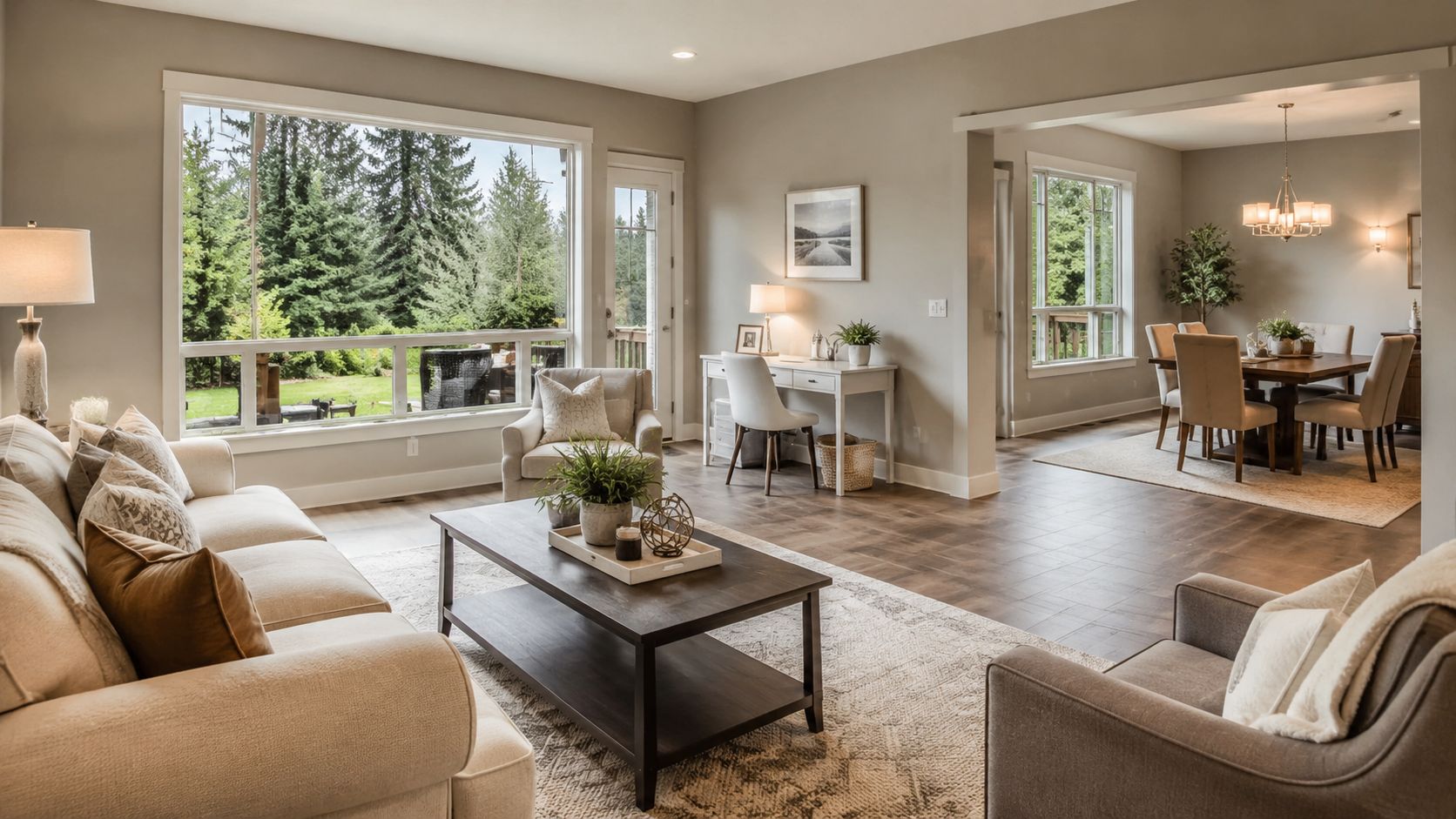
Staging should show buyers how the home supports daily life, not merely make the rooms look tidy. In Cottonwood and Silver Valley, families may be assessing whether a floor plan can handle school routines, guests, storage, and work from home. In Albion, an open kitchen and dining area can help buyers understand how the main level functions during family gatherings.
A Kanaka Creek home with a defined office near natural light gives remote workers a clear use for otherwise ambiguous space. That matters more than placing a random desk in a corner. The same principle applies to basements, flex rooms, mudrooms, covered patios, and garages. Each area should answer a practical question before a visitor has to ask it.
Make the floor plan easy to understand
Furniture should create a natural route through the home. Buyers need to move from the entry to the living area, kitchen, dining space, bedrooms, and outdoor areas without squeezing past oversized pieces. Warm lighting, clean fixtures, and consistent finishes help rooms feel connected.
Useful preparation includes:
- Reduce personal distractions: Remove a substantial portion of photographs, collections, children's artwork, and decorative items so buyers can focus on the home's proportions.
- Clarify each room: Give a spare room one obvious purpose, such as an office, study, guest room, or hobby space.
- Show outdoor connection: Open curtains, clean patio doors, and arrange furniture so gardens, decks, balconies, and green views become part of the presentation.
- Use a local staging perspective: A professional familiar with Maple Ridge buyer preferences can identify where furniture blocks function or where a room lacks a clear role.
For additional preparation guidance, sellers can review this resource on how to stage a home for sale. The right staging choice depends on the property. A family house may need to emphasize flexibility and storage, while a condo may benefit more from showing efficient furniture scale and low-maintenance living.
2. Time Your Open House Around Maple Ridge Community Events and School Calendars
A well-staged home can still have a quiet open house if the timing ignores local routines. Maple Ridge families may be managing school activities, sports, community programs, and weekend commitments. Pitt Meadows buyers may be grouping several viewings around commuting routes, errands, and the time needed to tour each property.
Choose the date with the same care used for staging. Spring, from March through May, can attract families hoping to move before a new school year. Early fall, from September through October, may suit buyers who have returned to regular schedules. These periods are useful starting points, not guarantees. Weather, competing listings, community events, and the home's market position can change attendance.
Set the time for the buyer you want
Weekend afternoons often provide daylight and let buyers combine a viewing with other plans. A two-to-five window may suit families, while a later period could show a property's evening lighting or appeal to buyers touring after activities. The right choice depends on the home and its surrounding schedule.
Before advertising the event, the listing team should:
- Check local programming: Review Maple Ridge Parks & Recreation activities and events at facilities such as the Maple Ridge Leisure Centre.
- Identify conflicts: Consider holiday weekends, major community events, and the period before school begins, when family schedules may be crowded.
- Compare nearby listings: Similar homes scheduled at the same time can bring comparison traffic, but they can also divide attention.
- Match the season to the property: Gardens, covered patios, and wooded settings usually benefit from daylight. Strong exterior lighting can support a later viewing period.
- Leave room for travel: For buyers coming from Pitt Meadows or other nearby areas, a practical start and end time can make the property easier to include in a wider tour.
Review current local conditions before committing to a date. BCREA's market statistics provides market reporting that can help frame the decision, but attendance remains specific to the listing, neighbourhood, weather, and competing events.
The useful measure is qualified attention, not a crowded doorway. A smaller event with buyers whose budget, timing, and lifestyle fit the property may produce better follow-up than a busy window filled with casual visitors.
3. Enhance Curb Appeal by Highlighting Maple Ridge's Natural Setting
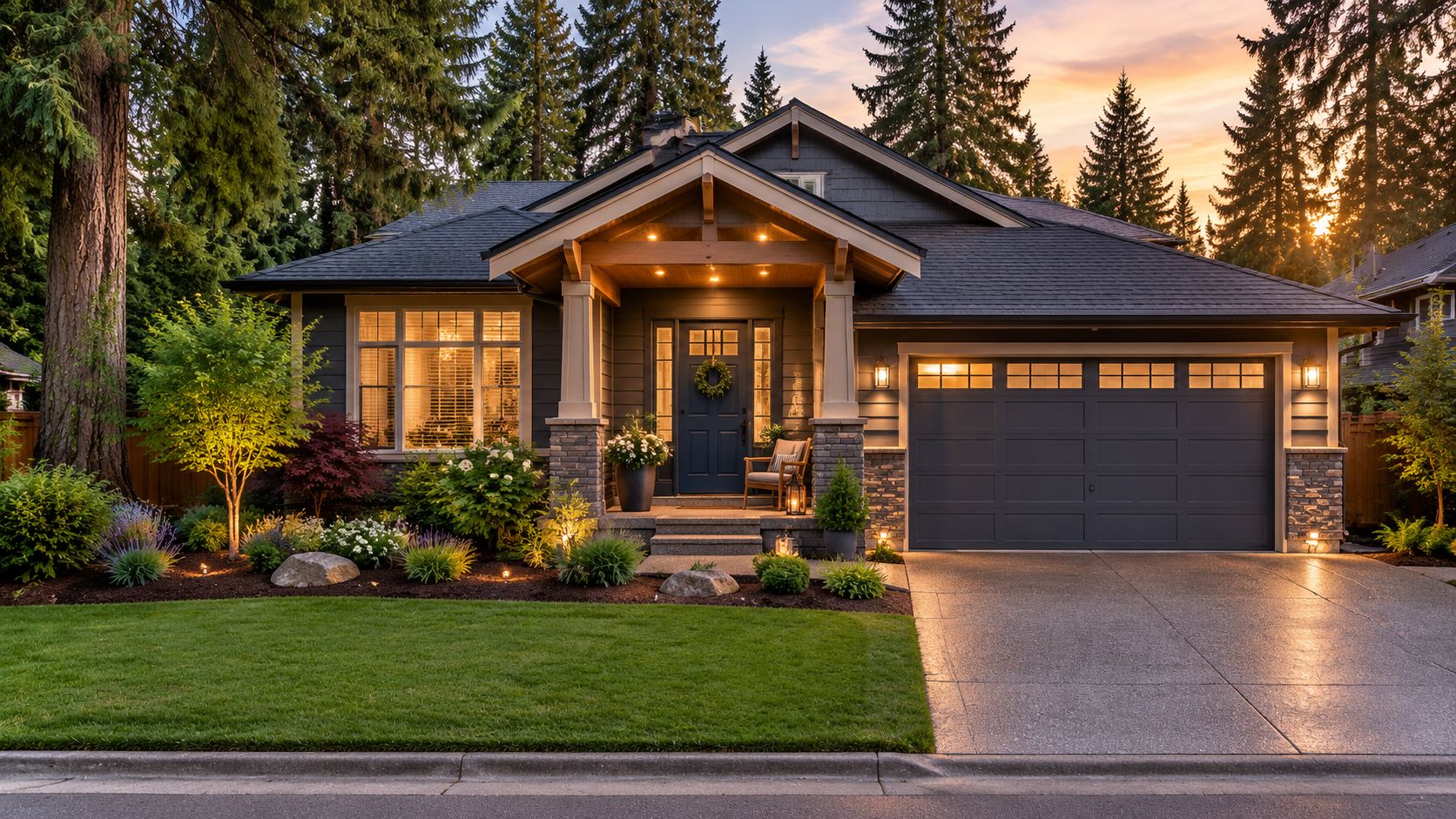
Maple Ridge buyers often assess the setting before the floor plan. Mature trees, privacy, greenery, longer driveways, and usable outdoor areas can separate a home from a similar property on an exposed street. The goal is to show these advantages while keeping the yard approachable and manageable.
Walk the arrival route from the street to the front door before the open house. Check it at the planned viewing time, since shadows, glare, and exterior lighting can change how the property presents.
Cottonwood homes with mature cedars or Douglas firs may need deadwood, underbrush, and blocked sightlines removed. In Albion, a longer driveway feels more welcoming when its edges are maintained and the route clearly leads to the entrance. If the approach looks neglected, buyers may read natural features as future maintenance liabilities.
Make the setting easy to read
Prioritize work that improves first impressions without creating a costly landscaping project:
- Clear key views: Trim vegetation hiding the exterior, windows, address, or entry path.
- Clean hard surfaces: Wash siding, steps, walkways, and driveway areas affected by dirt or moss.
- Define garden edges: Remove weeds, edge planting beds, and add mulch where it improves order.
- Repair visible wood: Paint or stain weathered fencing, decking, railings, and trim.
- Show outdoor use: Arrange a patio or deck with limited furniture, leaving clear walking space and sightlines.
- Add restrained lighting: Warm fixtures can highlight architectural details and make an evening arrival feel safer.
A seller considering design changes can use an AI front yard design tool for visual ideas. Test every concept against actual grading, drainage, access, and maintenance requirements before spending money.
For homes near water, trails, or green space, the setting should support the property story without implying features the home does not have. Discussion of Maple Ridge waterfront property for sale shows why location can shape buyer interest, but accurate descriptions and photographs remain more persuasive than exaggerated claims. Keep the landscaping tidy enough to welcome visitors, while preserving the natural character that makes the Maple Ridge and Pitt Meadows area appealing.
4. Create an Inviting Entry Experience That Sets the Tone
The first few steps shape how buyers read the rest of the home. In a Kanaka Creek family property, the foyer should look ready for daily arrivals without appearing overfilled. A modern West Maple Ridge home often benefits from cleaner lines and a direct view into the living area.
Keep the entryway out of the preparation overflow. Shoes, school bags, mail, keys, sports equipment, and seasonal clothing can make a generous foyer appear tight. Buyers may read that congestion as a storage concern, even when the closets are adequate.
Set a clear arrival sequence
Begin at the door. Clean the surface, polish the hardware, and replace weak bulbs so the entry feels maintained from the moment visitors arrive. If daylight is limited, combine the ceiling fixture with a nearby lamp or restrained accent light. Keep the air fresh, but avoid strong fragrance that can distract or raise questions about the home.
Use this quick reset before opening the doors:
- Show closet capacity: Remove excess coats and shoes, while leaving enough visible contents to demonstrate practical storage.
- Simplify the console: Put away paperwork, keys, medication, and personal mail. Leave one controlled arrangement rather than an empty surface.
- Choose a mild scent: Fresh linen or citrus is less intrusive than heavy floral or chemical fragrance.
- Direct attention forward: Position furnishings so buyers can see an appealing living area or a meaningful backyard view as they enter.
- Clear the household: Sellers, children, and pets should leave before visitors arrive. The foyer stays calmer when daily traffic has stopped.
Privacy matters at the threshold, too. Remove family photographs, documents, and packages from sight, and keep personal items out of the route buyers will use. This protects the household while making the space easier to assess.
For a practical preparation sequence, use this guide to prepare your home for sale. Expensive décor is rarely necessary. Clean surfaces, suitable proportions, good light, and an unobstructed path give Maple Ridge and Pitt Meadows buyers a clear reason to continue the tour.
5. Highlight Functional Spaces Buyers Value in Maple Ridge Homes
A well-staged room should answer a practical question: how will this home work on an ordinary Tuesday? Maple Ridge and Pitt Meadows buyers may be assessing space for remote work, family routines, storage, entertaining, and access to outdoor areas. Show those uses clearly, while leaving enough openness for visitors to picture their own routines.
Start with the room that needs the most explanation. A Cottonwood home can present remote-work potential through a proper desk, comfortable chair, and clear surface near a window. In Silver Valley, arrange the kitchen, dining area, and conversation space so their relationship is easy to understand. If the primary bedroom is compact, use restrained furniture and calm bedding to preserve a sense of rest and circulation.
Stage the function, not a showroom
The kitchen needs disciplined editing. Clear counters, polished appliances, clean cabinet fronts, and a visible route to the dining area help buyers judge both appearance and movement. Leaving a few appropriate items can make the room feel usable, but paperwork, excess décor, and too many small appliances reduce clarity.
Use this room-by-room check:
- Make the office credible: Set up a real workstation instead of placing a decorative laptop on a side table.
- Keep the bedroom open: Use quality bedding and appropriately scaled furniture so buyers can judge space and privacy.
- Expose storage capacity: Organize closets, pantry shelves, laundry areas, and garage zones. Buyers should see where everyday belongings could go.
- Give flexible rooms a clear starting point: Present a den as an office, or a basement and spare room as a hobby area, guest room, or secondary workspace.
- Make the layout easy to recall: Repeat selected colours, keep lighting consistent, and avoid furniture that interrupts sightlines between connected rooms.
A room with several possible uses should be staged for the use most relevant to the likely Maple Ridge buyer. Keep the arrangement flexible enough for visitors to consider other options.
Functional staging should also acknowledge constraints. A narrow dining area, limited basement light, or small storage zone becomes easier to assess when furniture is scaled appropriately and the listing materials provide technical details buyers may want to review after the visit. The goal is a home that feels usable, not a display that conceals how residents would really live there.
6. Manage Open House Traffic Flow and Buyer Privacy Boundaries
A well-run open house gives buyers room to look while keeping the property, its information, and its occupants protected. This requires more than opening every door. Family homes in Maple Ridge and Pitt Meadows may include multiple floors, side entrances, garages, bedrooms, and work areas that should not all be freely accessible.
Before guests arrive, remove bank statements, prescriptions, passports, spare keys, financial records, small valuables, and personal photographs. Secure laptops, tablets, smart-home controls, and handwritten notes too. These items can expose personal information or provide access beyond what a visitor needs to assess the home.
Use a clear route and a professional host
The seller's agent should host whenever possible. If that agent is unavailable, another licensee from the brokerage can cover the event with the seller's informed consent and managing-broker oversight, as outlined in this BC open house safety guidance and these Fraser Valley realtor safety protocols.
Set up the visit so the host can monitor movement without making buyers feel watched:
- Start at the entry: Use a sign-in process to record attendance, explain the suggested route, and answer immediate questions.
- Keep circulation open: Arrange doors and furniture so visitors can move between principal rooms without crowding or backtracking.
- Close unnecessary areas: Restrict bedrooms, offices, closets, storage rooms, or bathrooms that do not need to be inspected during the event.
- Limit gathering points: Water, coffee, or light snacks are enough. Avoid refreshments that keep visitors clustered in one space.
- Ask the seller to leave: Buyers usually discuss condition, price, and fit more openly when the owner is not nearby.
Earlier B.C. safety guidance emphasized visitor logs, controlled numbers, and ensuring buyers were not left unescorted (B.C. open house safety guidance). Although that guidance addressed a different public-health context, its privacy practices still apply. A managed tour protects personal space while giving serious buyers a comfortable way to evaluate the home.
7. Use Digital Integration to Enhance the Physical Open House Experience
A printed feature sheet cannot answer every question after buyers leave. They may want the floor plan, utility information, renovation history, inclusions, exclusions, neighbourhood context, or comparable properties. Digital resources keep those details available, provided the information is accurate, mobile-friendly, and easy to find.
Place a QR code near the entry that opens the property page, video tour, floor plan, and neighbourhood guide. A second code near the kitchen can explain improvements, while a tablet in the living area can show the layout or relevant market context for homes in Albion, Cottonwood, or Silver Valley.
Give visitors information they can use
Digital presentation should remove friction. Test every link on a phone, keep pages quick to load, and connect each resource to a question buyers may have. Avoid making visitors scroll through a duplicate of the listing they already viewed.
Build the information around the visit:
- Property documents: Include listing details, inclusions and exclusions, improvement history, utility-cost summaries, inspection documents, or survey materials where available.
- Lifestyle information: Cover parks such as Haney Heritage Park, schools, trails, shopping, recreation, and commuting routes. Avoid unsupported claims about school assignment or travel time.
- Layout support: Provide a floor plan or room dimensions so buyers can assess furniture placement at home.
- Feedback capture: Offer a short form asking about the strongest feature, an unresolved concern, and interest in a private showing.
- Technical backup: Test QR codes, charge tablets, and keep printed alternatives available if connectivity fails.
For sellers reviewing listing technology, this overview of Restb.ai and Paragon connect explains how digital tools can support property presentation.
Technology should reinforce the physical experience. Buyers still need to judge the light, noise level, ceiling height, storage, and room flow in person. Give them useful information without allowing screens to distract from the home itself.
8. Follow Up Strategically After the Open House to Convert Interest Into Offers
The open house ends when the doors close. The selling work starts immediately afterward, and attendance alone cannot show whether a visitor is curious, comparing homes, unprepared, or ready to write. Follow-up should identify each buyer's next question and distinguish a one-off opinion from a repeated concern.
A Maple Ridge buyer may like the kitchen but worry about renovation scope. Someone viewing in Albion or Kanaka Creek may need financing clarity before booking another visit. Other questions may involve school assignment, parks, commuting practicality, or storage. Answer the specific question instead of sending a generic listing message.
Use the first day to preserve momentum
Assign follow-up responsibility before visitors arrive. Anyone who provides contact details should receive a personalized message within 24 hours. Refer to the concern raised during the visit, answer it accurately, and offer a private showing where appropriate.
A practical review looks like this:
- Ask one direct question: “What would it take for this to be your home?” can identify whether price, condition, timing, financing, or a specific feature is holding the buyer back.
- Respond to the actual objection: If the kitchen raised concerns, provide available improvement information and describe the renovation scope accurately.
- Set a clear next step: Offer relevant documentation, financing resources, or an appointment rather than leaving the buyer to decide how to proceed.
- Track repeated feedback: Comments about price, bathrooms, lighting, condition, or layout matter more when several visitors raise the same issue.
- Reconsider the selling plan: Interest without private-showing requests or offer discussions may point to a presentation, marketing, access, or pricing problem.
Maple Ridge's market may move at a measured pace, so a prompt answer can keep a serious buyer engaged. In March 2026, 88 homes sold, 105 new listings, and the average time on market was 114 days, according to Maple Ridge market data. Use that context when reviewing the response, but avoid treating broad market figures as a substitute for buyer-specific feedback.
At the end of the first day, summarize every contact, question, objection, and requested next step. The seller and agent can then decide whether to arrange private showings, supply documents, adjust the presentation, or revisit pricing while interest is still current.
Maple Ridge: 8-Point Open House Comparison
| Item | Implementation Complexity 🔄 | Resource Requirements ⚡ | Expected Outcomes 📊 | Ideal Use Cases 💡 | Key Advantages ⭐ |
|---|---|---|---|---|---|
| Stage Your Home for Maple Ridge Buyers' Lifestyle Expectations | Moderate 🔄, planning, furniture arrangement | Moderate ⚡, staging fees, rental furniture, time | Boosts perceived value; faster sales; stronger listing photos 📊 ⭐⭐⭐ | Family homes in Cottonwood, Silver Valley; listings needing lifestyle visualization | Emotional connection; higher offers; photo-ready presentation ⭐ |
| Time Your Open House Around Community Events & School Calendars | Low 🔄, calendar research and coordination | Low ⚡, time, local schedule knowledge | Increases qualified attendance and visibility 📊 ⭐⭐ | Listings targeting families, school-year movers, seasonal markets | Maximizes foot traffic; reduces direct competition ⭐ |
| Enhance Curb Appeal by Highlighting Maple Ridge's Natural Setting | Moderate 🔄, landscaping and exterior updates | Moderate–High ⚡, gardening, repairs, possible contractor costs | Strong first impressions; better photos; more drive-by visitors 📊 ⭐⭐⭐ | Homes near trails, long driveways, mature trees (Cottonwood, Albion) | Immediate visual impact; encourages walk-ins and photo appeal ⭐ |
| Create an Inviting Entry Experience That Sets the Tone | Low 🔄, declutter, lighting, small fixes | Low ⚡, cleaning, minor decor, lighting tweaks | Positive tour tone; increases buyer confidence 📊 ⭐⭐ | All listings, especially homes with prominent foyers (Kanaka Creek) | Sets favorable first impression; signals good maintenance ⭐ |
| Highlight Functional Spaces Buyers Value in Maple Ridge Homes | Moderate 🔄, targeted staging of offices, kitchens, bedrooms | Moderate ⚡, furniture, minor upgrades, styling | Demonstrates usability; reduces functionality concerns; higher perceived value 📊 ⭐⭐⭐ | Homes for remote workers, families seeking practical layouts (Albion, Cottonwood) | Shows lifestyle fit; addresses buyer "must-haves" directly ⭐ |
| Manage Open House Traffic Flow and Buyer Privacy Boundaries | Moderate–High 🔄, planning, staffing, access controls | Moderate ⚡, signage, staffing, sign-in system | Better interactions, security, and lead capture; prevents damage 📊 ⭐⭐ | High-traffic open houses, valuable listings, agent-led events | Protects privacy; improves lead quality and professionalism ⭐ |
| Leverage Digital Integration to Enhance the Physical Open House | Moderate 🔄, setup of QR codes, tablets, digital content | Moderate ⚡, devices, content creation, testing | Enhanced presentation, measurable engagement, data capture 📊 ⭐⭐ | Tech-savvy buyers, younger demographics, listings with compelling data | Digital context, better tracking, appeals to modern buyers ⭐ |
| Follow Up Strategically After Open House to Convert Interest Into Offers | Low–Moderate 🔄, timely outreach and documentation | Low ⚡, agent time, CRM/email templates | Converts visitors into offers; provides actionable feedback 📊 ⭐⭐⭐ | All open houses, especially when leads are collected | Speeds conversion, uncovers objections, nurtures buyers toward offers ⭐ |
Turn Local Attention Into Your Next Move
An open house isn't a guaranteed sale event. It's a controlled opportunity to present the home, observe buyer reactions, answer questions, and test whether the listing is positioned correctly for current conditions. The seller's real advantage comes from what happens before visitors arrive and what the listing team does after they leave.
The post-event review should be practical. First, assess attendance quality, not just the number of people through the door. Did visitors resemble the likely buyer for the home? Did they ask about bedrooms, offices, storage, yard use, schools, parks, commuting, strata details, or renovation history? A quiet visit from a qualified buyer may be more useful than a crowded event filled with uncommitted browsers.
Next, group the feedback. One comment about paint colour may not justify a change. Several visitors questioning the same kitchen, bathroom, odour, layout, or price can indicate a pattern. The listing team should compare those comments with private showing requests, digital engagement, competing listings, and the seller's original positioning.
Market data provides a useful reference point, but it doesn't replace property-specific feedback. Maple Ridge's July 2026 benchmark price was $897,000 across all property types, with detached homes at $1,184,800, attached homes at $718,100, and apartments at $501,700. July also recorded 131 transactions, according to Maple Ridge housing market data. These figures give sellers local context, but a specific home still needs to compete on condition, location, layout, presentation, and price.
The combined Maple Ridge and Pitt Meadows market recorded 139 sales in May 2026 compared with 149 in May 2025, while new listings were 364 compared with 481 a year earlier, based on May market information. That softer supply-and-demand picture reinforces the need for selective scheduling and realistic follow-up rather than repeating open houses automatically.
BCREA's June 2025 report also showed that monthly activity can shift, while CREA reported a national average home price of $674,819 in July 2026, up 0.2% year over year (CREA statistics). Sellers should use current evidence to decide whether the next move is improved staging, clearer digital information, stronger private-showing access, a pricing review, or another open house.
Homeowners preparing to sell in Maple Ridge or Pitt Meadows can benefit from neighbourhood-specific marketing, clear pricing guidance, and a practical plan for turning buyer feedback into action. A local Brookside Realty professional can help assess the property, interpret the response, and decide whether an open house supports the broader selling strategy.
Royal LePage Brookside Realty Property Management offers professional property management services for owners who need reliable support beyond an open house, including practical coordination for investment properties and ongoing tenancy needs. Sellers and owners in Maple Ridge or Pitt Meadows can visit Royal LePage Brookside Realty Property Management to learn how those services may fit their real estate plans.