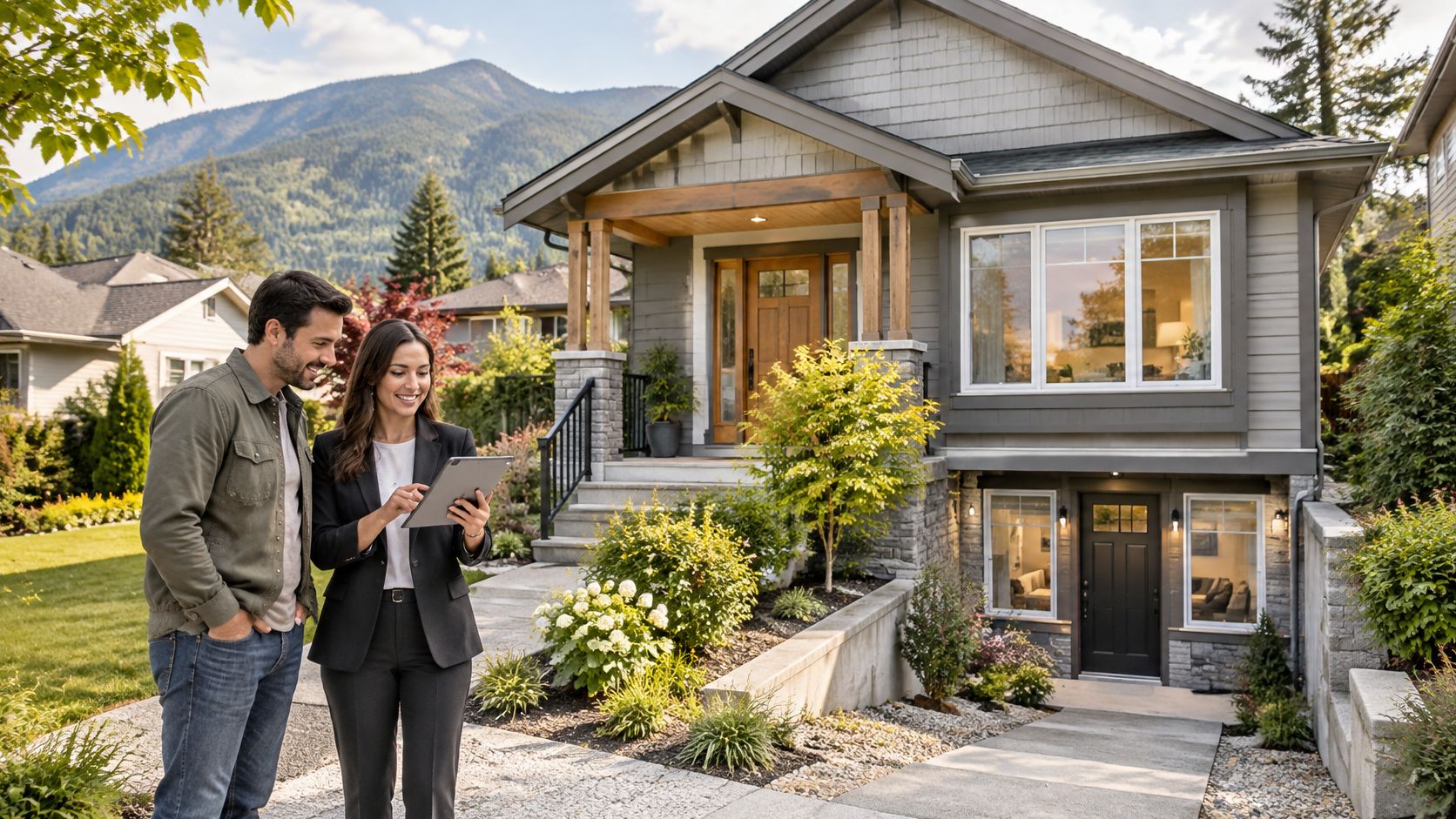
The advice most buyers hear is simple. Find a house with a basement suite, treat the rent as a mortgage helper, and stretch the purchase price. That advice skips the only question that matters. Is the suite legal, safe, and acceptable to a lender and an insurer?
A listing label doesn't answer it. "Suite," "in-law suite," and "mortgage helper" are search flags. They aren't proof of a permit, a final inspection, or zoning that allows a secondary suite. An unpermitted conversion can lower what the home is really worth, because legalization, insurance gaps, and financing limits can wipe out the rent a buyer hoped to count.
Homes for sale with basement suites in Maple Ridge BC are common enough that the search is worth doing with a checklist, not a slogan. Tour only when zoning, size, and permits can be shown. Count rent only when the paperwork and the lender agree. Everything else is finished space, not income.
Table of Contents
- Narrow Maple Ridge Listings to Suites Worth Touring
- Zoning, Floodplain and Covenant Checks Before an Offer
- Legal Suite Size and Placement Limits to Check
- Legal, Potentially Legal and Illegal Suites Compared
- Fire Safety and Egress Checks for Basement Suites
- Rental Income, Mortgage Helper and Insurance Math
- Confirm Suite Status Before You Make an Offer
Narrow Maple Ridge Listings to Suites Worth Touring
A Maple Ridge detached home is worth touring as a suite property only when the lower level can be shown to meet zoning, size, and permit rules. Use the MLS feed to build a shortlist, and treat every suite label as unverified until the seller produces records.
Maple Ridge has treated secondary suites as part of its housing supply for years. A City of Maple Ridge update dated September 19, 2017 reported approximately 400 secondary suites already operating, with another 200 applications or suites in process, roughly 600 existing or emerging units. That figure is a historical municipal snapshot, not a current listing count, and it may include suites at different stages of approval. It does show that self-contained lower-level accommodation was already a local pattern, so rental income, multigenerational living, and mortgage help are fair reasons to look. They aren't reasons to skip verification.
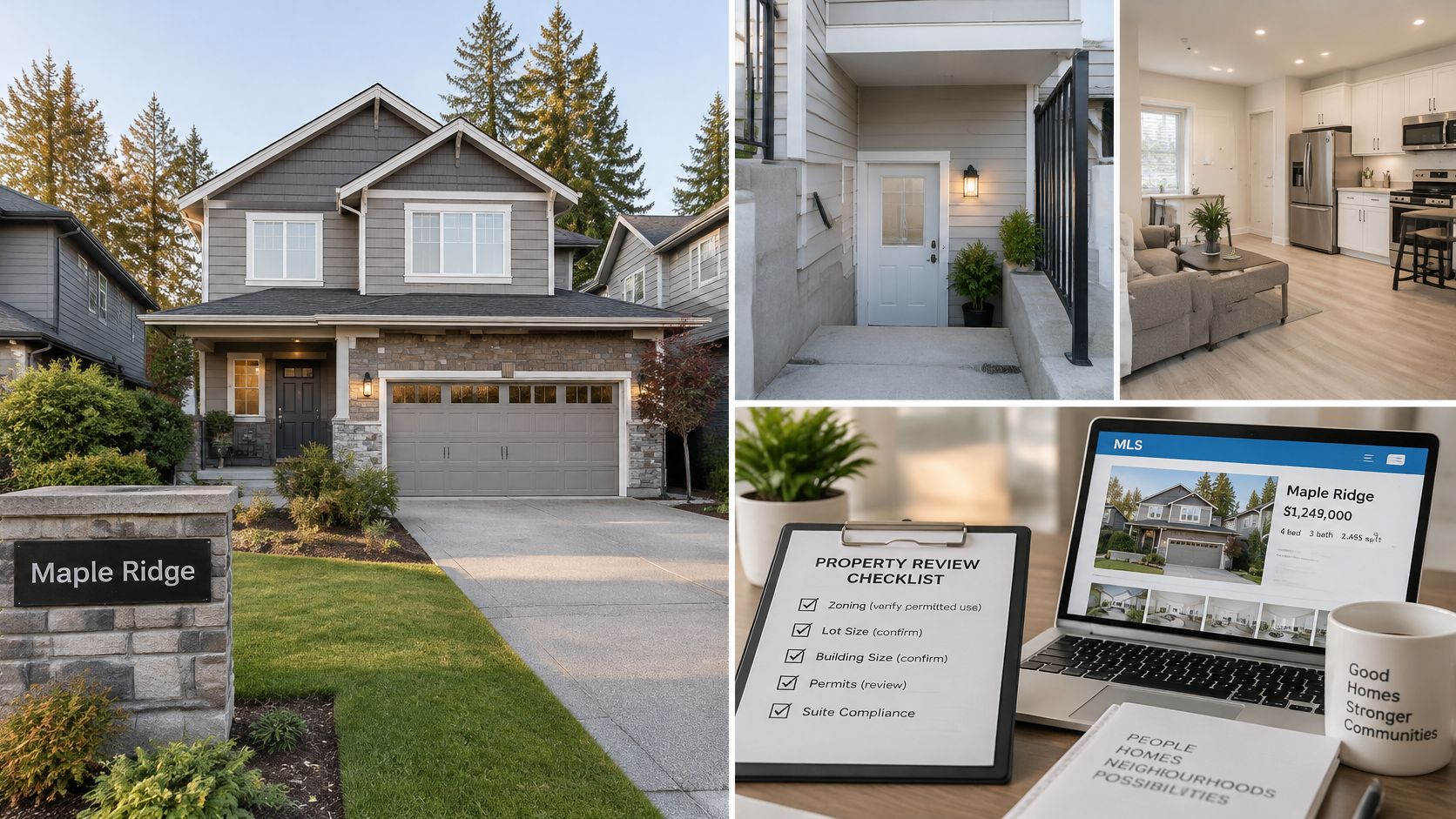
How to build this week's shortlist
- Filter the MLS remarks. On the Maple Ridge MLS listings, filter for detached homes and search the remarks for "suite," "in-law suite," "mortgage helper," and "lower-level apartment."
- Treat the wording as a flag. A "mortgage helper" may be an unpermitted room with a hot plate. The phrase doesn't mean the City signed off.
- Set lot size and commute before you tour. Lot size shapes later options as much as the suite does. A tight lot with a finished basement is a different purchase from a larger serviced lot.
- Compare the street, not just the suite. Look at routes toward the downtown core at 224th Street, school catchments through the official school district, TransLink access, and the character of the block.
- Keep five to eight homes. Note the suite entrance, whether there's a separate hydro meter, and the apparent ceiling height. Those three notes decide which showings are worth the drive.
Royal LePage Brookside Realty serves Maple Ridge, Pitt Meadows, Mission, Abbotsford, and the Fraser Valley with full-service sales and property management. That local coverage helps when a buyer is weighing a suite home against a rental while the decision is still open.
Working kit: Leave the search with a shortlist and a written list of questions for the seller's agent on permits, inspections, and covenants.
Zoning, Floodplain and Covenant Checks Before an Offer
A finished lower level doesn't make a suite legal. Buyers often assume paint, a kitchen, and a separate door are enough. The City's rules say otherwise, and they have to be checked on that property before an offer assumes rent.
The City of Maple Ridge secondary suite brochure states that secondary suites aren't permitted in designated floodplain areas unless constructed above the established flood-construction level. The same guidance identifies zones where suites aren't permitted, including CD-3-98, R-2, R-3, RM, and RST. A property with a "No Suite" covenant may need that covenant removed through a lawyer or notary before a suite can proceed. The suite must stay under the same legal title as the principal dwelling, and it can't be used as a short-term or vacation rental.
This is general information, not legal advice. A lawyer or notary should review any covenant on title.
Five checks before the offer
- Confirm the zoning designation with the City. Don't infer it from a listing photo of a second kitchen.
- Check floodplain status against City mapping. A suite below the flood-construction level fails even when the rest of the house is dry today.
- Search title for a covenant. A "No Suite" note can sit on title long after the basement was finished.
- Confirm long-term tenancy only. A plan to list on a short-term platform fails this rule even if the space is otherwise compliant.
- If a covenant or floodplain issue appears, get a written plan and a cost estimate before you write. Price the fix, or don't price the rent.
A zone prohibition leaves two honest choices. Buy the home as a non-suite property, with no rent in the numbers, or walk away.
Eligible single-family and duplex lots in the urban area, with municipal water and sewer, may contain up to three, four, or six units, subject to lot size, zoning, parking, and the building code, according to the City's small-scale multi-unit housing page. In many cases, lots under 281 m² are limited to three units, while lots from 281 m² to 4,050 m² may qualify for up to four. A buyer paying a premium for one existing suite should weigh that against the lot's wider potential, and shouldn't capitalize speculative density into today's price. More units can mean higher construction, servicing, and parking costs. Buyers also looking at Pitt Meadows can start with key considerations for first-time home buyers in Pitt Meadows, then run the same title and zoning questions on the Maple Ridge address.
Legal Suite Size and Placement Limits to Check
A finished basement can look rentable and still fail the City's suite limits. Confirm the permitted area and layout before treating the space as a mortgage helper.
The City of Maple Ridge secondary suite page allows one secondary suite per lot, within the same building as a single-detached home. It sets a maximum of 40% of the building's total gross floor area and 90.0 square metres, about 969 square feet. The City's existing-suite guide gives a general minimum of 37 square metres, about 398 square feet, and outlines parking and building-code conditions. The City also requires building permits for new construction or alterations to a secondary suite, as explained in its home improvement guidance. A listing label does not confirm compliance.
Maple Ridge secondary suite size and placement limits
| Rule | Maple Ridge limit | What to request | Source |
|---|---|---|---|
| Suites per lot | One secondary suite per lot | Zoning confirmation from the City | Secondary suite requirements |
| Location | Inside the same building as the single-detached home | Floor plan showing the building outline | Secondary suite requirements |
| Maximum size | 40% of gross floor area and 90.0 m² (about 969 sq ft) | Measured floor plan with areas | Secondary suite requirements |
| Minimum size | About 37 m² (about 398 sq ft) | Permit drawings | Existing-suite guide |
| Clear height | At least 2.0 m | Final inspection record | Existing-suite guide |
How to measure the lower level
Start with the floor plan and identify the suite area. Separate shared space, such as stairs or a mechanical room, from the suite, then check the remaining area against both maximum limits.
The finished basement may extend beyond the permitted suite area. In that case, the legal suite could be smaller than the space shown in listing photos. A layout below the City's stated minimum also needs scrutiny, even if it has a kitchenette and separate entrance.
Request the permit drawings, a measured floor plan and the final inspection record. Check the parking requirement against the City file too. If the suite area or parking does not comply, treat the space as living area rather than established rental income. For a separate budget to finish or improve the space, review this guide to basement completion costs.
Legal, Potentially Legal and Illegal Suites Compared
A listing's “mortgage helper” label says little about whether a basement suite is approved, rentable or acceptable to a lender. Sort out its status before treating the advertised rent as part of your budget.
Suite status, documents and income treatment
| Status | What it means | Documents to review | Income treatment |
|---|---|---|---|
| Legal suite | Permitted and finalized, with a business licence where two rental units exist | Final permits, inspection records, zoning confirmation | Count rent once the required licence is confirmed |
| Potentially legal | Permit history is incomplete or inspections are not closed | Inspection status, covenant search, written legalization estimate | Deduct the estimated legalization cost before assessing the potential rent |
| Illegal conversion | Does not meet zoning, safety or building-code requirements | Records showing the gap and a correction plan | Exclude rent and account for correction and insurance risk |
The City of Maple Ridge home improvement guidance says secondary suites must meet zoning, safety and BC Building Code requirements. Renovations involving a kitchen, bedrooms, plumbing, electrical work, fire separation or egress windows require permits. A permit that remains open, or never received a final inspection, does not establish that the suite is legal. A second kitchen without a permit file needs a status determination from the City.
A home with both an upper rental and a basement suite requires a business licence to rent both dwellings. Confirm the licence before relying on income from either unit. Two signed leases do not establish that both rentals are licensed.
Treat a potentially legal suite as a renovation project in your offer calculations. Get a written estimate for the work needed to close the permit and compare that cost with the rent you could receive after approval. If the correction cost and uncertainty outweigh the expected income, value the home without suite rent.
Match the listing's suite description to the City file. Until approval and licensing are established, leave the advertised rent out of your mortgage-helper calculation.
Fire Safety and Egress Checks for Basement Suites
A finished basement does not prove that its suite is safe or approved. Check the fire separation, alarms and bedroom exits against the City record before treating the space as usable rental housing.
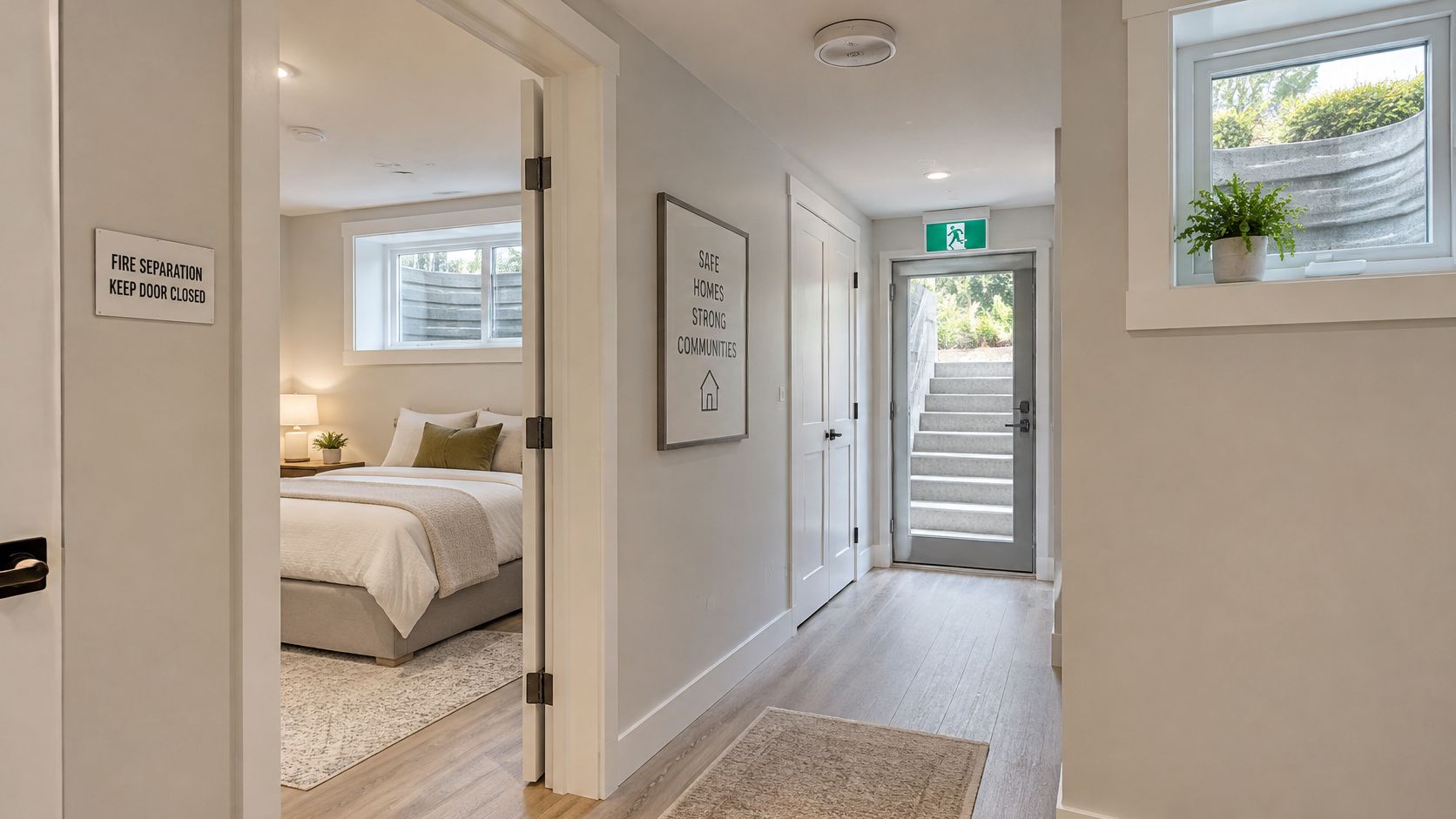
The Maple Ridge secondary suite permit application identifies a 45-minute fire-separation benchmark, with a possible 30-minute alternative where specified interconnected smoke-alarm conditions are met. It also identifies 2.0 m as the minimum clear height and requires current-code compliance and final permits. BC Building Code requirements for separation between dwelling units are reflected in the City's secondary-suite permit materials.
A private inspection report and a City inspection record answer different questions. The inspector describes the home's condition; the City record shows whether the suite received approval. Ask for both.
Walkthrough checks
- Ceiling and wall assemblies. Look for a continuous fire separation. A gap above a dropped ceiling or an open joist bay can interrupt the barrier between dwellings.
- Doors. Check that doors have the required rating and self-closing features. A hollow door propped open will not contain smoke as intended.
- Smoke alarms. Test hard-wired, interconnected alarms with battery backup on every level and near bedrooms. An alarm in the suite should sound upstairs if the systems are interconnected as required.
- Carbon monoxide. Check for working carbon-monoxide alarms near bedrooms where fuel-fired appliances or an attached garage are present. Confirm placement against the BC Building Code requirements.
- Exhaust. Confirm kitchen and bathroom fans vent outdoors, not into a joist space. Moisture trapped in the framing can lead to repairs.
- Bedroom exit. Compare each bedroom's exit path with the permit drawings. A blocked or undersized window may mean the room does not meet the approved bedroom layout.
- Moisture. Check perimeter walls and corners for drainage problems or mould. A finished floor plan does not resolve water damage.
- Shared systems. Ask whether heating or electrical work was changed without a permit. Informal connections to a furnace or panel can create safety and financing concerns.
Pay particular attention to low ceiling areas, bedroom windows that do not provide a clear exit, and shared systems that may have been altered without permits. Fresh paint does not correct these problems.
Questions for the inspector
Bring a written list: What is the clear height at the suite's lowest point? Do bedroom openings match the permit drawings? Is the separation continuous at the mechanical room? Do smoke alarms interconnect across both dwellings? Are there signs of unpermitted electrical or plumbing work?
Use this home inspection checklist for buyers for the rest of the house, and keep suite-specific questions together so they are not lost among roof and gutter items. The goal is to identify safety repairs and approval gaps before closing, rather than discovering them after someone is expected to occupy the suite.
Rental Income, Mortgage Helper and Insurance Math
A suite counts toward the mortgage only as verified net rent, and a lender may count less than the full rent. Gross rent written into the remarks isn't the figure that belongs in an offer.
Line by line
Gross monthly rent should come from current rental listings and recent leases for comparable Maple Ridge suites, not from an older ad or a seller's hope. Ask for the lease if a tenant is in place, and note whether utilities are included.
Vacancy allowance is the share of annual rent you set aside for empty months. Review that percentage with the lender. A suite that turns over between tenants isn't the same as one that sits empty through a renovation.
Operating costs cover utilities if they're in the rent, a maintenance reserve, and any change in property tax. Use past bills, contractor quotes, and City tax notices. Don't invent a round number because the suite "looks low maintenance."
Insurance needs a written quote with the suite disclosed and rental use confirmed. A policy written for an owner-occupied house with no second kitchen can leave a claim in doubt. The shift in rental property insurance cost belongs in the monthly math once that quote exists.
Lender treatment is the lender's written policy on suite rent, requested before the offer. Some lenders want a lease, a rent history, or an appraisal note. Some won't use rent from a suite that lacks final permits. Get that answer on paper.
An illustrative calculation
Say a suite rents at $1,800 a month. That's $21,600 a year in gross rent. This example is illustrative only. It isn't a market average and it isn't a promise of what a Maple Ridge suite will fetch.
One vacant month removes $1,800. A $150 monthly maintenance reserve adds $1,800 a year in costs. That leaves $18,000 a year, or $1,500 a month, before the insurance premium, any tax change, and utilities the owner pays.
Those last three items have to come from written quotes and tax notices. They aren't assumptions you can back into so the payment looks comfortable.
BC residential tenancy rules, including the annual rent increase guideline, are set by the Residential Tenancy Branch. Check the figures for the year you buy, because they change and they're time-sensitive. A mortgage helper helps only when the lender, the insurer, and the City records all describe the same legal suite.
Confirm Suite Status Before You Make an Offer
Before you make an offer, establish what the suite is worth to you if it cannot be rented or counted as income. A finished basement and a listing label do not prove legal status. Put the checks and the consequences of an unsatisfactory result into the offer terms.
- Review the City file. Make the offer conditional on reviewing permit history and final inspection records, along with any relevant covenant search.
- Inspect the suite. Have a qualified inspector assess the fire-safety and egress items, and review the report before removing subjects.
- Get written lender and insurer answers. Ask how the lender will treat suite rent, and confirm that the insurer knows about the suite and covers its rental use.
- Confirm rental requirements before closing. Check whether a business licence is required if both dwellings will be rented, and prepare the tenancy paperwork under current Residential Tenancy Branch rules.
- Resolve title or covenant concerns. Have a lawyer or notary review them before you remove subjects.
Royal LePage Brookside Realty serves buyers in Maple Ridge and Pitt Meadows, including people relocating from Vancouver, Burnaby, Surrey and elsewhere. Its local guidance can help you compare neighbourhoods, commute routes, schools and what your budget buys, as well as rental options while you decide.
If the records or inspection do not support the rent assumed in your budget, reassess the offer price and terms before subjects come off. The suite's documented status can change what the home is worth to you.