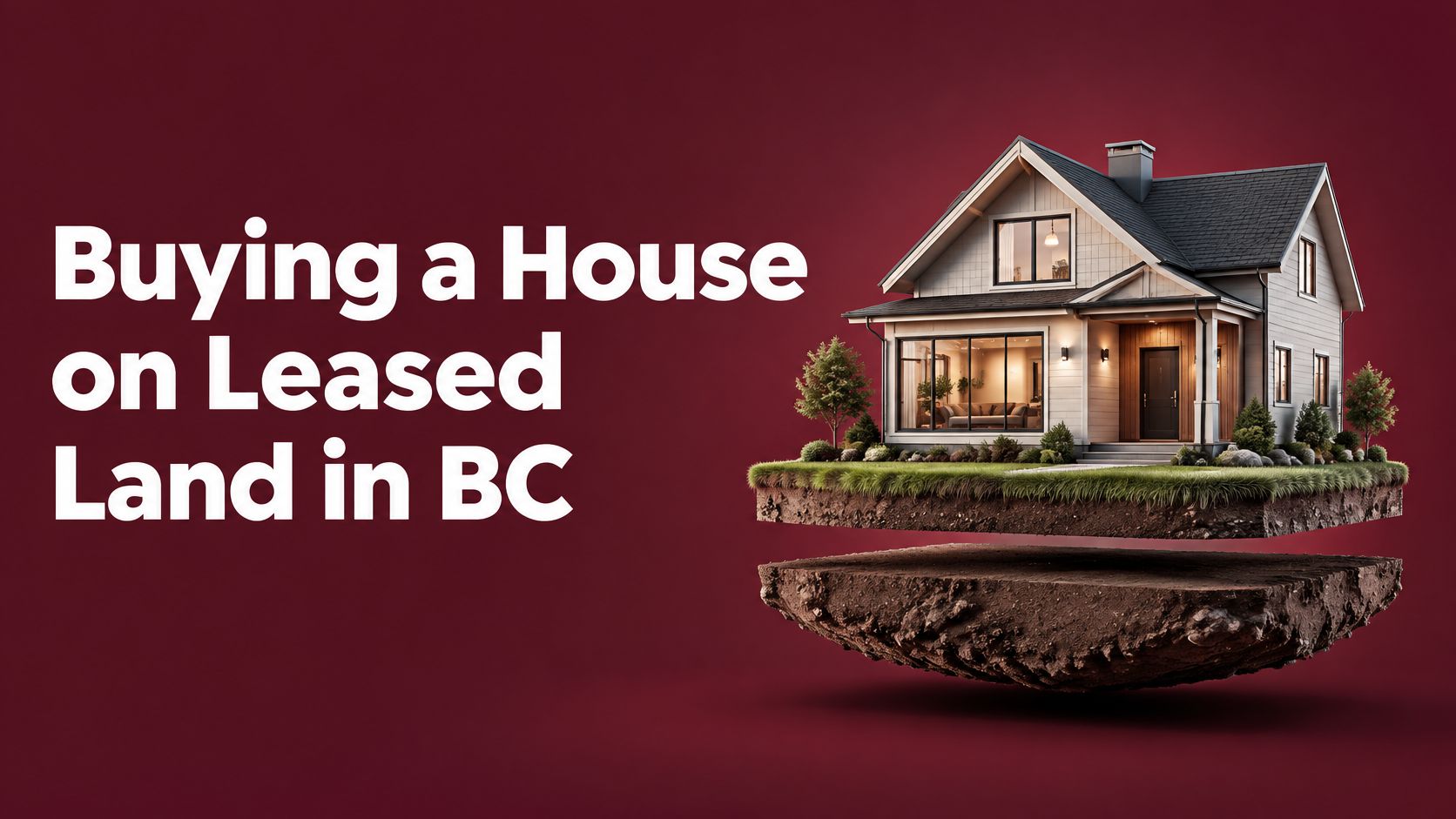
A Maple Ridge buyer scrolls past a home that looks like a straightforward house, then notices the listing is not ordinary fee-simple land. The price is the number that caught their eye. The document behind it is the number that should. Buying a house on leased land in BC usually means paying for a building, or for a time-limited right to occupy it, while a landlord or landowner keeps the land.
That is a different purchase from the conventional title most Pitt Meadows and Maple Ridge shoppers expect. The remaining years, the charges, and the rules for selling on are part of the asset, not footnotes. What follows is practical information for reading those documents. It is not legal advice, and the signed agreement plus a British Columbia real estate lawyer control the particular file.
Table of Contents
- What Buying on Leased Land Actually Means
- How the Three Leased Land Setups Differ
- Park Rules Rent Increases and Termination
- Financing, Tax and the Monthly Cost Behind the Sticker
- How the Choice Plays Out Locally
- What to Confirm Before You Offer
- Review the Lease With a Local Broker
What Buying on Leased Land Actually Means
Say a couple has been watching townhomes and detached houses around Maple Ridge. One listing sits well below the others on the same street pattern. The photos look ordinary. The catch appears in the remarks: the land is leased. Until that line is translated, the lower sticker is not a bargain. It is an incomplete description.
British Columbia treats a home on leased land as a different form of ownership from ordinary freehold ownership. The Province's page on long-term residential leases describes residential long-term leaseholds as uncommon and notes that they are sometimes called "99-year leases" or leasehold units. In a leasehold purchase, the buyer acquires the contractual right to occupy and use the property for a specified term. The landlord or landowner retains ownership of the underlying land.
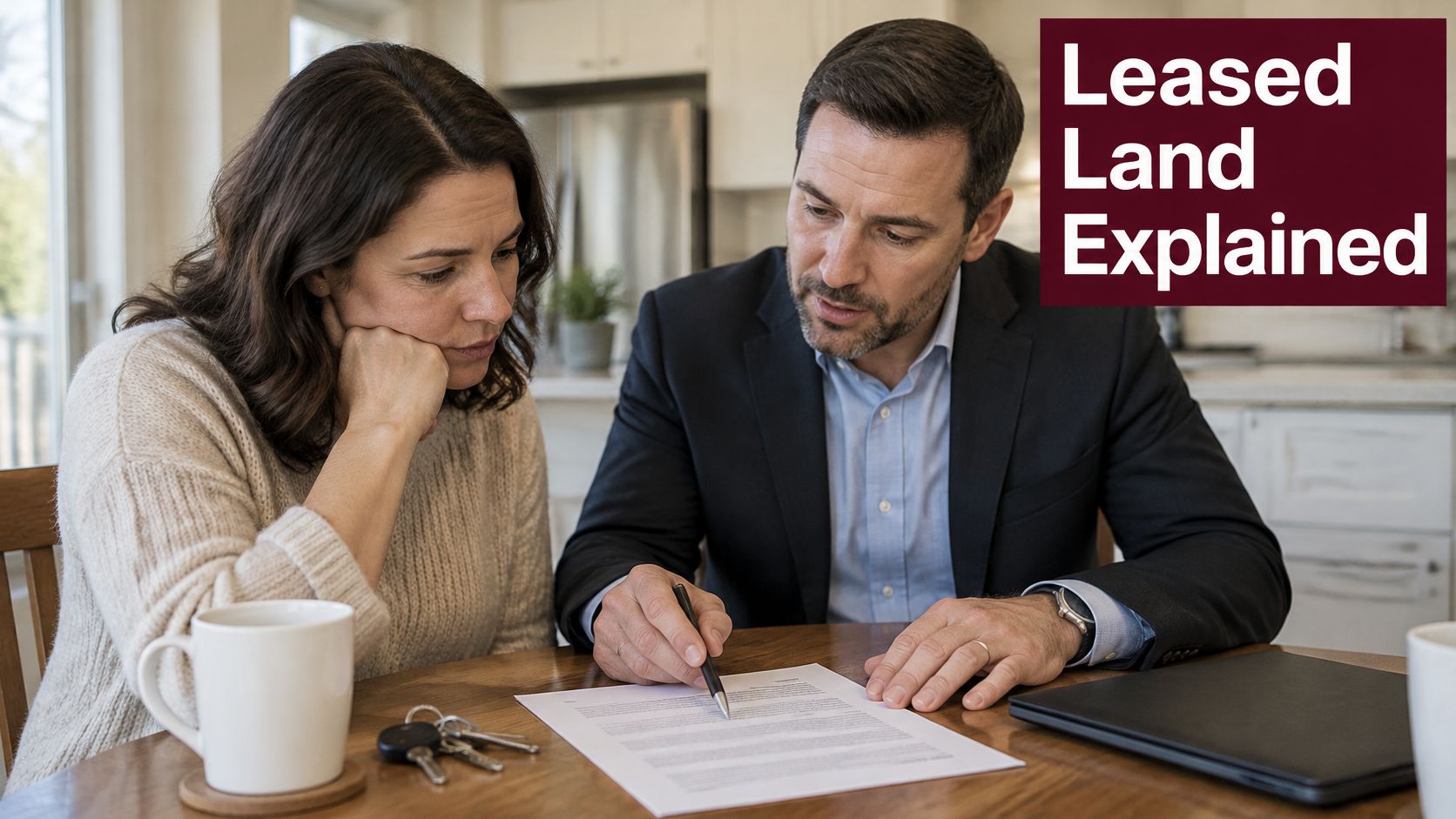
A label is not a title
For strata leaseholds, that same provincial page explains that buyers purchase a term lease, often 99 years, covering the strata lot and common property rather than purchasing the land outright. A 99-year label is not freehold. The buyer's rights stay governed by the lease, and the landowner retains a legally significant interest. The Province also states that freehold stratas are much more common than strata leaseholds, so a Pitt Meadows or Maple Ridge listing should not be assumed to carry conventional title.
A long original term does not erase the landowner's interest. Count the years left, then read what happens when they run out.
Three setups show up in local searches, and they are not the same purchase. One is a manufactured home on a rented pad. Another is a strata leasehold covering the strata lot and common property. The third is some other long-term residential land lease. The rules for each come later. What they share is that the remaining term, renewal language, rent or other charges, and assignment rules are part of the asset's value and of its resale prospects.
What to pull from the file first
Before an offer, a buyer should have the lease commencement date, the expiry date, renewal provisions, rent or other charges, permitted uses, assignment rules, financing requirements, and the clause that says what happens when the term ends. In Maple Ridge, Pitt Meadows, and the wider Fraser Valley, those items change what the home is worth to the next buyer, not only what it costs today.
The useful next step is a side-by-side look at what transfers at closing. Price comparisons come after that answer, not before it.
How the Three Leased Land Setups Differ
The closing question buyers rarely get in plain language is simple. Does the buyer receive title to a building, a registered term lease, or only a park tenancy? That answer changes control, alterations, insurance, estate planning, and exit value. A lower purchase price does not mean the buyer controls the land, can renovate freely, or can resell to the same pool as a conventional Maple Ridge house.
| Setup | What you acquire | Who keeps the land | Term to verify | How occupancy can end | Resale reality |
|---|---|---|---|---|---|
| Manufactured home on a rented pad | The home, plus a site tenancy | Park landlord | Ongoing tenancy, not a 99-year title | Lawful end of tenancy; home may have to be moved | Assigned tenancy keeps existing pad rent; buyer pool is narrower |
| Strata leasehold | A term lease of the strata lot and common property | Landowner or landlord | Often called 99 years; count the years left | Expiry, non-renewal, or breach of the lease | Value and lenders track the remaining term |
| Other long-term land lease | Contractual right to occupy for the lease term | Landowner | Commencement, expiry, and any renewal in that lease | The termination and expiry clauses in that lease | Written assignment is required, and a lender must accept the lease |
| Fee-simple house | Land and building | The buyer | Indefinite ownership | Sale or other land-title events, not a lease expiry | Broadest buyer and lender pool |
What each row means on completion day
Manufactured home on a rented pad. The purchaser generally owns the structure and becomes the park owner's tenant for the site. An assigned tenancy continues on the existing terms, including current pad rent and the next scheduled increase date. Buying the home does not hand over the land. Buyers comparing this path with other local housing can read manufactured homes for sale in Maple Ridge and then test the specific park file against the row above.
Strata leasehold. The buyer purchases a term lease of the strata lot and common property, often described as 99 years, rather than the land. The years already used matter more than the original headline. Lenders and later buyers track what is left.
Other long-term land lease. Rights are whatever the registered lease states. They have to be read. A verbal summary from a listing, or a neighbour's memory of "a long lease," is not the interest being bought. Commencement, expiry, and any renewal sit in that document.
Fee-simple house. The buyer owns land and building. There is no lease expiry sitting under the ownership. That is the contrast, not a moral ranking. It is why the buyer pool and the lender pool are usually wider.
Promises that belong in the agreement
Downsizers and first-time buyers in the Fraser Valley often set a leased-land price beside a freehold home and stop there. The agreement is what changes practical control. Before an offer, confirm these points in the lease or tenancy itself:
- Assignment: Who must consent before the interest can be sold, and in what form.
- Occupancy and pets: Who may live there, and which animals the rules allow.
- Renovations: What needs written approval, including decks, additions, and even interior work if the park or lease says so.
- Maintenance: Which repairs sit with the resident and which sit with the landowner.
- Redevelopment and termination: The clauses that can end occupancy, and what happens to the building if they are used.
Put every comfort the seller offers into the contract or a schedule. A conversation at the kitchen table does not travel to the next owner.
Insurance and estate planning follow the same split. A policy and a will drafted for a fee-simple house may not match a tenancy of a pad or a lease that expires. The lawyer and the insurer need the actual instrument, not the listing photo.
Park Rules Rent Increases and Termination
This part is only for the buyer who will own the manufactured home and rent the pad. It is the most common leased-land pattern people meet around Maple Ridge and Pitt Meadows, and it is easy to misread as "I bought the house, so I bought the lot."
The provincial government states that the Manufactured Home Park Tenancy Act generally applies when a resident owns the manufactured home and rents the site it stands on. The provincial guidance on starting a manufactured-home tenancy is the public summary of that starting point. The same provincial framework does not apply to on-reserve lands. A home on reserve needs its own document review, not this park statute.
A standard residential tenancy agreement, the kind described in what a lease agreement is, is a different instrument. A site agreement is the park document. Do not treat one as a substitute for the other.
The site agreement is the occupancy right
The site agreement must be written, signed, and dated. Once signed, it is legally binding. The landlord must give the tenant a copy within 21 days. That agreement gives the homeowner the right to occupy the site. It does not transfer the land. The landlord keeps the land and may end the tenancy in accordance with the law, which can mean the home has to be moved.
The signed site agreement controls that park. A listing remark, a text from the seller, or last year's rent receipt does not replace it.
Ask for the current agreement, not a blank form. If the seller is assigning an existing tenancy, the buyer steps into the terms already in force.
How pad rent is allowed to move
Site rent is regulated, and the sequence is tight. Landlords generally may increase rent only every 12 months. They must provide three full months' notice. They cannot exceed the applicable annual rent-increase limit. Additional rules can apply for certain expenses or capital expenditures. Those protections limit how rent moves. They do not freeze it, and they do not remove the cost of living on someone else's land.
Because an assigned tenancy keeps the existing terms, get three figures in writing before subjects come off:
- Current pad rent: The amount charged now, not an estimate in the listing.
- Charges outside that rent: Utilities and park fees that sit on top of the pad.
- Next permitted increase date: The date the statutory timetable next allows a change.
If the tenancy ends
Ending a tenancy lawfully can require the home to be moved. Moving feasibility belongs in the offer stage. Age of the unit, width, skirt and addition details, and whether a transporter can reach the pad all matter. Park rules matter too. Read them with the site agreement, along with assignment or resale approval, pets, occupancy limits, maintenance duties, and any notice already issued about the park. This is still not legal advice. The Act sets the frame. The signed agreement is what the buyer is stepping into.
Financing, Tax and the Monthly Cost Behind the Sticker
A lower purchase price can still carry a higher monthly burden. Lenders, pad rent, tax, insurance and a thinner resale audience can absorb the apparent discount. The decisive question is whether the buyer receives title to a building, a registered term lease, or only a park tenancy. That answer changes the loan, the carrying cost and the number of future buyers who can step into the same purchase.
What the lender tests on this exact property
Available BC lending practice is more specific than “some lenders will finance leasehold.” Lenders assess the remaining lease term against the mortgage amortization. Privately held or non-prepaid leases are considered by fewer lenders. Tighter loan-to-value limits can also apply. A general mortgage pre-approval clears the buyer in the abstract. It does not clear this lease, this park or this home.
For manufactured homes, financing can be tighter still because the home may be treated as personal property while the land is rented. Older units, or parks where the landlord will not cooperate with the lender, may mean a shorter amortization, a larger down payment or an outright refusal. A registered long-term lease works differently from a park tenancy, even when the monthly payment looks similar on paper.
Ask the lender about that exact property:
- Minimum remaining term the lender will accept for the amortization requested.
- Amortization the lender will offer, not the one on a fee-simple quote.
- Loan-to-value cap for this lease or this personal-property home.
- Lender consent, lease assignment and any renewal the lender needs to see.
If the next buyer cannot get a similar loan, today's approval has already described tomorrow's buyer pool.
The monthly lines a sticker price hides
Any rent, tax or rate figure is time-sensitive. It has to come from the current agreement, the current assessment and the current lender. No benchmark payment belongs in a general comparison.
| Cost line | Leased-land home | Fee-simple home |
|---|---|---|
| Borrowing | Approval is property-specific; remaining term, amortization and loan-to-value can be tighter | Conventional terms if the buyer and property qualify |
| Site or lease rent | Ongoing pad rent or lease rent, with park increases on the statutory timetable | No pad or ground rent |
| Property tax | Annual tax on the owned or leased home; separately assessed homes exclude land value | Tax on land and improvements |
| Insurance | Confirm home, liability and any coverage the park or lease requires | Ordinary homeowner policy to confirm with the insurer |
| Exit | Fewer future buyers and lenders as the term shortens or if the home is hard to finance | Broader resale market |
Tax treatment depends on the legal arrangement. The Province requires annual property tax when a person owns or leases property or a manufactured home. If the home is assessed separately from the land, land value is excluded from that assessment, and the owner still owes tax on the home. Property Transfer Tax classification can turn on whether the home is a fixture, including permanence or attachment, connection to municipal services and additions such as decks, stairs or porches. A leased pad is not automatically free of that tax.
Registration in the B.C. Manufactured Home Registry, whether the site lease is assignable and whether the park owner must approve a sale all need written answers. Those points affect the monthly model because they shape both the exit path and the lender's willingness to treat the home as security.
Three insurance questions before subjects lift
A fee-simple homeowner policy is not assumed to fit a pad rental or a strata leasehold. Before subjects come off, the buyer asks the insurer and the park or landlord whether the home is insured as a building or as personal property, who carries liability for the site and which coverages the lease or park rules require. Those answers belong in the same monthly model as the loan, the tax position and the pad rent. A policy that looks ordinary on a fee-simple purchase may leave gaps when the land is owned by someone else.
How the Choice Plays Out Locally
Two composite buyers, not listings and not priced, show how the same documents land differently. Neither example is a property on the market. No current benchmark price is given here, because leased-land value turns on the remaining term and the charges. Any market number would need a dated Fraser Valley Real Estate Board release or a similar source. Local housing context sits on the Brookside site in the Maple Ridge real estate market notes and in the broader Maple Ridge BC real estate material, without a leased-land average attached.
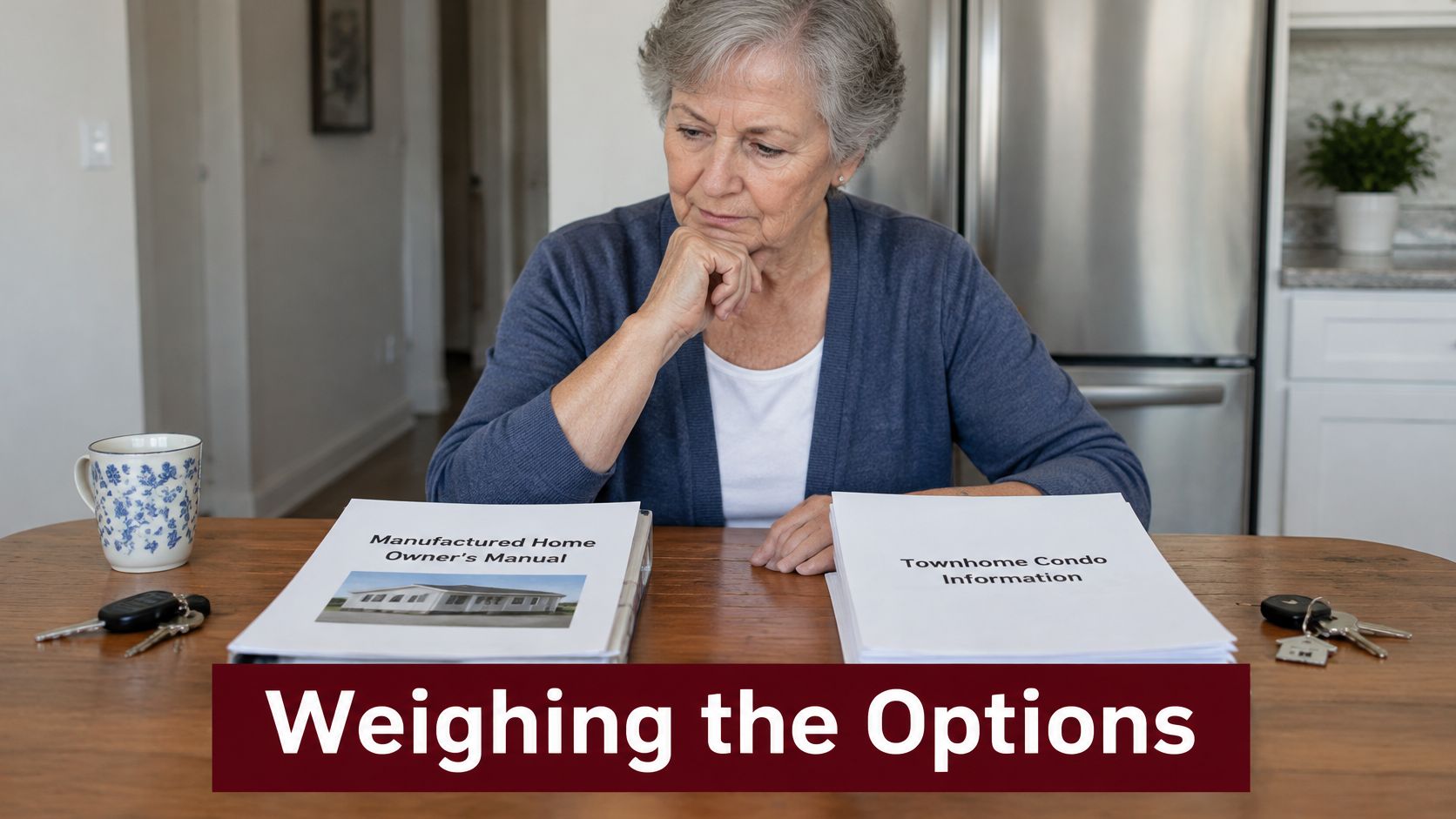
A downsizer weighing a pad against a townhome
A retired couple is comparing a manufactured home on a rented pad with a conventional townhome in Pitt Meadows or Maple Ridge. Friends mention Mission or Abbotsford only as other Fraser Valley places they might also look. The useful question is not which one is cheaper to buy. It is whether they can live with ongoing pad rent, park rules, approval to resell, and the chance the home must be moved.
They add the current written rent and the next increase date to the housing payment before they decide the discount is real. If the park must approve the next sale, they treat that consent as part of the exit, not as a formality. A townhome with its own land interest may cost more to enter and still leave them a wider set of future buyers. The pad home may fit if the rent, the rules, and the moving risk are acceptable on paper.
A first-time buyer beside fee-simple houses
A first-time buyer relocating from Surrey or Vancouver sees a leasehold strata, or another land-lease home, sitting beside fee-simple houses in Maple Ridge. The questions are how many years remain, whether renewal is a right or only a possibility, and whether a lender will approve that exact lease for the amortization they need.
A clause that says the landlord "may" renew is not a clause that says the landlord must. They ask the lender for a commitment on that lease, then they read the expiry against the years they expect to stay. Paying more for land ownership buys a broader exit. Accepting the lower entry price means less control and a thinner resale pool. That is the decision, in Maple Ridge first and Pitt Meadows next, for both of these buyers.
What to Confirm Before You Offer
A purchase file is like a set of train tracks. If one piece is missing, the deal may still look fine from the platform, but it will not carry the buyer where they expect to go. Work the file in order. Each check points at a document, not at a feeling about the neighbourhood. Use the file to set subjects and to price the rent and the years left, not the sticker alone.
Name what transfers. It is the home plus a site tenancy, a registered strata or land lease, or fee simple. Write that label at the top of the notes so later conditions match the interest being bought. That label drives the financing, the monthly cost, and the size of the future buyer pool.
Read the operative clauses against the comparison. Commencement, expiry, renewal, rent, permitted use, assignment, occupancy, pets, renovations, and termination should be marked on the agreement, not summarized from memory. A clause that says a landlord "may" renew gives the buyer less certainty than a clause that requires renewal, so keep the exact wording.
For a park home, secure the site agreement. Confirm it is written, signed, and dated, collect the landlord's copy, and record current pad rent, utilities, fees, and the next increase date. Treat that rent as part of the housing cost, the same way a mortgage payment and strata fee would be part of another purchase.
Registry and consent. Ask whether the home is in the B.C. Manufactured Home Registry and whether the park owner must approve the assignment. Get both answers in writing. Consent is part of the exit plan when a later buyer needs to qualify under the same park rules.
Lender approval of that property. Remaining term, amortization, loan-to-value, consent, and renewal are the questions. A pre-approval letter that never names the lease is not this step. Ask for lender confirmation that addresses the exact lease, the exact home, and the remaining term.
Tax and transfer tax classification. Confirm the tax position with the provincial manufactured-home property tax page, and have the lawyer test the fixture question for Property Transfer Tax.
Insurance. Confirm the three answers already lined up with the insurer and the park or landlord: building versus personal property, who carries site liability, and which coverages the rules require. The answer should match how the home is owned and where it sits.
Moving and notices. Check whether the home can physically be moved, and whether any notice about the park or the lease has already been issued. A lower purchase price can carry a higher future cost if the home has to leave the site.
Lawyer before subjects are removed. Have a B.C. real estate lawyer review the file. This article cannot do that review. The lawyer's job is to connect the lease wording, registry position, tax treatment, and lender conditions before the buyer loses the chance to walk away.
Put promises in the contract. Every seller or park promise goes into the contract or a schedule. Compare site rent plus tax, utilities, insurance, maintenance, and park fees with a fee-simple mortgage payment, using written rent and written scheduled increases.
Why the order matters
A home inspection still belongs in the subjects. The home inspection checklist for buyers covers condition. On a pad or a land lease, the inspector's notes also feed the moving question and the fixture question. Decks, stairs, porches, and service connections are not only comfort items. They can affect how the home is classified and whether it can leave the site.
The order matters because each answer changes the next one. A home that cannot be moved makes the site agreement more important. A short remaining term makes lender approval more important. A park approval right makes the resale plan more important.
Subjects are the pause that lets the lease, the lender, the park, and the lawyer see the same property. Removing them on a verbal "it's basically freehold" is how the cheaper price becomes the expensive one.
Require written confirmation of current rent and of every increase already scheduled. Then price the years left beside that carrying cost. The sticker is the last number in that stack, not the first.
Review the Lease With a Local Broker
Bring the listing, the lease or site agreement, the current rent statement, and any lender notes to Royal LePage Brookside Realty before an offer is written. The firm is a licensed British Columbia brokerage, licensed with BCFSA, working with buyers in Maple Ridge first and Pitt Meadows next. Mission, Abbotsford, and the rest of the Fraser Valley come into the conversation only when that buyer is comparing those markets. The brokerage serves those communities with full-service real estate sales and property management, which is useful context, not a substitute for reading the lease.
The meeting sorts the purchase into a manufactured-home site tenancy, a strata leasehold, or another long-term land lease. Subjects are then lined up for document review, for lender approval of that exact property, and for any park or landlord consent. Readers who also need ordinary rental context can use Brookside's existing pages on lease agreements and on landlord rights. Those pages do not replace the Manufactured Home Park Tenancy Act, and they do not replace a lawyer's review.
Buyers coming from Vancouver, Burnaby, Surrey, or another province get the same document-first review rather than a sticker-price comparison. A real estate contract review is the habit that keeps the interest being purchased matched to the conditions in the offer. Book the consultation, bring the lease, and do not remove subjects until a British Columbia real estate lawyer and the lender have seen the exact property.
Royal LePage Brookside Realty works with buyers in Maple Ridge and Pitt Meadows who need a leased-land file read before an offer, including the site agreement or registered lease, the rent statement, and lender notes on that property. The same document-first review applies when the comparison is a fee-simple home nearby. Visit Royal LePage Brookside Realty to book a consultation and bring the lease.