
A rent payment lands in the account, but the transfer message doesn't say which unit it belongs to. Another tenant pays part of the balance in cash, and nobody writes a receipt. Later, a dispute turns on exactly how much was due, when it arrived, and what the payment covered. For Maple Ridge landlords, the collection method is only half the job. The record it creates can matter just as much.
The best way for BC landlords to collect rent legally is to set clear payment terms in a written tenancy agreement, use a consistent and traceable method, and maintain a ledger that can be matched to payment records. If a tenant doesn't pay, act on the documented shortfall and follow the Residential Tenancy Branch (RTB) notice process rather than relying on informal demands.
Table of Contents
- What BC Actually Requires From Any Rent Collection Method
- Comparing Payment Methods for a Maple Ridge Portfolio
- Setting Up the Tenancy Agreement the Right Way
- Running Rent Day So the Records Build Themselves
- Building the Rent Ledger You Will Need at a Hearing
- When Rent Does Not Arrive, the Notice Process Step by Step
- Rent Increases as a Compliance Issue, Not a Collection Issue
What BC Actually Requires From Any Rent Collection Method
Any rent collection setup should meet four basic requirements: written payment terms, full and timely payment, consistent records, and lawful notice when payment breaks down. The payment method comes after those fundamentals. An app, bank transfer, or cash payment can all become a problem if the agreement and records don't explain what happened.
Start with a written tenancy agreement that identifies the monthly rent, due date, and permitted payment methods. BC's guidance on paying rent says rent is due in full and on time, by midnight on the due date. A non-refundable late fee is allowed only when the agreement authorizes it, and it can't exceed $25.
The agreement should also match the process the landlord follows. If it names one payment method, don't routinely accept another without recording the arrangement. Consistency helps both parties understand what counts as payment and gives the landlord a clearer record if they later need to establish whether rent was paid.
Practical rule: Every payment should be traceable to a tenant, a rental period, and an amount owing.
Keep a complete payment ledger and retain the underlying evidence, including bank or e-transfer confirmations, written communications, notices, and an up-to-date statement of the balance. For cash, the landlord must provide a receipt, and both parties should keep a copy.
If rent or certain utilities remain unpaid after the due date, a landlord may serve a 10 Day Notice to End Tenancy. The tenant has 5 days after receiving the notice to pay all rent and utilities owing or dispute it. Paying the full amount within that period cancels the notice and allows the tenancy to continue. The BC Residential Tenancy Act explained provides further context on the rules that shape these obligations.
The test for any payment method is straightforward: can the landlord show what was agreed, what was paid, when it was paid, and how any shortfall was handled?
Comparing Payment Methods for a Maple Ridge Portfolio
Payment options differ less in whether they can move money and more in how clearly they document the transaction. For a landlord managing rentals in Maple Ridge or Pitt Meadows, the useful comparison is traceability, usefulness in an RTB dispute, and day-to-day effort.
| Method | Type of Record | RTB Defensibility | Best Fit For |
|---|---|---|---|
| Cash | Signed receipt and ledger entry | Depends on complete, dated receipts and consistent records | Tenants who need a cash option, with strict receipt discipline |
| Cheque | Cheque image or deposit record, plus ledger entry | Stronger when matched to the amount owing and rental period | Landlords and tenants who prefer a paper payment trail |
| E-transfer | Bank confirmation and transfer details | Useful when each payment is identified and recorded | A simple default for landlords and tenants comfortable with electronic payment |
| Bank PAD or electronic transfer | Bank record and payment confirmation | Useful when each scheduled payment is reconciled to the ledger | Recurring payments where the tenant agrees to the arrangement |
| Dedicated landlord platform | Payment history, receipts, and tenant ledger, depending on the service | Useful when exported records clearly show dates, amounts, and allocations | Landlords who want payment tracking and records in one workflow |
Cash isn't prohibited, but a cash handoff without a receipt leaves an avoidable gap. The receipt should identify the amount and date and make clear what the payment covers. A cheque provides a paper trail, though it still needs to be matched to the tenant and rental period; the landlord should also confirm whether it was deposited or returned.
E-transfer is convenient, but an auto-deposit notification or a vague message isn't a complete ledger entry. Ask the tenant to identify the rental unit or address in the transfer message, save the confirmation, and record the payment against the correct month. A screenshot can preserve useful transaction details, but it doesn't replace a ledger that explains whether the transfer covered rent, utilities, or a shortfall.
A dedicated payment platform may combine recurring payments, receipts, and tenant balances. Landlords comparing what a payment portal can document can review secure tenant payment portal options, then check whether the service produces records that can be exported and reconciled.
For many small portfolios, a layered setup is practical: use e-transfer as the default if it's agreed in the tenancy terms, consider an authorized bank PAD or in-app transfer when recurring collection would help, and issue a receipt for every cash top-up. The strongest choice is the one that leaves a consistent record without creating unnecessary friction.
Setting Up the Tenancy Agreement the Right Way
A tenancy agreement should remove guesswork before the first payment comes due. It needs to tell both parties how much is payable, when it's due, how to pay, and how the landlord will record it. The tenant lease agreement template can help landlords review the basics, but any agreement still needs to reflect the actual tenancy and current BC requirements.
Write the rent amount and due date in plain language. List the permitted payment methods specifically, such as cash, cheque, or electronic transfer. Vague wording such as “electronically or otherwise” doesn't help when the parties later disagree about whether a particular payment method was agreed.
A late-fee clause should state when the fee may apply and comply with the $25 maximum described in BC's rent guidance. Don't add a blanket convenience fee or assume that an amount not authorized by the agreement can be collected. Keep the clause clear, and don't use it to disguise a charge that isn't permitted.
Utilities need equally careful wording. Identify each utility and explain how the tenant's share is calculated, using a written formula or a sub-meter where applicable. A charge with no clear calculation can turn a payment dispute into an argument about whether the amount was ever properly established.
The agreement should also state how partial payments will be applied. A representative clause might say: “Payments will be recorded against rent and then against any separately documented utility amount owing.” The wording must reflect the arrangement and applicable rules, not only the landlord's preferred accounting practice. Security-deposit terms must also stay within the legal limit, and rent increases must not be rounded up or collected without proper notice.
Before the next rent cycle, check the agreement for:
- Rent and due date: The amount and payment deadline are unambiguous.
- Payment methods: Each accepted method is named.
- Fees and utilities: Any charge is clearly authorized and calculated.
- Payment allocation: The agreement and ledger can show what each payment covered.
Running Rent Day So the Records Build Themselves
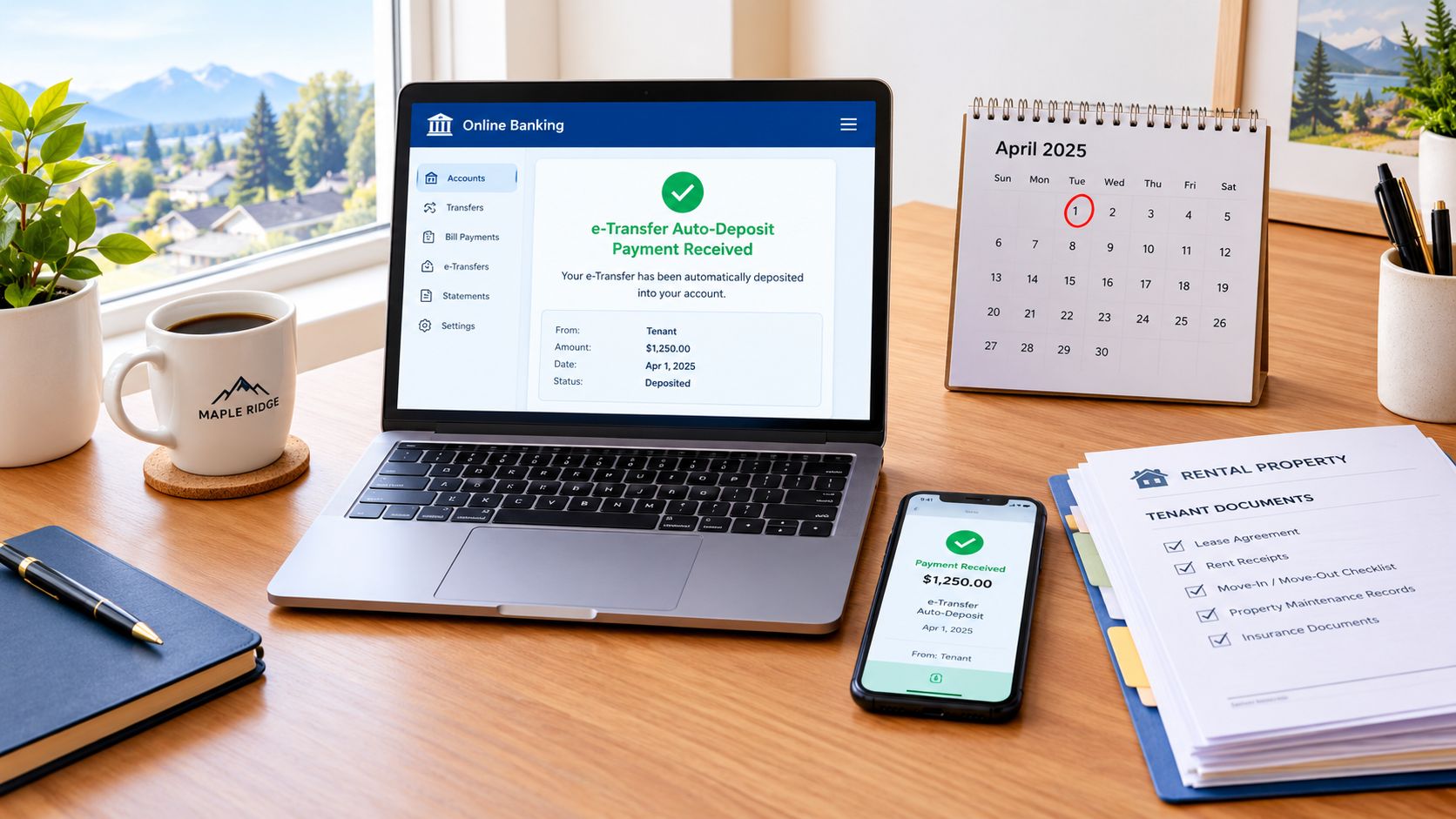
Rent day shouldn't depend on remembering which messages came in or reconstructing a bank balance later. Set a routine that checks each tenancy against the agreement and updates the ledger as payments arrive. For electronic payments, retain the bank confirmation or transaction record; an auto-deposit notification is a prompt to update the file, not a substitute for it.
When cash changes hands, write the receipt during the same interaction. Include the date, amount, tenant, and the period or charge covered, then keep a copy with the ledger. Don't leave the receipt for later. That small delay is how a clear transaction becomes a disputed memory.
If the tenant pays only part of what's due, enter the amount received and the remaining balance immediately. Record how the payment was allocated, and don't quietly treat the account as settled. If the ledger tracks utilities or pet fees, keep those entries distinct from rent so the running balance shows what is owed for each category.
Rent is payable in full and on time. A small shortfall still needs attention. Verify it against the agreement and ledger, record the amount outstanding, and follow the applicable process rather than letting it sit until the next month. The RTB rules also allow certain deductions in specific circumstances, so a landlord shouldn't assume every disputed deduction automatically counts as unpaid rent.
A straightforward rent-day routine can take about a minute once the records are organised:
- Check the amount due against the agreement and current ledger.
- Match each payment to the tenant and rental period.
- Issue any cash receipt and save the confirmation for electronic payments.
- Record shortfalls and allocations before closing the file for the day.
The routine matters more than the software. If another person needs to review the account, they should be able to tell what arrived, what remains owing, and what action followed.
Building the Rent Ledger You Will Need at a Hearing
The rent ledger is the landlord's working case file. It should show the payment history in a way that can be checked against the tenancy agreement and original records. A bank statement may show money moving, but it won't necessarily explain which rental period or charge the payment covered.
Each entry should include the date rent was due, date received, payment method, reference or confirmation, amount, and allocation. If a payment was partial, show the amount received and the balance remaining. Record a correction as a dated adjustment rather than overwriting the earlier entry, so the history remains understandable.
A simple spreadsheet can work for a small Maple Ridge portfolio. Use a separate sheet for each tenancy, keep the columns consistent, and reconcile the entries against bank or e-transfer records every month. A dedicated landlord platform can serve the same purpose if it exports the underlying payment data and lets the landlord check how amounts were allocated.
For broader bookkeeping context, Brookside's guide to rental property accounting is relevant to the recordkeeping side of managing a rental. Whatever format the landlord chooses, the ledger should be backed by the documents that explain it:
- The tenancy agreement and any written changes to payment terms.
- Bank or e-transfer confirmations and cash receipts.
- Written communications about payment, shortfalls, or disputed charges.
- RTB notices and proof of service, if the landlord has served a notice.
Keeping the tenancy file for the duration of the tenancy and one year afterward is a cautious administrative practice, not a retention period stated in the cited BC guidance. Store the records securely and keep them organised by tenancy and date, so the evidence can be assembled without having to search across unrelated accounts and message threads.
A recent RTB decision described in BC's direct-request guidance awarded a landlord arrears after the landlord established the unpaid amounts and confirmed rent remained payable under the tenancy agreement. The practical lesson is not that any particular ledger guarantees an outcome. It's that the amount owing and the agreement supporting it need to be clear.
When Rent Does Not Arrive, the Notice Process Step by Step
When rent is unpaid, move from informal follow-up to a documented process. Repeated messages don't fix a calculation error, preserve proof of service, or create a reliable record of the balance.
Verify the shortfall first. Check the tenancy agreement, due date, ledger, and any payment confirmation that may not yet have been recorded. If the amount includes utilities, confirm the utility charge and calculation before including it in the balance.
Then use the prescribed RTB-30 10 Day Notice to End Tenancy for Unpaid Rent or Utilities when appropriate. BC's information on unpaid rent describes the notice process and the tenant's response period. Keep the completed notice, the ledger, and proof showing who received the notice, when, and by what method. A copy of the notice without a reliable service record may leave a gap in the file.
The tenant has 5 days after receiving the notice to pay all rent and utilities owing or apply to dispute it. If the tenant pays the full amount within that period, the notice is cancelled. If neither payment nor a dispute occurs within the period, the landlord may use the RTB direct-request process to seek an Order of Possession.
Partial payment during a notice period needs careful handling. Record what was paid and when, and confirm the notice's legal effect before deciding what to do next.
Four avoidable mistakes can weaken an otherwise valid claim:
- An incomplete or miscalculated notice: Check the amount and details against the agreement and ledger.
- No proof of service: Keep a record of delivery, including who received it, when, and how.
- A partial payment handled casually: Record it and understand its legal effect before taking further action.
- A delayed response to repeated lateness: Address each incident promptly and keep a consistent record.
For repeated late payments, BC policy identifies three late payments as the minimum generally sufficient to support a one-month notice. An arbitrator may also consider how far apart the incidents were, exceptional causes such as a bank error, and whether the landlord acted promptly. The RTB dispute-resolution overview can help landlords understand the dispute process. A notice should never be treated as permission for a self-help eviction, such as changing locks or removing a tenant's belongings.
Rent Increases as a Compliance Issue, Not a Collection Issue
A tenant's regular payment is due on the first, but a rent increase takes effect only after the legal notice period. Change the scheduled withdrawal or ledger too early, and your records can show a balance the tenant does not owe.
In BC, a landlord can generally increase rent once every 12 months, with at least three full months' notice on the approved RTB-7 form. The provincial rent increase rules set out the requirements, and Brookside's guide to BC rent increase rules for landlords and tenants explains the calculation and notice timing. The annual limit for 2026 is 2.3%. The calculated increase cannot be rounded up.
If the calculation leaves cents, charge the exact lawful amount. Your ledger should record what the tenant is legally required to pay, not a more convenient figure. A tenant does not owe an unlawful or improperly noticed increase.
Correct the ledger before changing collection
Check the notice date, effective date, tenancy anniversary, and calculation before changing the rent amount. Until those details are correct, keep collecting and recording the current lawful rent. Update the payment schedule only after the notice and amount are in order.
An increase above the annual limit requires the tenant's written agreement or an RTB decision approving an additional increase. Keep that agreement or decision with the tenancy records. Then update the ledger with the approved amount and effective date.
Have a second person review each rent change before it reaches the ledger or payment schedule. Set a calendar reminder well before the notice deadline, then check the form, calculation, and timing yourself. The reminder prompts the review; it does not prove compliance.
Keep the operating rhythm simple
At month-end, reconcile the ledger against payment records. Review the tenancy agreement, utility allocations, and contact details, and check the rent-increase calendar before preparing a notice. On rent day, confirm payments, issue receipts, and record any shortfall.
File proof of service, utility allocations, and updated addresses alongside payment records. When a tenant pays a different amount after an increase, the dated notice, receipt, and ledger should make clear what was due and what was received.
Some Maple Ridge and Pitt Meadows landlords prefer to hand off ledger work, follow-ups, and tenancy paperwork. Royal LePage Brookside Realty provides licensed residential property management, including rent collection and tenancy administration. Review the service and decide whether managed rent collection fits your needs.
Royal LePage Brookside Realty provides licensed residential property management, including rent collection and tenancy administration for rental owners in Maple Ridge and Pitt Meadows. If organised records and consistent rent administration would make managing your property easier, start a conversation through Royal LePage Brookside Realty.