A couple comparing homes in Maple Ridge often starts with a simple question: how much less will the move cost than staying closer to Vancouver? The better question is broader. Living in Maple Ridge means weighing the purchase price against commuting, utilities, property taxes, insurance, maintenance and the value of having more space. The city can offer a quieter pace and a wider range of housing than many eastern municipalities, but it isn't automatically inexpensive once the full monthly budget is on paper.
Maple Ridge had 90,990 residents in the 2021 Census, up 10.6% from 82,256 in 2016, and the community has continued to evolve from a small agricultural district into a substantial suburban city. Statistics Canada census information and the municipal population history help explain why buyers encounter everything from older homes near established corridors to newer townhouse and detached-home communities farther east.
For buyers, the practical answer is this: Maple Ridge suits people who value space, outdoor access and a less urban daily rhythm, and who can accept a more concentrated road network, longer regional trips and careful property maintenance. The neighbourhood choice matters as much as the city name.
Table of Contents
- What Daily Life Really Looks Like in Maple Ridge
- How Maple Ridge's History Shapes Its Housing Stock
- Maple Ridge Neighbourhoods Compared Side by Side
- What the Maple Ridge Housing Market Looks Like in 2026
- Commuting and Getting Around the Lower Mainland
- Schools, Parks, and Family Life in Maple Ridge
- The Honest Pros and Cons of Living in Maple Ridge
- Practical Next Steps for Buyers and Sellers in Maple Ridge
What Daily Life Really Looks Like in Maple Ridge
A typical move conversation involves a couple leaving a smaller condo near the region's employment centres for a townhouse or detached home in Silver Valley or Albion. One partner imagines a quieter morning, a yard and easier access to trails. The other checks the route to work, the school run and the cost of heating a larger home. Both are asking whether the extra space will improve daily life enough to justify the travel.
That trade-off defines Maple Ridge. A morning from an Albion subdivision may begin with a short local drive before joining a busier arterial route. A Silver Valley household may enjoy newer construction and a wooded setting, but still need to plan errands around the neighbourhood's distance from larger commercial areas. Traffic tends to collect on a limited number of roads, so a route that looks manageable on a map can feel very different during school and work peaks.
The local rhythm
Dewdney Trunk Road and 224th Street provide much of the everyday rhythm. Coffee, groceries, appointments and school activities often fit into a sequence of local stops, but residents still travel outward for broader shopping, specialised services or an evening in Langley or Coquitlam. Maple Ridge is quieter than Burnaby and less commercially dense than some more central suburban areas, which is part of the appeal and part of the inconvenience.
Weekends can split in two directions. One day might involve trails, the dykes, the Allco Fish Hatchery or a drive toward Golden Ears Provincial Park. The next might mean heading west for shopping, recreation or family commitments. That pattern works well for households that want outdoor access and don't need every amenity within walking distance.
Practical rule: A buyer should test the actual weekday route before making an offer, not rely on a quiet weekend drive.
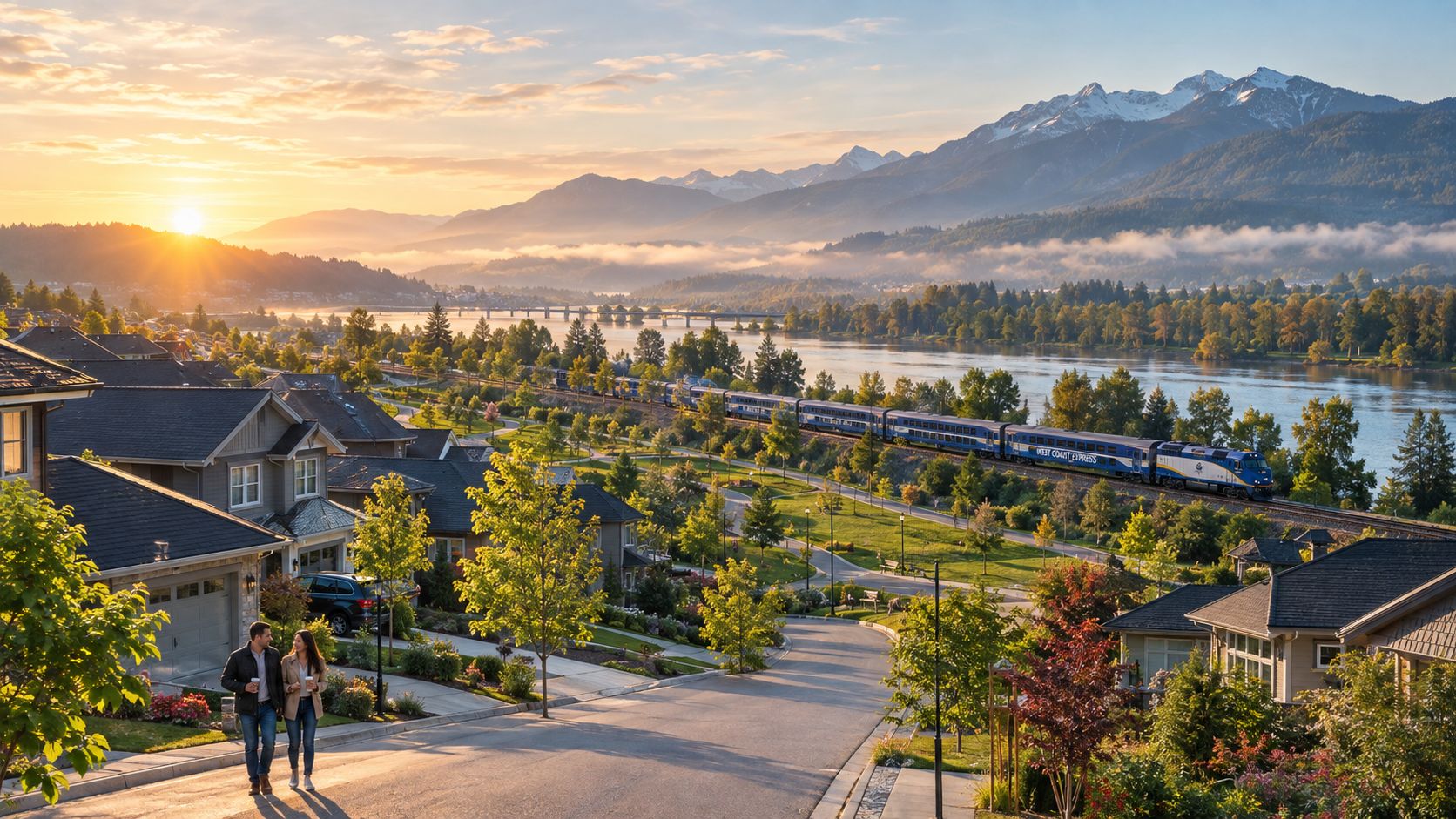
The West Coast Express remains relevant for commuters whose schedules match its service pattern, while discussion of a future SkyTrain extension should be treated as planning context rather than a promise of immediate service. The local guide to moving to Maple Ridge offers useful background, but the decisive test is personal: where does the household work, how often must it travel, and how much space does the budget need to support?
How Maple Ridge's History Shapes Its Housing Stock
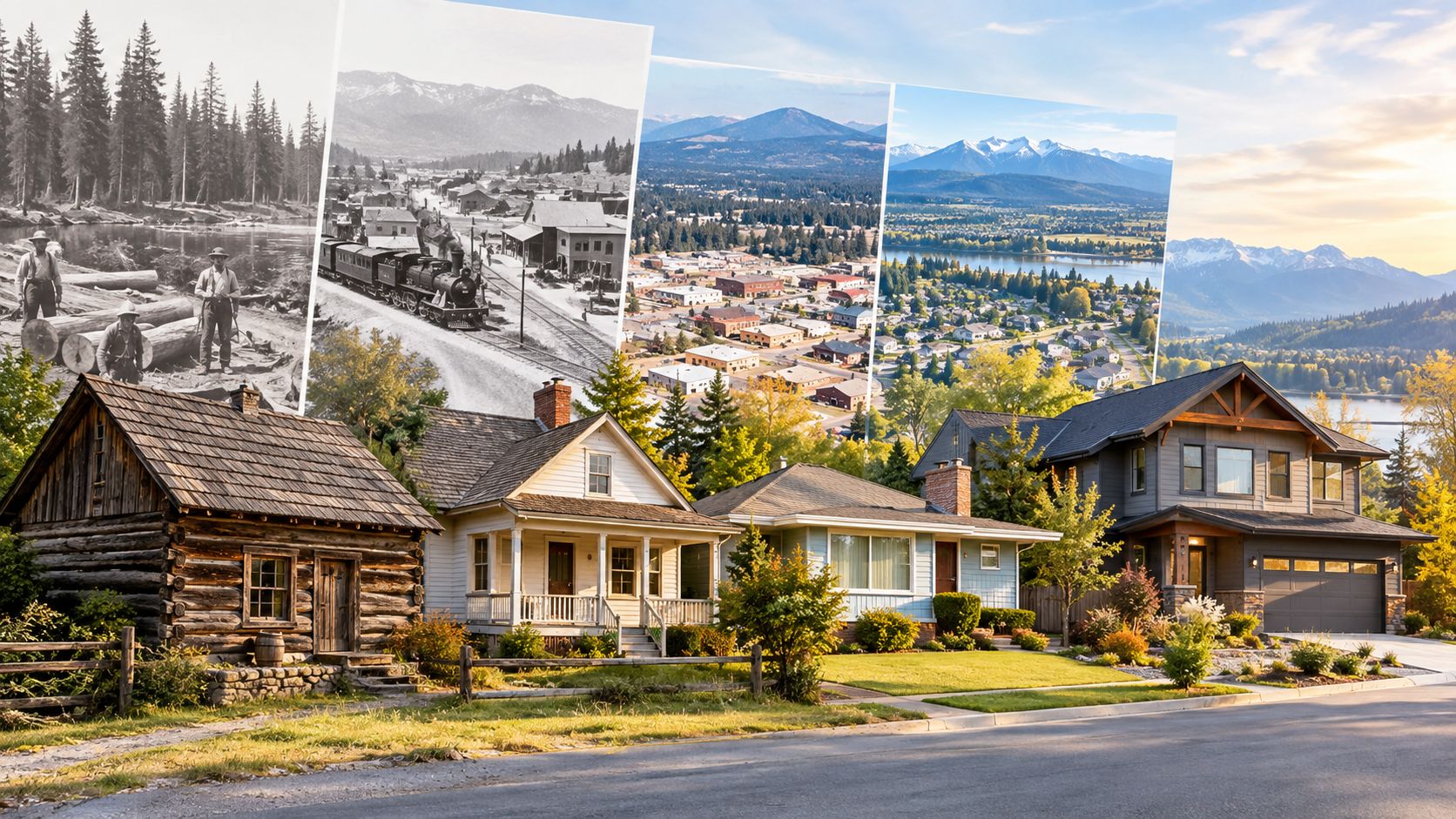
Maple Ridge's housing stock makes more sense once its civic history is visible. The municipality was incorporated on September 12, 1874, when the district was sparsely settled and had fewer than 50 pioneer families. It was also much larger than the municipality residents recognise today, extending from the Pitt River to the Stave River before later communities separated. Local heritage material describing Maple Ridge's incorporation and early geography provides the historical context behind the city's scattered settlement pattern.
From settlement corridors to subdivisions
Older places such as Haney, Hammond and Port Haney developed around established transportation and settlement corridors. That legacy still appears in the housing. Near Lougheed Highway and older commercial streets, buyers may encounter houses from different renovation eras, smaller lots, older infrastructure and a mixture of detached homes, apartments and townhome clusters.
West Maple Ridge often feels more established because much of its housing predates the newer eastern subdivisions. Cottonwood and Kanaka Creek represent later suburban growth, while Albion brought more family-oriented development. Silver Valley generally presents a newer suburban profile, with master-planned communities and more recent construction.
This history explains why lot sizes can change noticeably from one block to the next. A buyer who expects a uniform subdivision experience may instead find a renovated older house beside a newer infill project, or a compact strata community close to a long-established detached-home street.
What buyers should notice during showings
The population arc is substantial. Provincial and federal census records show growth from 3,772 residents in 1921 to 90,990 in 2021, which means the city has absorbed many waves of housing development rather than one single building phase. That depth creates choice, but it also creates variation in roofs, windows, drainage, electrical systems, layouts and renovation quality.
A showing should therefore include more than room measurements. Buyers should ask when major components were replaced, whether additions were permitted, how water moves around the lot and whether the current finishes conceal older systems. The city's history isn't just background. It is a practical explanation for why two similarly priced homes can carry very different future costs.
Maple Ridge Neighbourhoods Compared Side by Side
Neighbourhood names are useful only when they help a buyer choose a daily routine. Albion, Silver Valley, Cottonwood, Kanaka Creek and West Maple Ridge each offer a different balance of housing age, lot or strata scale, access and travel time. The right fit depends less on a generic reputation than on where the household works, how often it drives and whether it values newer construction or a more established setting.
| Neighbourhood | Character | Dominant Housing Type | Typical Buyer |
|---|---|---|---|
| Albion | Newer, family-oriented suburban development | Detached homes and townhouses | Move-up families seeking newer layouts |
| Silver Valley | Newer, greener and more planned | Detached homes and townhouses | Buyers prioritising newer builds and space |
| Cottonwood | Convenient suburban pocket with practical amenities | Townhouses and detached homes | First-time buyers and young families |
| Kanaka Creek | More wooded and semi-rural in feel | Detached homes, larger properties and some acreage | Buyers trading walkability for land and privacy |
| West Maple Ridge | Established and closer to central services | Older detached homes, townhouses and apartments | Buyers valuing access, transit and mature streets |
Matching the pocket to the household
Cottonwood can appeal to a first-time buyer who wants a townhouse and practical access to groceries and daily errands. Its compromise is that strata living brings monthly fees, shared maintenance and rules that need review before an offer. Albion tends to suit a family looking for a newer subdivision, but the buyer should test the commute rather than assume newer construction solves every lifestyle issue.
Silver Valley often gives buyers a newer-home feel and more generous living space. The trade is central convenience. A household that regularly needs transit, hospital access or quick westbound travel may find the location less forgiving than the floor plan suggests.
Kanaka Creek works for buyers who care about trees, privacy or a larger property. It isn't the natural choice for someone who wants to walk to a broad range of services. West Maple Ridge offers a more established setting and practical access to central amenities, transit and the hospital, but older homes may require a more detailed inspection and renovation budget.
The most useful neighbourhood question is not “Which area is best?” It is “Which compromise will this household notice least often?”
A more detailed Maple Ridge neighbourhood guide can help narrow the search, but buyers should still compare individual streets. In Maple Ridge, the block, home age, slope, drainage and route to work can matter as much as the broader neighbourhood label.
What the Maple Ridge Housing Market Looks Like in 2026
August 2026 pricing shows why Maple Ridge can feel more attainable than the broader region without becoming a low-cost market. The composite MLS® HPI benchmark was $890,800, down 0.7% from July and 7.0% from a year earlier, according to Maple Ridge August 2026 market data. Detached homes remained the most expensive segment, while apartments offered the lowest benchmark entry point among the three main property types.
The benchmark figures were:
| Property Type | Maple Ridge Benchmark | Greater Vancouver Benchmark | 6-Month Change |
|---|---|---|---|
| Detached | $1,177,800 | Not provided | Not provided |
| Townhouse | $704,100 | Not provided | Not provided |
| Apartment | $504,300 | Not provided | Not provided |
| Composite | $890,800 | $1,081,900 | Not provided |
The Greater Vancouver composite benchmark was $1,081,900, so Maple Ridge's composite sat below the broader regional figure in August 2026. That gap is meaningful, but it doesn't answer whether a particular household can carry the home comfortably.
The market question behind the price
The Fraser Valley market recorded 941 home sales in August 2026, while its composite benchmark declined 0.9% month over month. The Fraser Valley Real Estate Board monthly market report characterised conditions as increasingly buyer-friendly, which gives buyers more room to assess inspection findings, financing and resale fit rather than treating every listing as an urgent decision.
A buyer considering a conditional offer should compare the home's benchmark segment with its actual condition. An older detached house may look close to the city's detached benchmark but require roof, drainage, envelope or heating work. A townhouse may appear more manageable, yet strata fees and upcoming shared-building projects can alter the monthly calculation.
Affordability beyond the listing
The useful comparison is not just Maple Ridge against Greater Vancouver. It is the household's complete budget, including mortgage qualification, insurance, taxes, utilities, commuting and repairs. Readers looking for broader policy context can review housing affordability solutions, but a local purchase still requires property-specific analysis.
Current Maple Ridge homes for sale should be filtered by property type, age, location and monthly carrying cost. Waiting may bring more choice or different pricing, but no buyer can assume that a future season will produce a better personal outcome. The strongest decision is the one supported by a resilient budget and a home that fits the household's actual routine.
Commuting and Getting Around the Lower Mainland
Maple Ridge commuting works best when the neighbourhood matches the workplace. A downtown Vancouver employee with a predictable schedule may prioritise access to the West Coast Express. Someone travelling regularly to Langley may value direct road access more than proximity to a station. A household working in Coquitlam or Burnaby needs to test the Lougheed Highway and Mary Hill Bypass experience at the times it will travel.
Four practical route tests
For downtown Vancouver, examine the West Coast Express station options first. The service can be useful for households whose work hours align with the timetable, but it shouldn't be treated as a universal replacement for a car or local bus connection.
For Burnaby and Coquitlam, assess the Lougheed Highway corridor and the transfer points required after reaching the western side of the region. A home that looks close on a map may still produce a demanding trip when traffic and connections are included.
For Langley, compare the route through local arterials and Highway 1 access via 200th Street. Albion and Silver Valley can feel quite different from West Maple Ridge once the trip begins, particularly when a household must cross congestion-prone corridors.
For households relying on buses, check the specific route and timing rather than assuming citywide coverage. Routes such as the 701 and 791 form part of the local transit picture, while HandyDART-adjacent services are relevant to eligible riders and should be confirmed directly through the applicable transit information.
Car-free households often prefer locations closer to the West Coast Express stations and established services. Buyers farther east may gain newer housing or more space, but they need a realistic plan for errands, school travel and appointments.
The proposed SkyTrain Evergreen extension context can be useful for understanding regional transportation discussion, but a buyer should base today's purchase on existing services. A short test drive during rush hour is more valuable than an optimistic map estimate.
Schools, Parks, and Family Life in Maple Ridge
Family life in Maple Ridge is organised around school catchments, activity schedules and vehicle routines. Families often ask about elementary and secondary options within Maple Ridge and Pitt Meadows School District 42, then narrow their search based on French immersion availability, program fit and enrolment logistics. Catchment boundaries can affect a decision as much as the home's bedroom count, so the address should be checked directly with the school district before an offer.
Garibaldi Secondary's Riverside program can also shape a family's enrolment discussion. Program availability and admission details can change, which means parents should confirm current requirements rather than rely on a listing description or a neighbour's past experience.
A realistic family week
A weekday might involve a school run, work travel and an after-school activity near the Greg Moore Youth Centre or Leisure Centre. Sports schedules can pull families toward facilities such as Planet Ice, while the refurbished Hammond Community Centre adds another established recreation option. The practical issue is coordination. A home that feels spacious may still create stress if every activity requires a separate cross-city drive.
The parks network changes the weekend rhythm. Trails around the Kanaka Creek watershed and the Allco Fish Hatchery provide nearby options for walking and nature time. Sports fields and recreation facilities create a more scheduled type of outdoor life, while the dykes and access toward Golden Ears Provincial Park offer longer outings when weather and travel time cooperate.
Weather affects the routine
Maple Ridge's wet season has a direct effect on family logistics and home upkeep. Annual precipitation is around 1,788 millimetres, with most rainfall concentrated from October through March, according to Maple Ridge climate summaries. That means families should evaluate covered storage, mud control, drainage around play areas and the condition of paths and retaining features.
A successful family move isn't just about finding a nearby school or park. It is about making the full week workable, including wet-weather travel, practice schedules, school boundaries and the maintenance demands of a larger property.
The Honest Pros and Cons of Living in Maple Ridge
Maple Ridge can reduce the purchase price compared with the broader region, but a lower listing price doesn't guarantee a lower monthly burden. The household still needs to budget for property taxes, water and sewer charges, natural gas, insurance, strata fees where applicable, commuting and repairs. These costs vary by property and household, so they need to be confirmed rather than estimated from a generic relocation article.

Where the trade-offs appear
Maple Ridge's ownership-heavy housing structure is important. In 2021, 79.1% of households were homeowners, single-detached houses represented 52.6% of occupied private dwellings, and renters occupied 20.9% of households, according to Maple Ridge demographic data. That mix supports a strong owner-occupier identity, but it can also mean fewer purpose-built rental choices and greater sensitivity to resale conditions.
The benefits are tangible:
- Space: Buyers may find more room, yards or family-oriented layouts than in more central markets.
- Outdoor access: Trails, dykes and regional parks can become part of ordinary weekends.
- Housing variety: Older detached homes, townhouses, apartments and newer construction create several entry points.
The costs are just as real:
- Travel: Commutes can be longer, especially when bridge and arterial congestion builds.
- Amenities: Late-night and specialised shopping options may require a trip outside the city.
- Maintenance: Older West Maple Ridge homes can require more investigation, while hillside properties need careful attention to drainage, grading and exterior wear.
- Qualification: The mortgage stress test can be the limiting factor even when the sticker price appears lower.
Renters and landlords also need current tenancy information. British Columbia's 2026 residential rent increase limit is 2.3%, and the province requires at least three full months' written notice, with an increase occurring only once every 12 months. The provincial rent-increase rules should be checked before any notice is prepared, because this isn't legal advice and individual circumstances can matter.
For a household that values quiet streets, outdoor access and interior space, the compromises may be worthwhile. For someone who needs a short daily commute and dense amenities, the apparent bargain may not survive the complete budget review. A local assessment of whether Maple Ridge fits a buyer's lifestyle can support that comparison, but the final answer belongs to the household's numbers and routines.
Practical Next Steps for Buyers and Sellers in Maple Ridge
A Maple Ridge move becomes clearer when the preparation reflects the specific property and commute rather than a generic checklist.
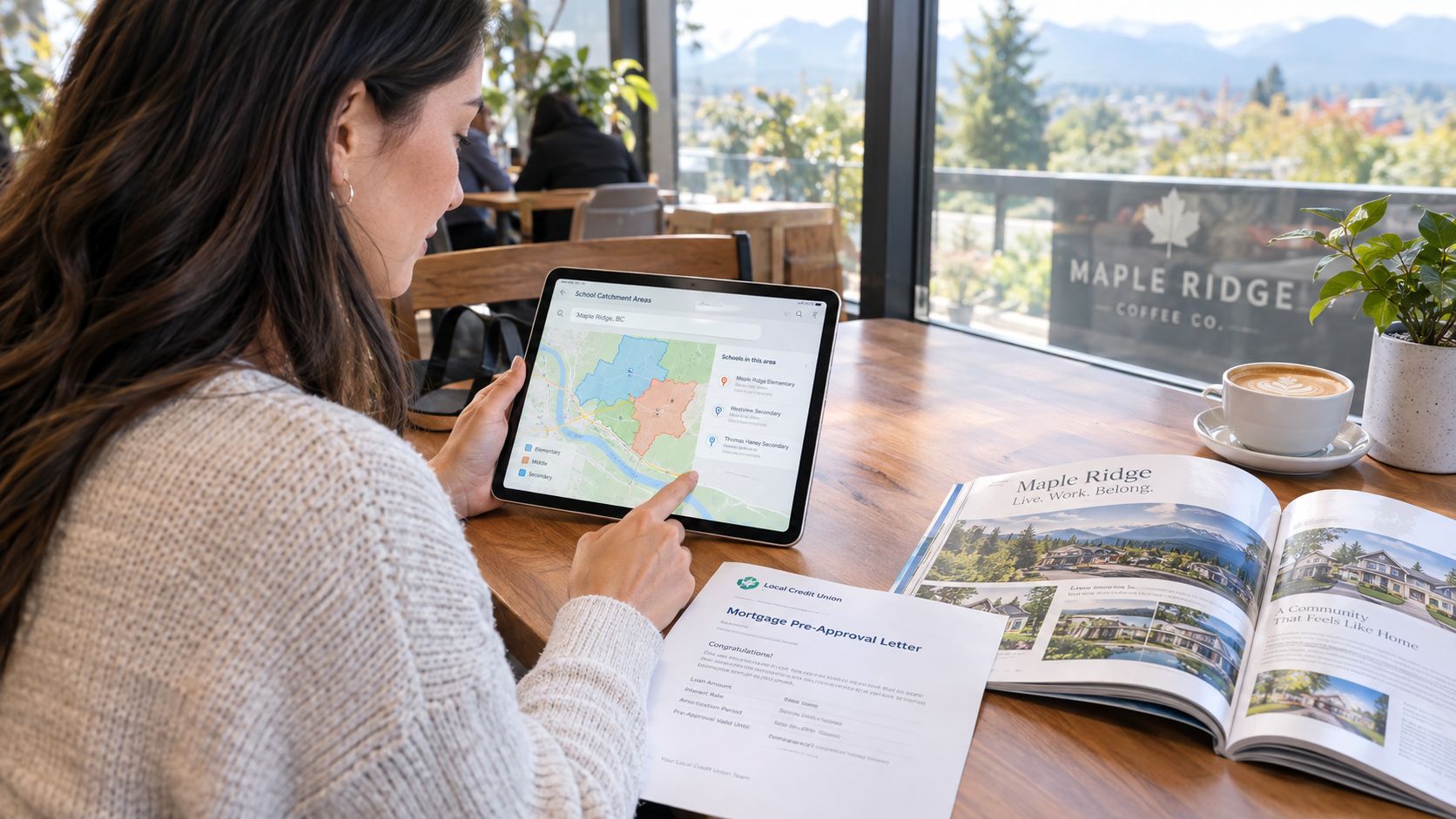
Buyers should start with financing. Pre-approval from a lender familiar with local price points should account for the mortgage stress test, property taxes, utilities, insurance, strata fees and expected maintenance. Viewings should then be scheduled during the commute windows that matter, including a West Coast Express trip or a Highway 7 drive where relevant.
Catchment research belongs before the offer. Families should verify boundaries and current program information through School District 42, especially when French immersion or the Riverside program is part of the decision. Buyers should also request strata documents early for townhouses and apartments, and collect inspection, insurance and financing records before writing.
Sellers need sub-area pricing, not a citywide guess. A current comparative market analysis should distinguish West Maple Ridge, Albion, Silver Valley, Cottonwood and Kanaka Creek, while a pre-listing inspection can identify drainage, roof, envelope and deferred-maintenance issues. Presentation should match the home's age. Older finishes need a different preparation plan from newer construction.
Royal LePage Brookside Realty typically begins a Maple Ridge file with a 30-minute lifestyle call, a neighbourhood-specific pricing review and a written plan for offer strategy or launch timing. Before listing or writing, clients should gather identification, mortgage details, title or strata documents, renovation records, permits, utility information and preferred dates. Households planning logistics can also use this practical guide to plan your house move.
Royal LePage Brookside Realty provides locally focused guidance for Maple Ridge and Pitt Meadows buyers, sellers, landlords and investors, including valuations, residential sales and property management. Visit Royal LePage Brookside Realty to arrange a neighbourhood-specific conversation about carrying costs, commute fit and the next step for the property.