A 2024 Abbotsford profile framework now includes 13 new or amalgamated community areas, while the city had roughly 166,847 residents in 2024. The right Abbotsford neighbourhood depends on whether the priority is walkability and services, established lots and schools, newer homes and Highway 1 access, recreational or semi-rural space, or rental investment.
Which Abbotsford neighbourhood fits a move when the same budget could lead to a condo near services, a detached home on a mature street, a newer subdivision property, or an acreage with very different commute and maintenance demands? The answer depends less on a universal ranking and more on the daily routine the home must support.
This guide compares eight Abbotsford neighbourhood profiles, from the downtown core and established west side to newer eastern communities, Mill Lake, central strata housing, semi-rural edges and rental properties. Each profile considers likely residents, home types, time-sensitive pricing, commuting and transit, amenities and schools, trade-offs, and a practical due-diligence step. Supplied market figures should be checked against current reliable data before a buyer makes an offer.
The focus is Abbotsford directly. Maple Ridge and Pitt Meadows remain relevant to Royal LePage Brookside Realty's primary Fraser Valley service area, but only where a regional comparison helps clarify a decision. For broader local-search strategy, readers can also review how to boost your brokerage with local SEO.
School assignments, zoning, strata documents, transit schedules and tenancy rules require current verification. The city's neighbourhood data system also shows active planning work, including completed plans for City Centre, Historic Downtown, UDistrict and McKee, alongside broader Official Community Plan updates. Abbotsford's official statistics and planning resources are a useful starting point.
Table of Contents
1. Downtown Abbotsford Core
Downtown Abbotsford suits buyers who want daily convenience over a large lot. The historic heart around Mission Street and the downtown corridor combines heritage buildings, retail, dining, mixed-use projects and housing that can put more errands within walking distance.
The housing choice is broad. A buyer might compare a renovated heritage home south of downtown with a newer condominium that incorporates a heritage facade, or a live-work loft in a converted commercial building. Those options don't carry the same ownership responsibilities. A character property may offer architectural appeal but demand more investigation into structure, wiring, plumbing, insulation and renovation approvals.
The downtown lifestyle can work for a young professional, a downsizer or a household that values access to services. Families should look more closely at school routes, outdoor space and the practical distance to hospitals, employment centres and daily childcare. Parking can also change the experience, particularly where a property relies on street parking or has limited onsite spaces.
Practical rule: A walkable address still needs a block-by-block review. Visit during the day and evening, check parking patterns, and assess noise before treating convenience as a complete lifestyle solution.
What to verify before offering
- Older-home condition: Arrange appropriate heritage, structural and building-system assessments before committing to a renovation-heavy purchase.
- Parking arrangements: Review municipal requirements, title information, assigned stalls and realistic street-parking availability.
- Property incentives: Ask the municipality whether any current revitalization or heritage programs apply. Programs can change and shouldn't be assumed.
- Current market context: Use the latest local market reporting rather than relying on an old price range. The Abbotsford real estate market guide can help frame the conversation, but current listings and comparable sales still need review.
Downtown works when the buyer wants urban convenience within a mid-sized city. It works less well when the priority is privacy, a large yard or a quiet rural setting.

2. West Abbotsford Residential
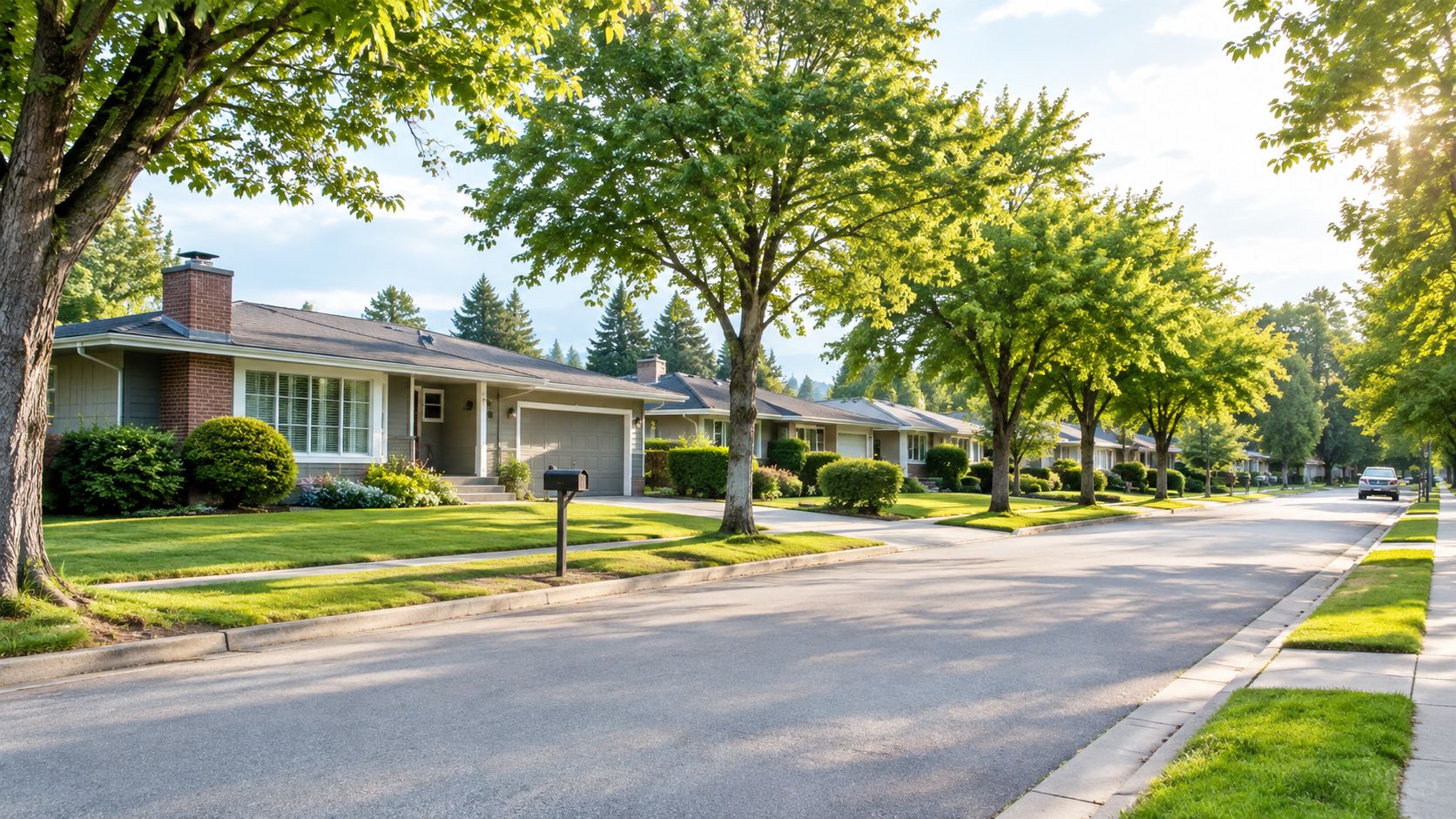
West Abbotsford, including the area described roughly between McCallum Road and Pearson Avenue, appeals to buyers who prefer established streets, mature landscaping and detached-home living. The neighbourhood's appeal comes from the contrast with newer construction. Mature trees, older homes and larger lots can create a settled residential feel, while parks, schools and local services remain within practical reach.
A typical search might include a renovated home from the 1970s, a property where a larger lot has been divided, or an older farmhouse adapted for modern family use. Each option needs a different inspection strategy. Renovated finishes don't necessarily confirm that major systems were updated, and a subdivided lot requires careful review of boundaries, access, servicing and future building potential.
This area can suit an established household that wants more space without moving to an acreage. It can also work for a buyer planning an addition, workshop or secondary suite, provided the lot, zoning and municipal requirements support the plan.
The mature-lot trade-off
Older trees add privacy and character, but they can also create maintenance obligations. A buyer considering an expansion should confirm the survey and lot lines before designing around assumed setbacks. Tree health, root systems and potential removal costs deserve attention before the renovation budget is finalized.
- School assignment: Confirm the current catchment directly with the relevant school authority. A nearby school doesn't guarantee assignment or enrollment availability.
- Secondary housing: Review current municipal rules for accessory dwellings or secondary suites before treating rental income as part of affordability.
- Lot potential: Obtain reliable survey information where additions, subdivision or new construction are part of the plan.
- Renovation history: Request permits, invoices and documentation for major work rather than relying only on visual finishes.
West Abbotsford can be a strong lifestyle fit for buyers who value established family living. Its main limitation is that older housing may require more capital planning than a newer property, even when the home looks move-in ready. Readers comparing available homes can use houses for sale in Abbotsford West as one search starting point, then evaluate each property on its own condition and legal status.
3. East Abbotsford
For buyers choosing between newer construction and an established setting, East Abbotsford brings a clear trade-off. Expanding residential communities, commercial services and Highway 1 access support contemporary family routines, while active development can affect how the area feels over time.
A new subdivision may offer efficient layouts, current mechanical systems and less immediate repair work. That convenience comes with questions about builder warranty coverage, completion timing, specifications and nearby projects. A finished show home demonstrates the intended design, but independent inspection and contract review still matter.
Pre-construction buyers should budget for uncertainty. Possession dates can change, specifications may require confirmation and neighbouring parcels may develop before the wider community feels settled.
Assess the purchase beyond the floor plan
Before making an offer, compare the property across four practical areas:
- Warranty and deficiencies: Confirm the builder's coverage, the process for recording deficiencies and the obligations that continue after possession.
- Drainage and grading: Inspect lot grading, retaining structures, stormwater management and how runoff moves between neighbouring properties.
- Future development: Review current municipal planning information for nearby parcels. An open view or quiet edge may change.
- Possession timing: For a pre-construction purchase, understand possible timeline changes and the financial effect of delayed occupancy.
The commute also needs a route-specific test. Highway 1 may suit someone travelling through the Fraser Valley, but the experience depends on destination, departure time and traffic conditions. Nearby shopping can reduce errands, while construction may add noise, traffic, altered views and changing street patterns.
One buyer may accept construction uncertainty for a new home with a lower immediate maintenance burden. Another may prefer an older East Abbotsford property with mature landscaping and a more established setting. The better choice depends on tolerance for renovation work, changing surroundings and delays.
Use Abbotsford homes for sale to compare completed homes and resale properties, then verify development information before narrowing the shortlist.

4. South Abbotsford
South Abbotsford, particularly around University Drive and the transition toward agricultural and rural-residential areas, offers a middle ground between suburban convenience and open space. It can suit families, professionals and households that want access to regional services without choosing a fully urban or fully rural setting.
Housing may include family properties near schools, newer subdivisions with recreation features and larger homes reflecting the area's agricultural history. The closer a property sits to open land or working agricultural operations, the more important it becomes to understand surrounding uses. Seasonal activity, equipment movement, odours and traffic can affect a buyer's experience even when the home itself is attractive.
A household with school-aged children should confirm current school assignments rather than relying on listing language or informal neighbourhood descriptions. The same applies to future development. A quiet edge can change when adjacent land is rezoned, subdivided or developed.
Compare convenience with transition-area realities
South Abbotsford can feel spacious, but the buyer should map the actual route to work, school, groceries and recreation. Proximity to a major traffic corridor may save time on some trips while adding road noise or turning challenges at others.
- School boundaries: Verify the current assignment and enrollment information through the appropriate authority.
- Traffic exposure: Visit the property during relevant commute periods and listen for road noise inside the home.
- Adjacent zoning: Review current zoning and planning information for nearby properties.
- Agricultural activity: Ask specific questions about neighbouring farms, field operations and seasonal conditions.
- Lot expectations: Confirm whether the property is standard suburban residential land or part of a larger rural-residential arrangement.
A buyer seeking a balanced lifestyle may find South Abbotsford more suitable than either downtown convenience or a distant acreage. The trade-off is that transitional areas demand more research. The neighbourhood label alone won't explain future development, agricultural activity or the day-to-day route.
5. Mill Lake and Sumas Prairie Area
Could more private space justify the extra work of rural ownership? Around Mill Lake and Sumas Prairie, buyers can choose among suburban homes near recreation, hobby farms, acreage properties and estate-style homes with naturalized grounds. The right fit depends on how much land management the household can handle.
Mill Lake suits buyers who value outdoor access without giving up a suburban setting. Sumas Prairie offers room for gardens, animals, equipment and outbuildings, but a one-to-three-acre property brings responsibilities beyond ordinary yard care. Water, wastewater, drainage, access and land-use rules all become part of the ownership decision.
A larger property also changes the inspection process.
A large lot isn't simply a larger version of a suburban lot. It can function like a small operating system, with water, wastewater, drainage, access and land-use questions that need separate answers.
Start with the property systems
Before making an offer, confirm:
- Water and wastewater: Verify well performance, water quality, septic condition and service records where applicable.
- Soil and environment: Consider professional soil and environmental assessments, particularly for agricultural land or properties with uncertain prior uses.
- Boundaries: Order a current survey if acreage claims, fencing or outbuildings do not clearly match title information.
- Agricultural rules: Review applicable bylaws and determine how neighbouring farm activity may affect the property.
- Legacy uses: Investigate possible environmental or industrial history before assuming the land supports a planned use.
Municipal services may not reach every home. A private well or septic system can affect daily routines, maintenance and future expenses. Nearby agricultural operations may also bring noise, odour, access changes and seasonal conditions, so visit at different times and ask specific questions.
The comparison is practical. Mill Lake and Sumas Prairie can suit outdoor-minded buyers who accept more maintenance and less predictable costs. It is a weaker match for anyone seeking simple ownership, short walks to a broad range of services or a fully suburban routine.
6. Central Abbotsford Townhouses and Condominiums
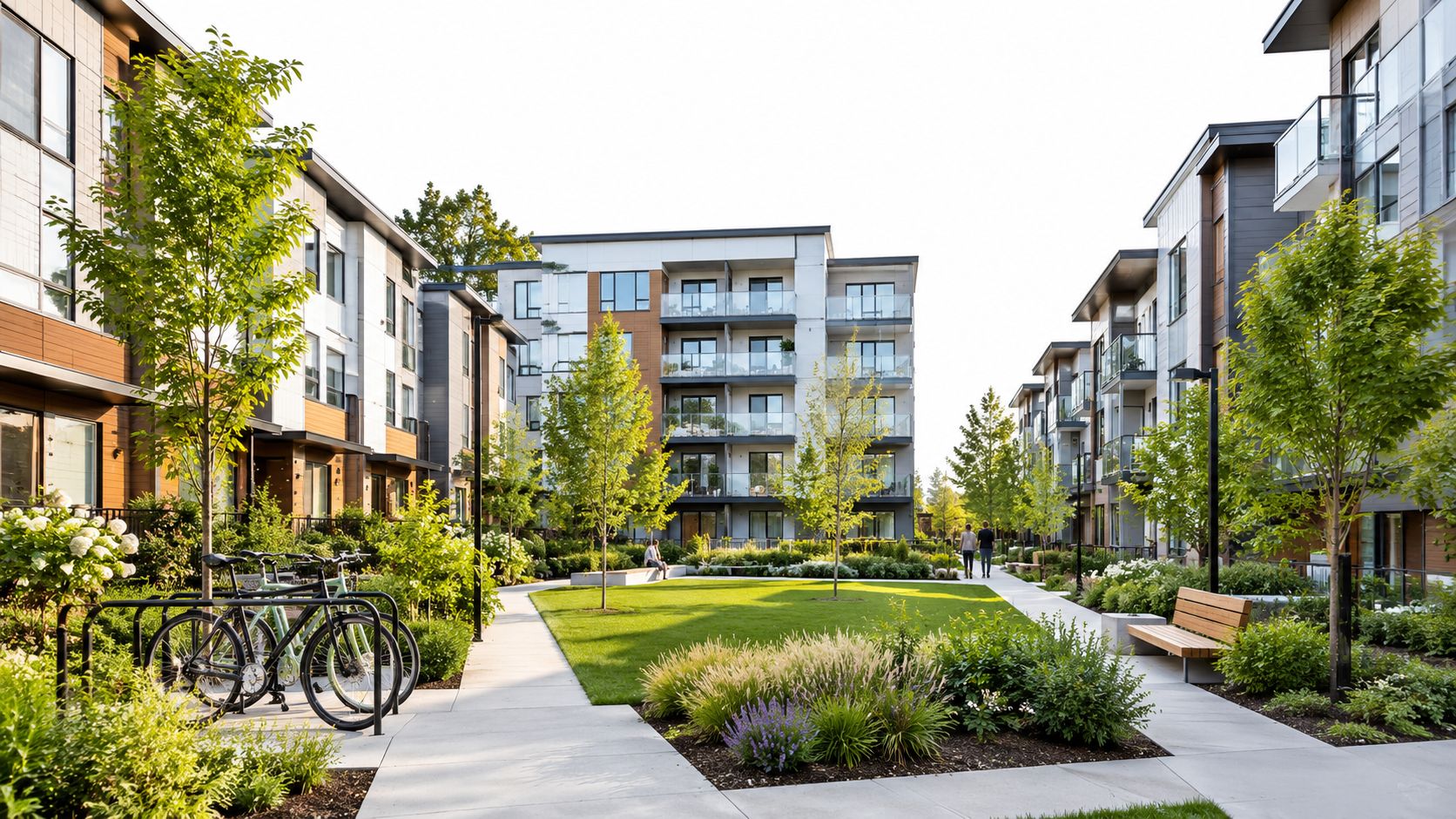
Central Abbotsford's townhouses, row homes and condominium apartments give buyers a lower-maintenance alternative to detached ownership. This housing type can suit first-time buyers, downsizers, professionals and investors who prefer shared maintenance over yard work, exterior repairs and larger standalone systems.
The choice isn't only between a townhouse and an apartment. A newer master-planned community may offer modern layouts and builder support, while an established complex may have mature landscaping and a more developed community atmosphere. Mid-rise apartments near commercial areas or transit corridors can reduce car dependence for some households, but the exact building location still matters.
Strata ownership requires careful financial and physical review. A buyer needs to understand monthly strata fees, the contingency reserve, upcoming projects, insurance arrangements, bylaws and restrictions affecting pets, rentals and renovations. A visually attractive unit can still carry substantial future costs if the building has deferred maintenance or an underfunded repair plan.
Calculate the complete monthly obligation
Mortgage payments tell only part of the affordability story. Add property tax, strata fees, insurance, utilities, maintenance and any parking or storage costs. A buyer considering a rental should also model vacancy, repairs and management costs rather than assuming rent will cover every expense.
- Documents: Request financial statements, meeting minutes, bylaws, depreciation information and reserve-fund material.
- Building condition: Inspect the envelope, roof, balconies, plumbing, mechanical systems and common areas.
- Renovation rules: Confirm approval requirements before planning flooring, kitchens, bathrooms or structural changes.
- Rental and pet policies: Check current restrictions before buying for occupancy flexibility or investment use.
- Independent inspection: Have a qualified inspector review the unit and accessible building systems.
Those researching the ownership model can read what a strata property means before comparing specific buildings. Central Abbotsford is often a practical fit for buyers who value manageable upkeep, but strata documents should carry as much weight as finishes and location.
7. Townline and Outer Abbotsford
Is extra land worth the added work? In Townline and outer Abbotsford, buyers trade urban convenience for privacy, agricultural potential and a slower pace while staying within reach of city employment and services. Listings can include horse properties, orchards, vineyards, market gardens, small farms, barns and other outbuildings.
The right comparison is between intended use, upkeep and resale flexibility. A buyer seeking outdoor space may value room for animals, gardens or workshops. Someone wanting a low-maintenance home may find the same acreage impractical. Land area can make a property appear affordable, yet fencing, drainage, access roads, wells, septic systems, pasture and equipment create ongoing costs.
Ownership also includes local land-use relationships. Agricultural zoning may limit construction or business activity. Nearby farms can lawfully create noise, dust, odour or truck traffic. Visit at different times and ask whether the property supports the activities you plan, rather than evaluating it only as a private retreat.
Check the property's working systems
Before making an offer, build the review around these questions:
- Intended use: Confirm zoning, permitted activities, setbacks and any restrictions affecting animals, farming, rentals or commercial work.
- Soil and land: Arrange professional soil testing and an agricultural viability assessment if production is part of the plan.
- Water and septic: Test well capacity and water quality, and have the septic system assessed by appropriate professionals.
- Access and services: Price private-road maintenance, snow removal, utility access and emergency access.
- Outbuildings: Verify permits, condition, electrical service, drainage and intended use for barns, arenas or workshops.
- Environmental history: Research industrial legacy, contamination and other environmental considerations.
- Resale: Allow for a narrower buyer pool and a potentially longer sale period for a specialized acreage property.
A buyer relocating from Maple Ridge or Pitt Meadows may recognize the appeal of more space, but the infrastructure burden can differ across the Fraser Valley. Townline works best when the lifestyle fits the maintenance plan, budget and land-use limits.
8. Abbotsford Rental and Investment Properties
What should an Abbotsford rental property do for your budget, tenant strategy and time? The answer changes by neighbourhood and property type. A downtown condominium, central townhouse, suburban detached house and semi-rural property each bring different tenant profiles, operating costs and management responsibilities.
CMHC's 2025 Housing Information Highlights report a 2.8% total primary rental market vacancy rate for the Abbotsford-Mission CMA. The figure is time-sensitive. It suggests a relatively tight rental environment, but it does not guarantee that every unit will lease quickly or achieve an assumed rent. Location, condition, parking, layout, utilities, strata rules and tenant demand still affect the result. Check CMHC's Abbotsford-Mission rental information for current context.
Start with the property's net operating position. Gross rent can look attractive until vacancy, repairs, property tax, insurance, utilities, strata fees and management costs are included. A suburban detached home may suit families while creating more exterior maintenance. A townhouse can provide a predictable layout but may have strata restrictions. A condominium may reduce exterior work while adding monthly fees and building-level risks.
Run three tests before buying
The tenant test: Identify who is most likely to rent the property. Families may value bedrooms, parking and outdoor space. Professionals may prioritize transit, shops and a low-maintenance layout. Match the property to a specific tenant profile rather than assuming broad demand.
The rules test: Review strata rental permissions, bylaws, move-in requirements, pet policies and upcoming assessments. Confirm that the insurance policy covers rental use, because a standard homeowner policy may not provide the required protection.
The cash-flow test: Model vacancy, repairs, taxes, insurance, utilities, strata fees and management costs. Keep records of inspections, repairs, communications and payments. Discuss tax treatment, deductions, capital cost allowance and liability with qualified accounting and legal professionals.
Budget rent increases conservatively. BC's 2026 rent increase limit is 2.3%, and the province says a landlord may generally raise rent once every 12 months with at least 3 full months' notice. Review the provincial rent-increase guidance before forecasting revenue. Rent above the annual limit requires the tenant's written agreement or an application to the Residential Tenancy Branch for an additional increase tied to eligible expenses or capital expenditures, as explained in BC's residential tenancy information.
If you will not manage the unit yourself, compare service options through property management in Abbotsford, then request a property-specific operating analysis before committing.
8 Abbotsford Neighborhoods Comparison
| Area / Type | Implementation complexity | Resource requirements | Expected outcomes | Ideal use cases | Key advantages |
|---|---|---|---|---|---|
| Downtown Abbotsford Core | Moderate, heritage assessments and potential renovations | Moderate budget; renovation costs; parking/strata considerations | Urban convenience, steady demand, potential appreciation from revitalization | Young professionals, small families, investors seeking walkable assets | Walkable mixed‑use environment, transit access, revitalization potential |
| West Abbotsford (McCallum–Pearson) | Low–Moderate, standard residential purchase; possible upgrades | Moderate funds for purchase and renovations; lot surveys for expansions | Stable long‑term appreciation, family‑oriented lifestyle | Families, renovators, buyers desiring larger lots and schools nearby | Mature neighbourhood, larger lots, strong school catchments |
| East Abbotsford (Highway 1 Corridor) | Low, new construction processes; pre‑construction due diligence | Higher purchase prices; builder deposits; verify grading/drainage | Modern amenities, faster delivery, good commuter access | Buyers seeking new homes, commuters, families wanting convenience | New builds, proximity to Hwy 1, retail and commercial growth |
| South Abbotsford (University Drive) | Moderate, mixed property types and transitional zoning | Varied budgets; consider traffic and adjacent agricultural activity | Balanced suburban lifestyle with institutional services and green space | Students, professionals, families seeking access to institutions and parks | Institutional amenities, variety of housing, parks and recreation |
| Mill Lake & Sumas Prairie Area | Moderate, environmental and septic/well checks for semi‑rural lots | Higher capital for acreage; utility and environmental assessments | Semi‑rural living, outdoor recreation access, potential for equestrian/agriculture | Outdoor enthusiasts, hobby farmers, buyers wanting acreage | Large lots, Mill Lake recreation, scenic natural amenities |
| Central Abbotsford (Townhouses & Condos) | Low, strata and building inspections required | Lower entry price; ongoing strata fees; review reserve funds | Affordable ownership, rental demand, low‑maintenance living | First‑time buyers, downsizers, small investors | Lower purchase cost, shared amenities, transit/walkable locations |
| Townline & Outer Abbotsford (Semi‑Rural) | High, zoning, utility, and long‑term maintenance complexities | Significant funds for acreage; well/septic, road upkeep, environmental testing | Privacy, agricultural opportunities, longer commutes and service gaps | Farmers, equestrian owners, buyers seeking large private parcels | Extensive land, privacy, suitability for farming or hobby agriculture |
| Abbotsford Rental & Investment Properties | Moderate, tenant management and regulatory compliance | Capital for downpayments; reserves for vacancy/repairs; management fees | Rental income, portfolio growth, variable ROI depending on management | Investors, landlords, property managers seeking diversification | Lower entry vs metro markets, broad tenant demand, diverse property types |
Turn a Neighbourhood Shortlist Into a Smart Move
A useful Abbotsford shortlist usually contains two or three neighbourhoods, not eight. Start with the daily routine. A buyer who wants walkability and services may begin downtown or in central strata housing. A household seeking established streets and a yard may focus on west Abbotsford. A commuter may prioritize newer eastern housing and Highway 1 access, while an outdoor-minded buyer may accept the added work of Mill Lake's larger properties or the semi-rural edges.
Next, compare current listings and market evidence. Abbotsford's neighbourhood framework is designed to make local conditions easier to compare, and the city profiles include measures covering population, income, education, employment, diversity, family and housing. A wider census resource identifies 43 Abbotsford neighbourhoods and 2,631 indicators using 2021 Census tract-level data, which reinforces why a citywide average can't answer every property question. The regional Vital Signs report provides that broader context.
Market conditions can shift quickly by property type and geography. In April 2026, Abbotsford detached homes recorded 61 sales and 430 active listings, with an average sale price of $1,173,937, $397 per square foot and 19 average days on market. The April 2026 detached-market report is time-sensitive, so buyers should confirm current conditions before relying on it. Regional context also changes. Fraser Valley Real Estate Board statistics placed the region in a buyer's market in August 2026, with a 10% sales-to-active-listings ratio. The board's August 2026 statistics package should be read as a dated snapshot, not a permanent market label.
A disciplined next step looks like this:
- Test the routine: Drive each shortlisted route at the times the household travels.
- Confirm schools and transit: Check current school boundaries, enrollment information and transit schedules directly.
- Review the property type: Obtain strata documents for shared ownership, and assess older homes for structural and system condition.
- Investigate land and services: For acreage or transition areas, verify zoning, drainage, septic, wells, soil, environmental history and agricultural considerations.
- Check tenancy information: Landlords should use current provincial guidance and qualified professional advice rather than treating market rent as unrestricted pricing authority.
Royal LePage Brookside Realty serves Maple Ridge and Pitt Meadows as its primary communities, with additional service in Mission, Abbotsford and the Fraser Valley. Buyers, sellers, investors and landlords can connect with Royal LePage Brookside Realty for local guidance on neighbourhood comparisons, valuations, purchases, sales and property management.
Royal LePage Brookside Realty can help buyers compare Abbotsford neighbourhoods against commute, property type and maintenance priorities, while also supporting sellers, investors and landlords with valuations and practical planning. Visit Royal LePage Brookside Realty to discuss a focused neighbourhood search or a property-specific next step.